What to Pack for a Summer Day Hike With Your Dog
For a summer day hike with your dog, pack more than a leash and a shared water bottle. At minimum, bring water specifically for your dog, a portable drinking bowl, secure walking gear, current identification, waste bags, familiar treats, basic first-aid supplies, and a plan for shade and rest.
For a summer day hike with your dog, pack more than a leash and a shared water bottle. At minimum, bring water specifically for your dog, a portable drinking bowl, secure walking gear, current identification, waste bags, familiar treats, basic first-aid supplies, and a plan for shade and rest.
The right list depends on the dog, trail, weather, and distance. A fit adult dog on a shaded two-mile loop has different needs from a senior dog on an exposed climb. Use the checklist below as a starting point, then shorten the route or skip the hike if the conditions do not suit your dog.
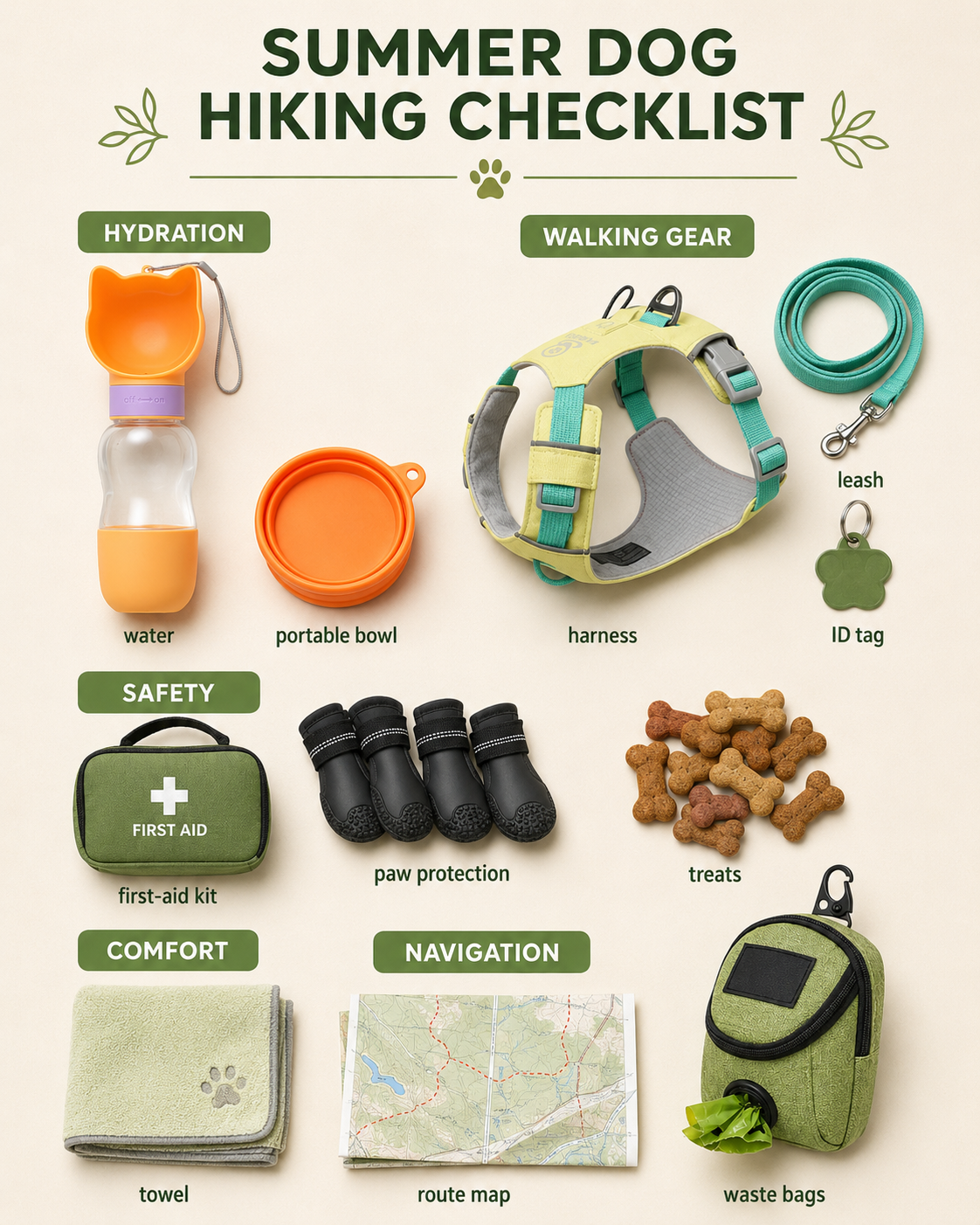
Summer Dog Hiking Checklist
| Pack | Why it matters | Quick check before leaving |
|---|---|---|
| Water for your dog | Natural water may be unavailable or unsafe | Carry enough for the full outing plus a reserve |
| Portable bowl or dog water bottle | Makes frequent water breaks easier | Test it at home and confirm it does not leak |
| Well-fitted harness and leash | Keeps your dog controlled near people, wildlife, and hazards | Check straps, buckles, stitching, and leash attachment |
| ID tag and current microchip details | Helps reunite you if your dog gets loose | Confirm the phone number is readable and current |
| Waste bags | Required for responsible trail use | Pack more than you expect to need |
| Familiar treats or food | Useful for rewards and longer outings | Pack food your dog already tolerates well |
| Dog first-aid basics | Helps with minor cuts or irritation until you reach care | Add your veterinarian’s number and the nearest emergency clinic |
| Paw protection, if appropriate | Rough or hot surfaces can injure paw pads | Introduce boots before the hike, not at the trailhead |
| Towel or cleaning cloth | Useful for mud, wet fur, and post-hike cleanup | Store it where it is easy to reach |
| Your route and turnaround plan | Prevents “just one more mile” decisions in worsening heat | Save the map and identify shaded exit points |
First, Decide Whether Today Is a Good Hiking Day
There is no single air temperature that is safe for every dog. Humidity, direct sun, trail surface, elevation gain, access to shade, and your dog’s age, health, coat, fitness, and heat tolerance all matter.
Short-nosed dogs, senior dogs, puppies, overweight dogs, dogs with thick coats, and dogs with heart or breathing conditions may have a harder time in warm weather. Ask your veterinarian about strenuous outings if your dog has a medical condition, is new to hiking, or has struggled with heat before.
Check the trail rules
Confirm that dogs are allowed on the specific trail—not just in the park—and review leash requirements. The National Park Service hiking-with-pets guidance recommends checking park rules in advance, choosing a trail that fits your dog’s condition, carrying extra water, keeping dogs leashed, and packing out pet waste.
Also look for:
- Reliable shade along the route
- Steep or exposed sections
- Sharp rock, loose scree, hot pavement, or long boardwalks
- Water crossings and wildlife advisories
- A shorter turnaround option
- Cell-service limitations and the closest veterinary clinic
Match the distance to your dog’s current fitness
A neighborhood walking routine does not automatically prepare a dog for a long climb. Start with a short, forgiving trail and build distance gradually over multiple outings. Plan around the slowest member of the group—often the dog once the day warms up.
An early start can reduce sun exposure, but morning temperatures alone do not guarantee a safe hike. Check the hourly forecast, humidity, and conditions expected during your return, not only at the trailhead.
Carry Water Your Dog Can Actually Drink
Do not assume a stream, lake, or puddle will be available or safe. Water sources can contain pathogens, harmful algae, or contaminants, and some are difficult to reach with a leashed dog. Carry clean water from home and keep a reserve for delays.
Offer water during regular shaded breaks instead of waiting for obvious thirst. The exact amount varies with body size, exertion, weather, food, and individual needs, so a fixed one-size-fits-all formula is not a reliable packing plan. If you are unsure how much your dog normally needs during exercise, ask your veterinarian and test your setup on shorter walks first.
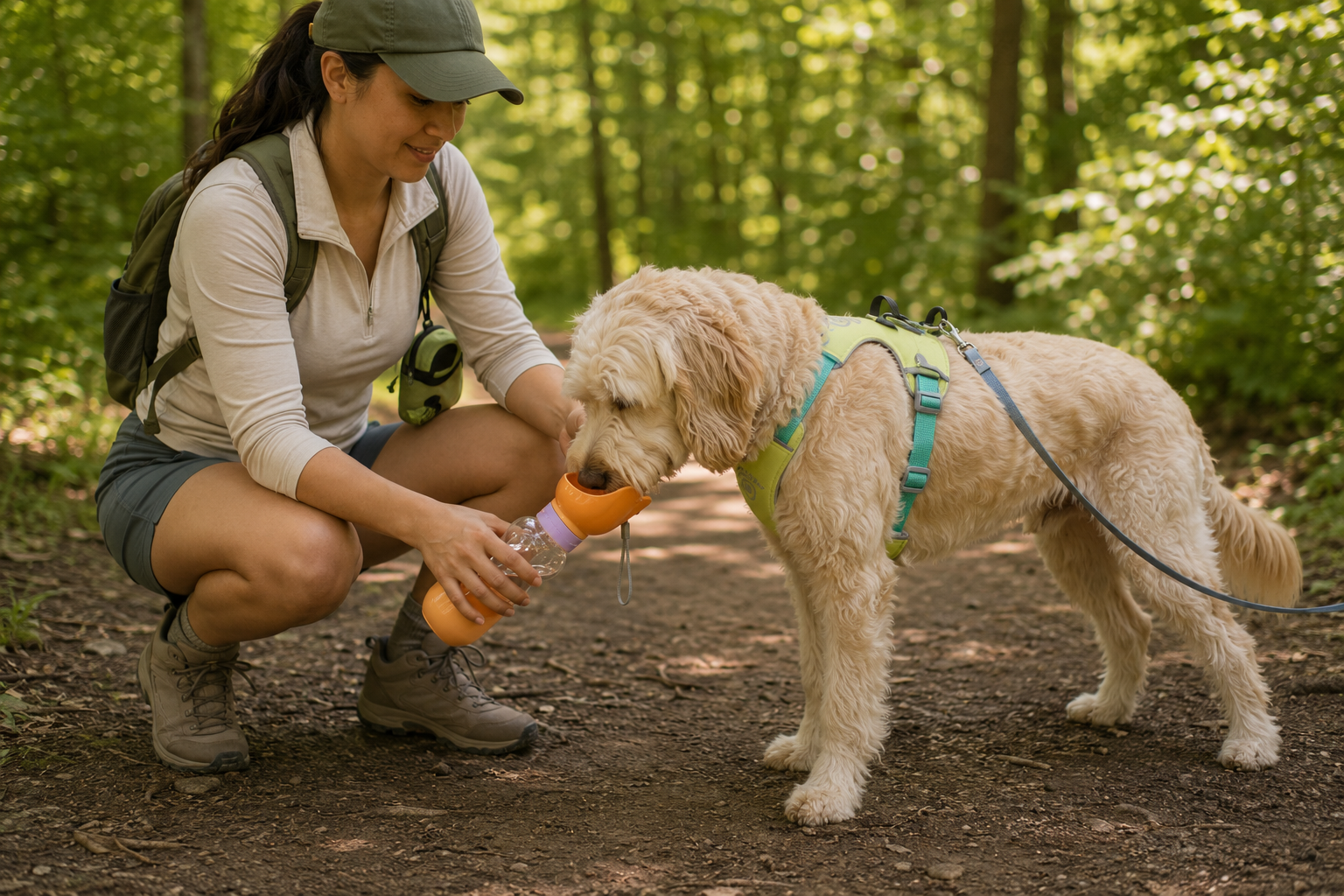
A bottle with its own drinking bowl reduces the number of loose items in a day pack. The My FurMigo 2-in-1 Leakproof Dog Travel Water Bottle has a built-in drinking bowl, a detachable treat compartment, and a carrying strap. Its listed capacity is 400 ml for water plus a 200 ml treat bowl. That can be convenient for accessible trail breaks, but it may not hold enough water for your entire outing; carry additional water when the route, weather, or your dog requires it.
Know the warning signs of overheating
Watch your dog throughout the hike, including during breaks. Warning signs can include frantic or excessive panting, thick drool, bright-red gums or tongue, labored breathing, vomiting, weakness, stumbling, or an unwillingness to continue. Collapse, seizures, or abnormal gum color are emergencies.
If you notice possible overheating, stop the activity, move your dog to a cooler shaded area, begin cooling with cool—not ice-cold—water, and contact a veterinarian promptly. The American Kennel Club’s veterinary-reviewed overheating guide explains that a dog may still need veterinary evaluation even if they appear to improve after cooling.
When conditions feel questionable, turn around. No viewpoint is worth testing the edge of your dog’s heat tolerance.
Use Secure, Comfortable Walking Gear
A trail adds distractions that do not exist on a familiar sidewalk: wildlife, runners, bikes, loose dogs, narrow ledges, and sudden changes in footing. Use a sturdy leash and a properly fitted harness or collar that your dog has already worn comfortably.
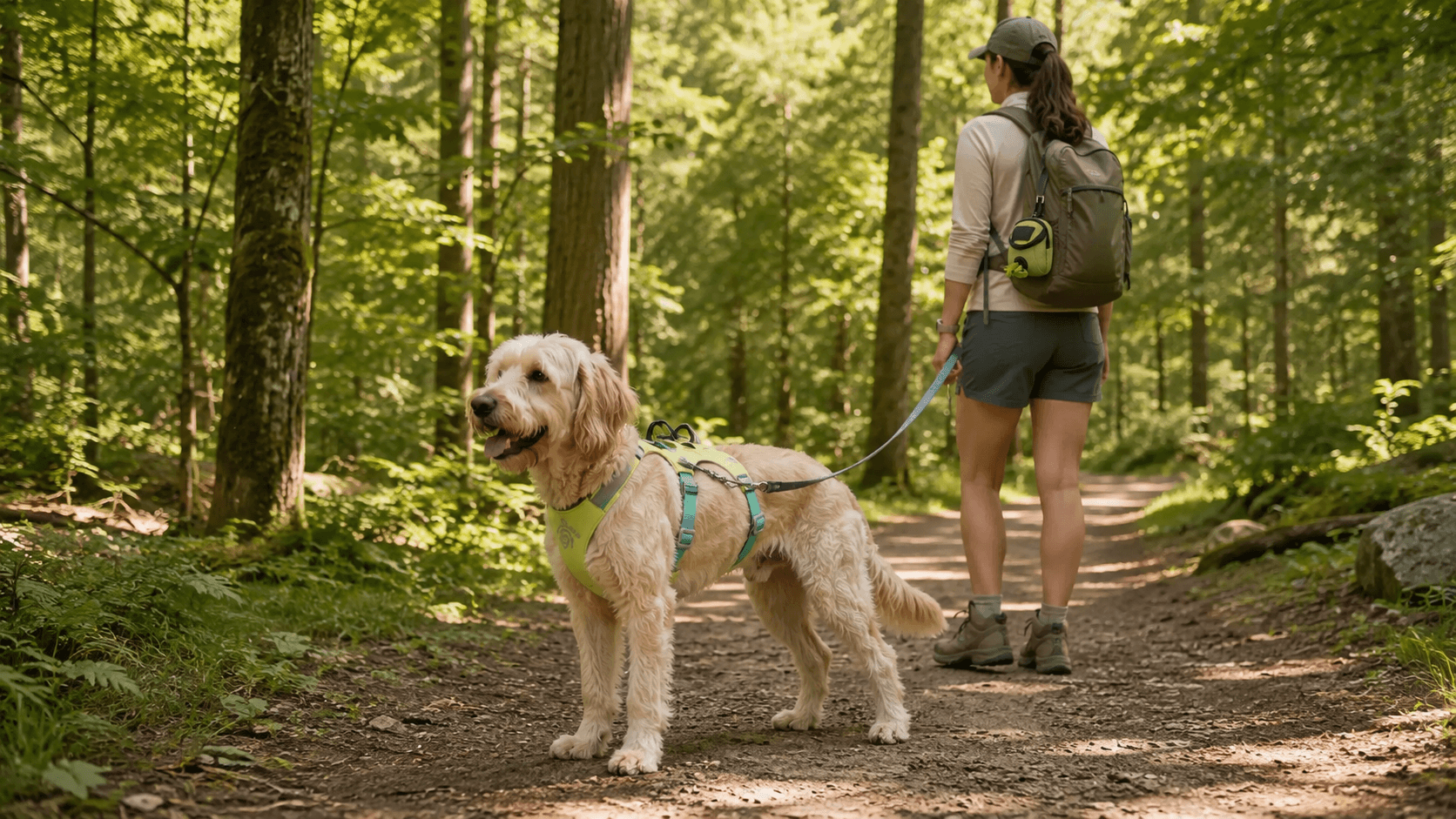
For many dogs, a harness gives the handler useful control without placing all leash pressure at the neck. A good fit should be snug enough that the dog cannot back out, but it should not rub behind the front legs or restrict normal movement. Follow the manufacturer’s size guide, adjust every strap, and recheck the fit after several minutes of walking.
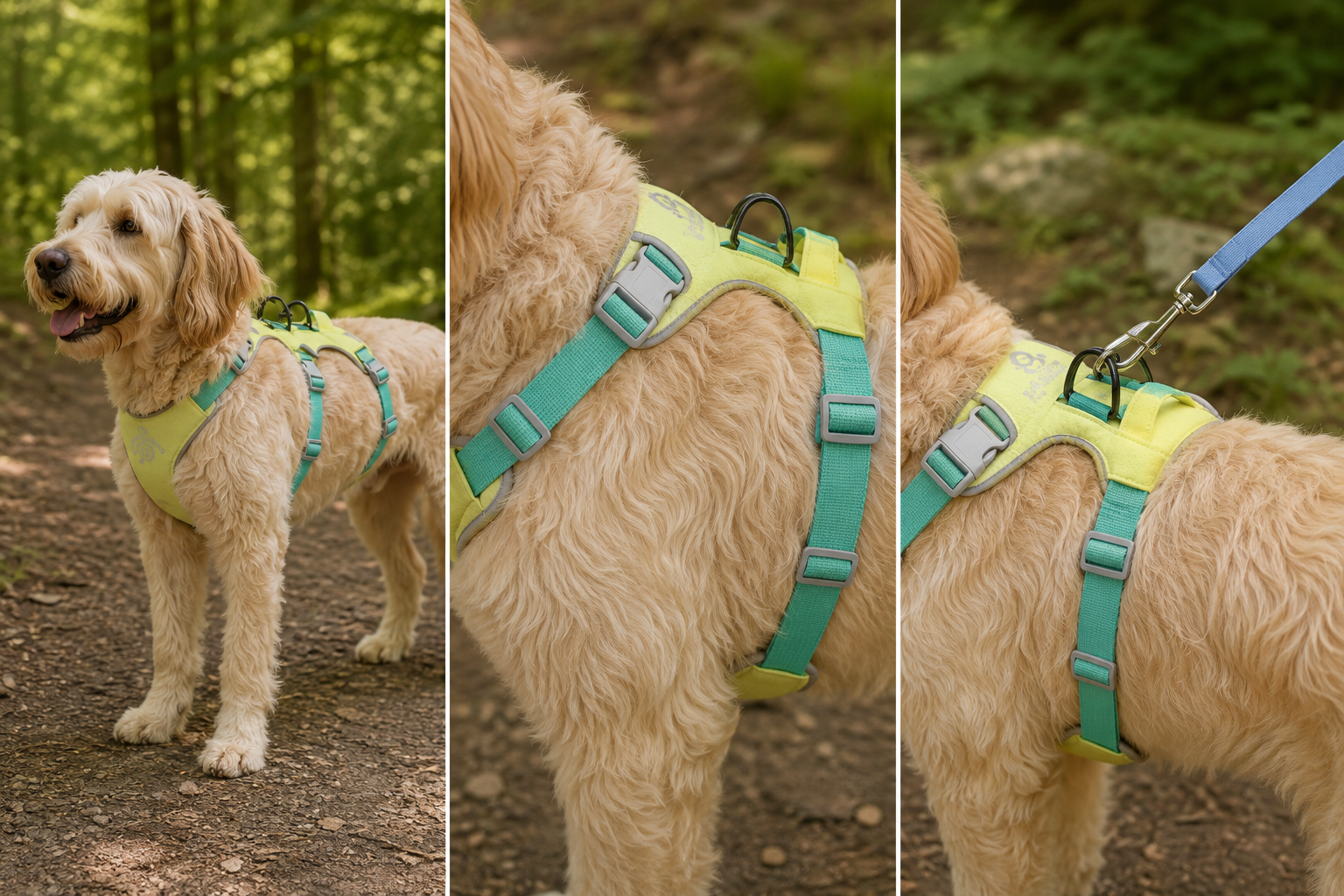
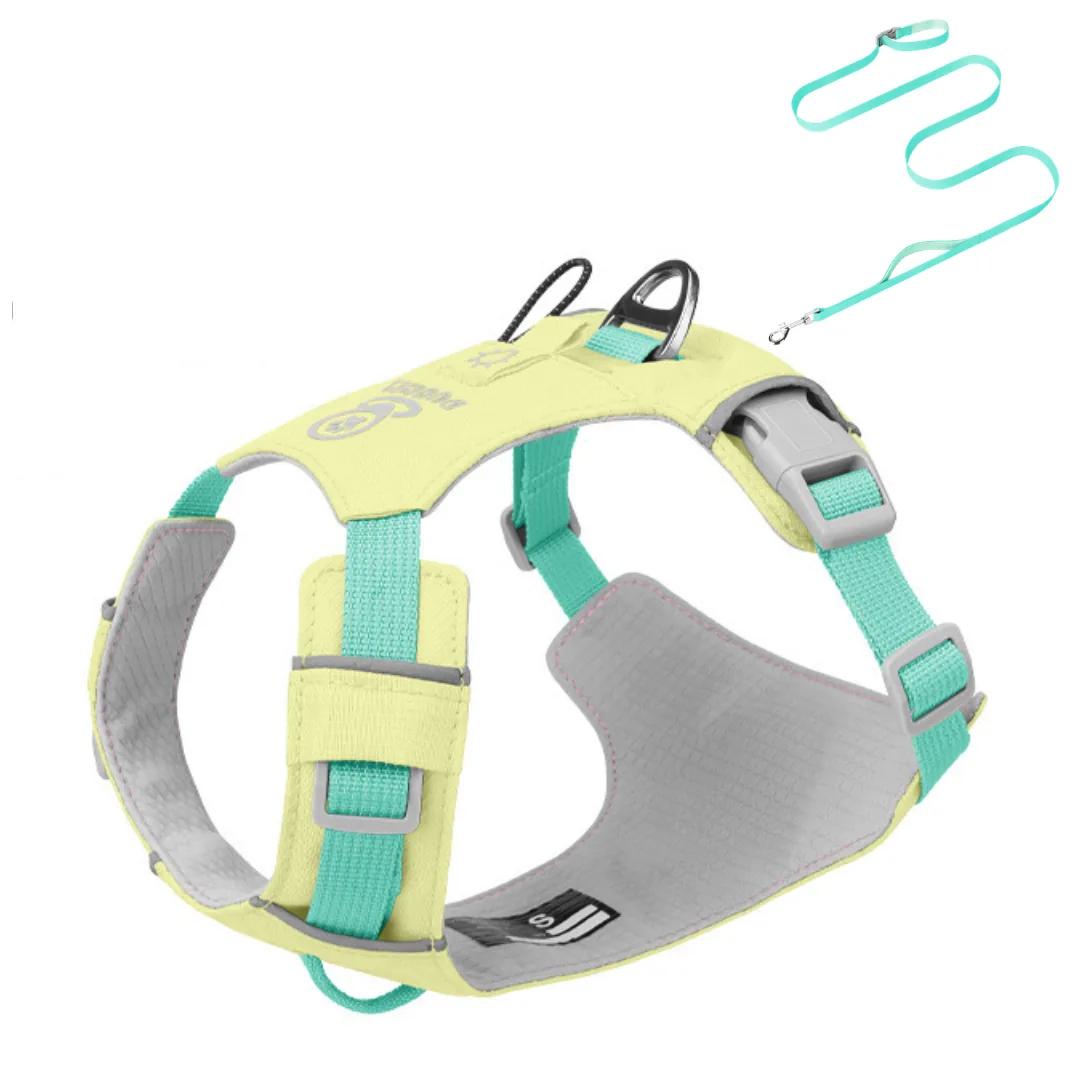
The My FurMigo Lightweight Breathable Dog Harness uses breathable mesh, adjustable straps, a quick-release buckle, and a leash D-ring. Those features make it relevant for warm-weather walking, but “breathable” does not make hot conditions safe. Shade, water, route choice, rest, and close observation still matter more than any piece of gear.
Before leaving the trailhead:
- Check the buckle and leash attachment.
- Make sure straps lie flat without twisting.
- Confirm you can control your dog without restricting their gait.
- Inspect the harness again at the first break for rubbing or shifting.
Keep your dog leashed unless the land manager explicitly permits otherwise and you can maintain reliable control. A leash protects wildlife as well as your dog and other trail users.
Protect Paws and Pack a Small First-Aid Kit
Summer trail surfaces can change quickly. A shaded dirt path may lead to sun-baked rock, gravel, sharp debris, or a hot parking lot. Check the surface with your hand and watch how your dog walks. Slowing down, repeatedly lifting a paw, licking the feet, or refusing to continue deserves an immediate stop and inspection.
Boots can help on rough or hot terrain, but only if they fit and the dog has learned to move comfortably in them. Introduce them during short sessions at home, then on familiar walks. Do not make a long hike the first test.
A compact dog first-aid kit might include:
- Nonstick pads and gauze
- Self-adhering bandage wrap
- Saline rinse
- Blunt-tip tweezers or a tick-removal tool
- Disposable gloves
- A small towel
- Any veterinarian-prescribed medication your dog may need
- Your veterinarian’s number and the nearest emergency clinic
First aid is for stabilizing minor problems and getting safely off the trail; it is not a substitute for veterinary care. Do not give human pain medication unless a veterinarian specifically instructs you to do so.
Pack Familiar Food, Waste Bags, and a Rest Plan
For a short hike, familiar treats may be enough. Longer or more strenuous outings may require a food plan based on your dog’s normal diet and your veterinarian’s advice. Avoid experimenting with a new rich snack on the trail.
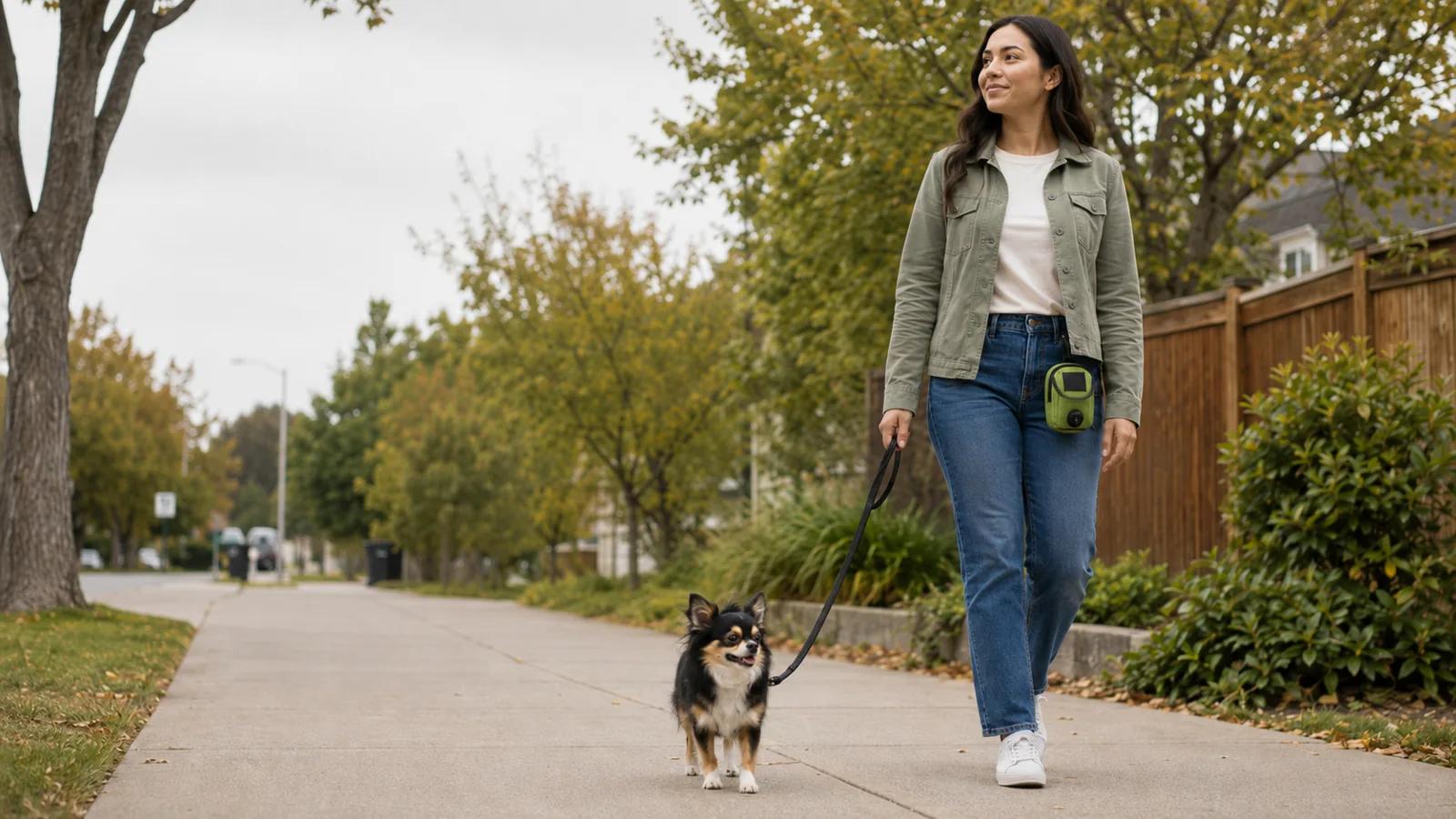
Keep treats and waste supplies easy to reach. The My FurMigo 2-in-1 Dog Treat & Waste Bag Pouch separates treats from waste bags and includes an external bag dispenser. It can clip to a leash, belt, or backpack; waste bags are not included. This is useful because the best cleanup system is the one you can reach before your dog—or the weather—moves on.
Pack out all dog waste, including on remote trails. Do not leave filled bags beside the path for pickup later. Keep your dog away from wildlife, nests, carcasses, and feces, and do not allow them to chase animals or enter protected water sources.
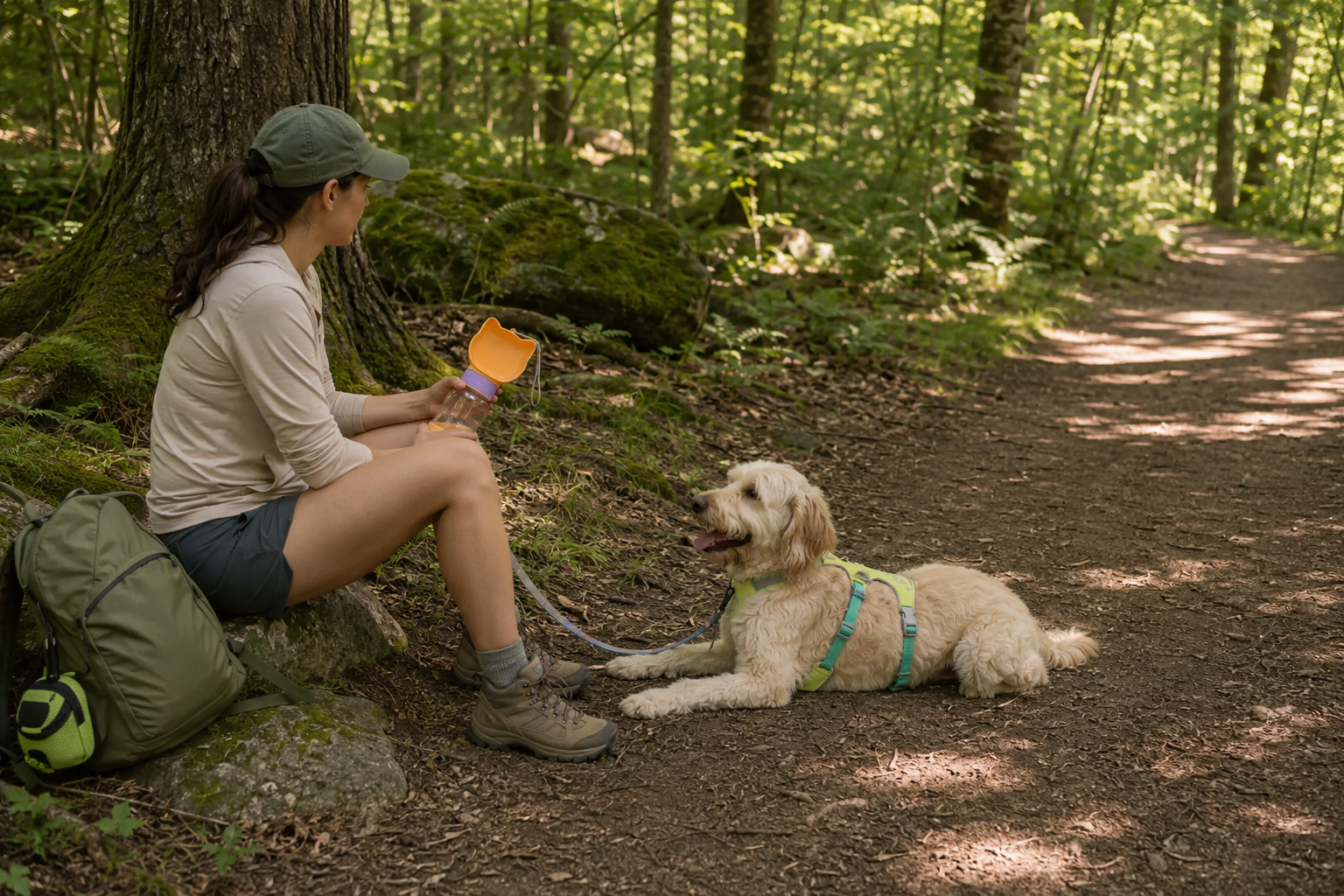
Plan rest stops in shade before your dog appears exhausted. A break is a chance to offer water, inspect paws, check harness contact points, and compare your dog’s behavior with their normal baseline. If they do not recover comfortably, head back.
Follow a Simple On-Trail Routine
A routine makes it easier to notice small changes before they become a problem.
At the trailhead
- Confirm the route and current trail notices.
- Check ID, harness fit, leash, paws, and water.
- Note your dog’s normal breathing and energy level.
- Set a turnaround time that leaves margin for a slower return.
At each break
- Move fully off the trail into shade when possible.
- Offer clean water.
- Look at breathing, gums, coordination, and willingness to continue.
- Check paws and areas where the harness touches the body.
- Shorten the route if conditions are warmer or harder than expected.
Before the return leg
- Recalculate your remaining water.
- Consider whether the return is more exposed or uphill.
- Turn around early enough that you are not rushing through peak heat.
The goal is not to complete a planned mileage number. The goal is to finish with a dog who is comfortable, responsive, and ready to recover normally.
Check Your Dog Again After the Hike
The hike is not over when you reach the car. Offer water, let your dog cool down in a well-ventilated area, and never leave them in a parked vehicle. Before driving away, check:
- Paw pads and between the toes for cuts, grit, seeds, or irritation
- Fur and skin for ticks, burrs, and foxtails
- The chest and armpit area for harness rubbing
- Eyes, ears, and nose for debris
- Gait and willingness to stand or walk
- Breathing and behavior as your dog settles
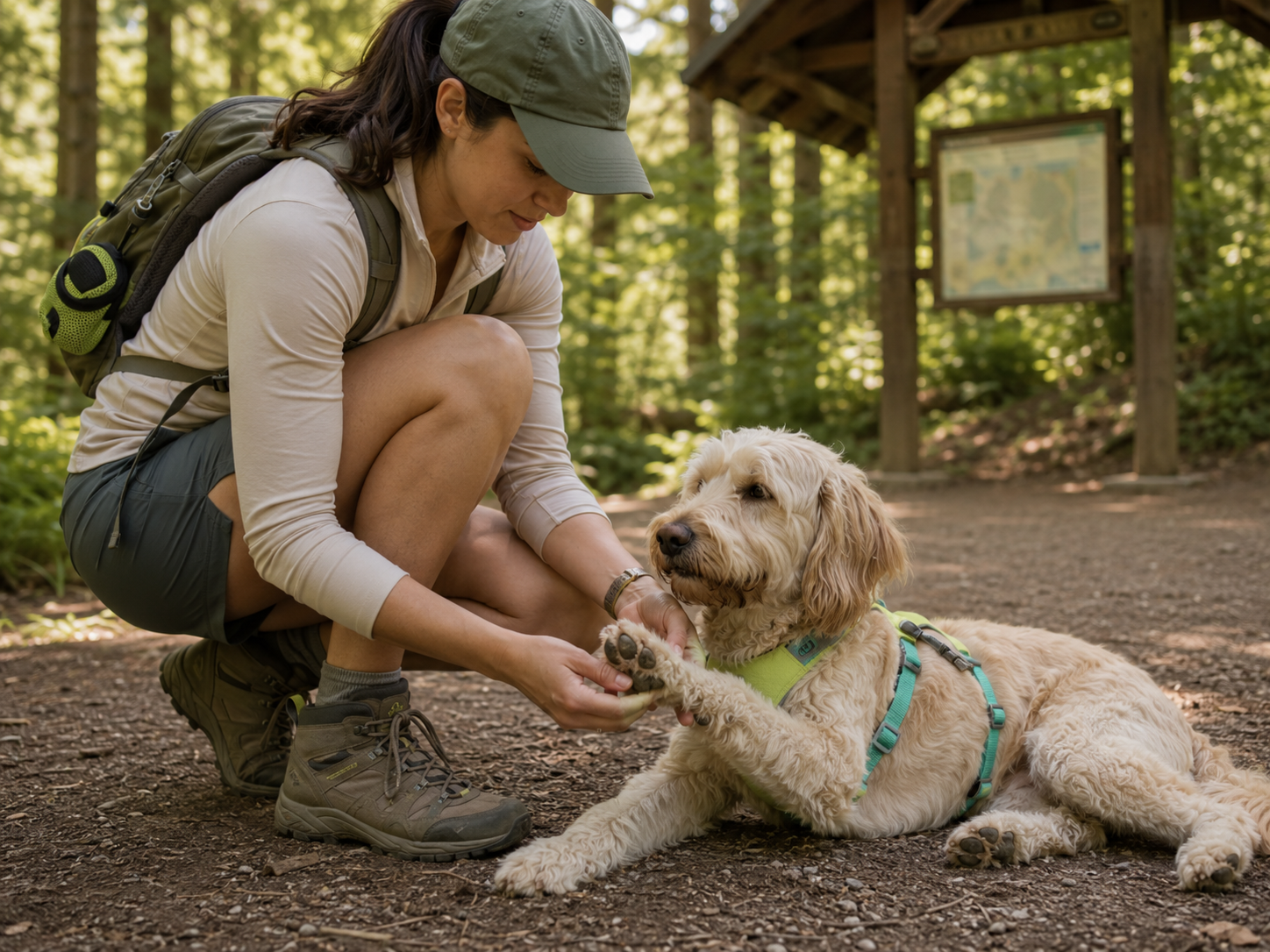
At home, clean and dry reusable gear before storage. Continue watching for limping, persistent heavy panting, unusual fatigue, vomiting, diarrhea, coughing, or behavior that seems unlike your dog. Contact your veterinarian if you are concerned.
Frequently Asked Questions
How much water should I bring for my dog on a summer hike?
There is no reliable universal amount for every dog and trail. Body size, temperature, humidity, elevation, exertion, diet, and health all affect water needs. Carry enough clean water for the planned hike plus a reserve, offer it during frequent shaded breaks, and ask your veterinarian for individualized guidance if you are planning strenuous or long outings.
What temperature is too hot to hike with a dog?
There is no single cutoff that works for every dog. Humidity, direct sun, surface temperature, route exposure, and individual health can make a moderate air temperature risky. Dogs that are short-nosed, older, very young, overweight, thick-coated, poorly conditioned, or managing health issues may need a much more conservative plan. When in doubt, choose a shorter shaded walk or stay home.
Can my dog drink from a stream while hiking?
It is safer to carry clean water. Natural sources may contain pathogens, algae, wildlife waste, or other contaminants, and water quality can change without visible warning. Keep your dog out of protected water sources and follow local rules.
Should my dog wear boots on a summer hike?
Boots can be helpful on hot, sharp, or abrasive terrain if they fit correctly and your dog has practiced wearing them. They are not a substitute for avoiding unsafe surfaces. Stop and inspect the paws if your dog changes gait, lifts a foot, licks repeatedly, or resists moving forward.
Is a breathable harness enough for hot-weather hiking?
No. A breathable harness may reduce bulk and improve walking comfort, but it cannot prevent overheating. Safe timing, an appropriate route, shade, clean water, rest, and active monitoring are still essential.
What should I do if my dog starts overheating on the trail?
Stop immediately, move to shade or a cooler area, begin cooling with cool rather than ice-cold water, and contact a veterinarian promptly. Weakness, collapse, seizures, breathing difficulty, vomiting, or abnormal gum color require urgent veterinary care.
Conclusion
A good summer dog hiking checklist is less about carrying every possible accessory and more about covering the essentials: clean water, secure walking gear, identification, paw and first-aid supplies, waste bags, familiar food, shade, and a realistic turnaround plan.
Pack for the dog you have and the conditions you will actually meet. Start early, choose a route with an easy exit, check your dog at every break, and be willing to turn around. A shorter safe hike leaves both of you ready for the next one.
Choosing gear for this route? Compare fit, capacity, and product limits in our dog hiking gear buying guide.
Shop this story