How to Start Running With Your Dog
Start running with your dog only after your veterinarian confirms the activity fits your dog's age, health, and body structure. Build from comfortable walks to short walk-jog intervals, use a predictable route, and increase time before speed or distance.
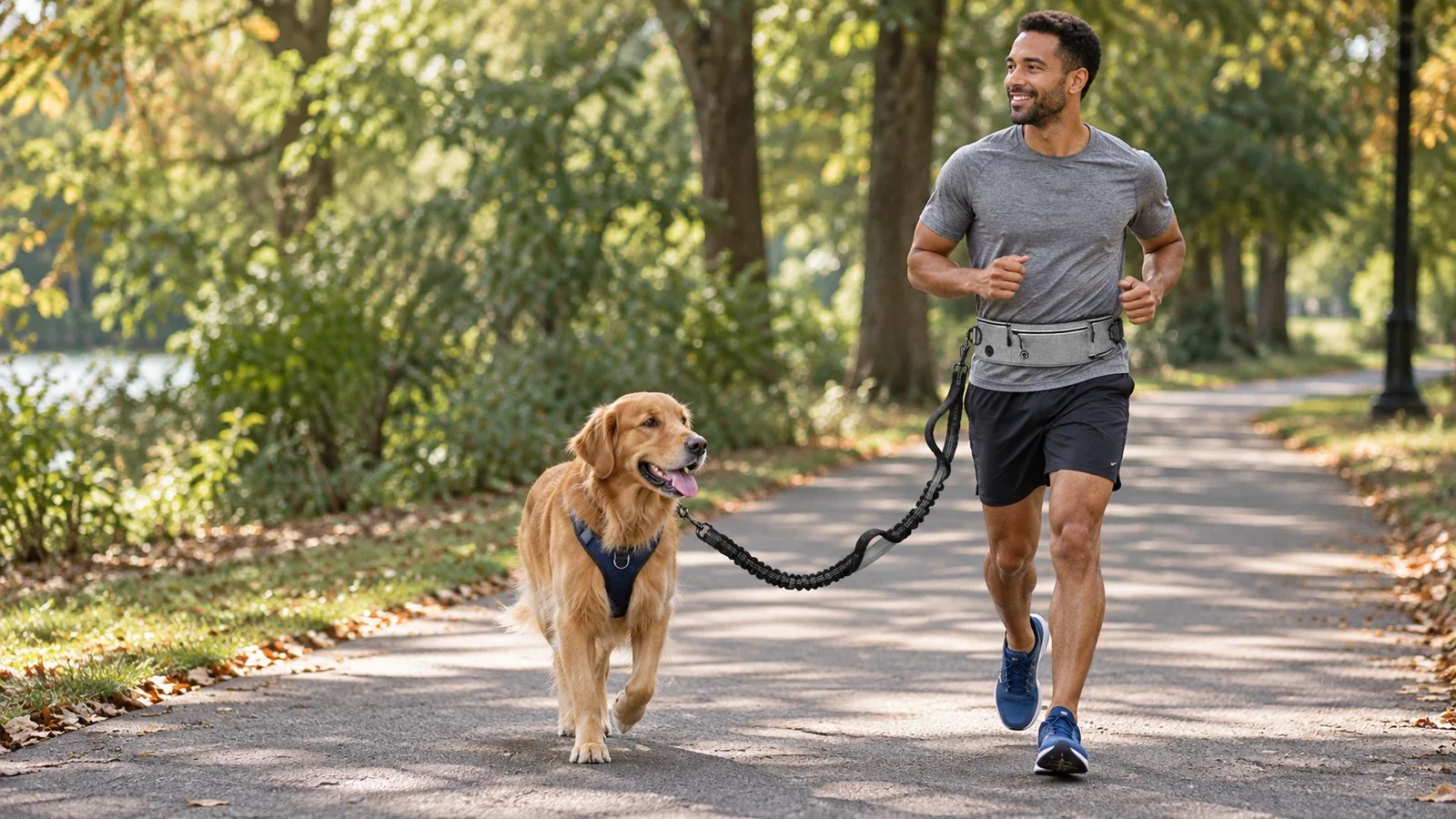
Start running with your dog only after your veterinarian confirms the activity fits your dog's age, health, and body structure. Build from comfortable walks to short walk-jog intervals, use a predictable route, and increase time before speed or distance.
A hands-free leash can reduce what you carry, but it cannot replace leash skills or attention. Your dog should already walk near you, respond to basic cues, and recover calmly from distractions before the first jogging interval.
Decide Whether Running Fits Your Dog
Running is more demanding than a walk. Puppies have developing joints, senior dogs may have reduced mobility, and short-muzzled dogs may have greater difficulty cooling during exercise. Dogs with limping, excess weight, heart or breathing concerns, or a history of orthopedic problems need individualized veterinary advice.
VCA recommends a veterinary examination before beginning a strenuous routine and starting with short alternating periods of walking and jogging. Do not use enthusiasm at the front door as proof of physical readiness.
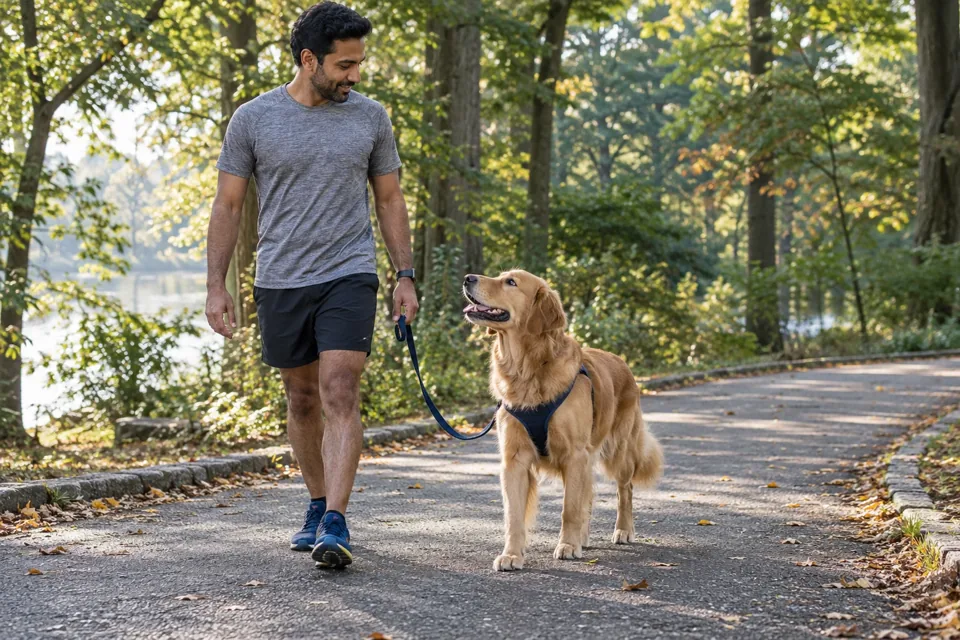
Your dog should first be able to complete an ordinary walk without lagging, limping, coughing, repeatedly sitting, or remaining unusually tired afterward. Practice “slow,” “stop,” “leave it,” and a direction-change cue at walking speed.
Choose a Predictable Route
For early sessions, choose a flat, familiar loop with good traction, shade, low traffic, and room to step aside. Grass or a firm dirt path may be more forgiving than long stretches of concrete, but inspect for holes, debris, ice, and sharp gravel.
Avoid the hottest part of the day. Bring water and know where you can pause safely. This dog travel water guide offers a practical packing routine for outings away from home.
Check local leash rules. A running route is not the place to test unreliable recall, and a busy multiuse path adds bicycles, children, wildlife, and other dogs.
Set Up the Leash Before Adding Speed
Use a well-fitted walking or running harness appropriate for your dog and inspect every connection. The leash should allow a natural stride without dragging, wrapping around legs, or staying under constant tension.
Fit a hands-free belt securely around your waist according to its instructions. Attach the leash, then walk in several directions. The dog should remain beside you rather than pulling from the end of the line. Practice unclipping only in a secure setting, never while moving beside traffic.
The Hands-Free Dog Running Belt includes an adjustable waist belt, storage pocket, and dual buffer points. Its page instructs users to check buckles, clips, and stitching before each use. Buffer sections may soften some sudden tension, but they do not make lunging harmless or provide automatic control.
Begin With Walk-Jog Intervals
Warm up with a relaxed walk that gives your dog time to sniff and eliminate. When both of you are moving comfortably, jog for a short interval at a pace where the leash remains loose. Return to walking before your dog falls behind or begins pulling.
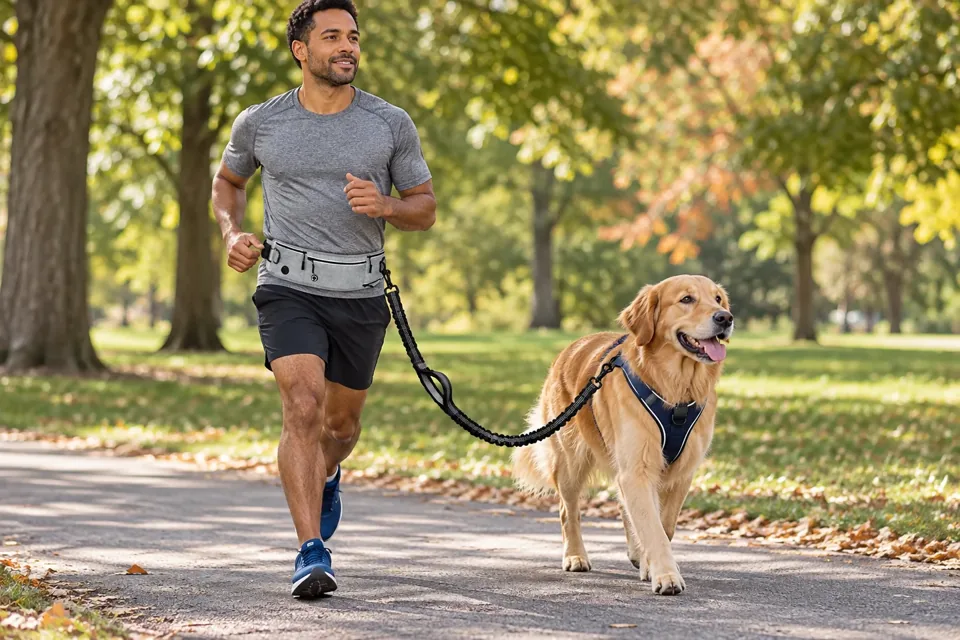
For the first sessions, repeat only a few controlled intervals. Keep the route and pace familiar. On later outings, increase just one element:
- add another short jog interval;
- lengthen one interval slightly;
- extend the total route; or
- introduce a small change in terrain.
Do not increase speed, distance, heat exposure, and elevation together. Consistent easy sessions build useful information about recovery; one long weekend run does not.
Use three progression stages
There is no universal calendar, but the work can follow three observable stages:
| Stage | Session focus | Move forward when |
|---|---|---|
| Walk foundation | Loose-leash walking, stop and direction cues, route familiarity | The dog stays responsive and comfortable through the ordinary walk |
| Walk-jog introduction | A few brief jogs separated by longer walks | Stride stays even and recovery during each walk interval is prompt |
| Easy continuous jogging | Short, steady sections at one comfortable pace | The dog finishes coordinated and behaves normally later that day and the next |
If a new stage produces pulling, lagging, prolonged fatigue, or paw soreness, return to the earlier stage. Weather, time away from exercise, weight change, illness, and a new surface can all justify an easier session.
Keep a simple note after each outing: route, temperature, surface, approximate jog time, stop signals, and recovery. This is more useful than copying another dog's or a human's training plan, and it gives your veterinarian clearer information if a concern develops.
Watch the Dog, Not the Pace Display
Slow to a walk if your dog drifts behind, pulls toward shade, repeatedly looks for water, changes gait, pants much harder than expected, or becomes less responsive to familiar cues. Stop the session if the dog repeatedly sits or lies down.
Weakness, vomiting, diarrhea, collapse, breathing distress, disorientation, or persistent limping requires prompt veterinary attention. Do not ask the dog to finish the planned distance.
Paw surfaces matter too. Hot pavement, ice, road salt, and abrasive ground can change an otherwise suitable route. Check paw pads before and after running.
Do not use the dog's leash tension to pull yourself uphill or maintain pace. Sudden movement transferred to the waist can affect the handler's balance, while a stumble can send force back through the line. Slow before corners and walk past congested areas. If the dog frequently lunges or crosses in front, pause running and work with a qualified reward-based trainer on walking skills first.
Cool Down and Review the Session
Finish with several minutes of easy walking rather than stopping abruptly. Offer water in manageable opportunities, then let your dog rest in a comfortable place.
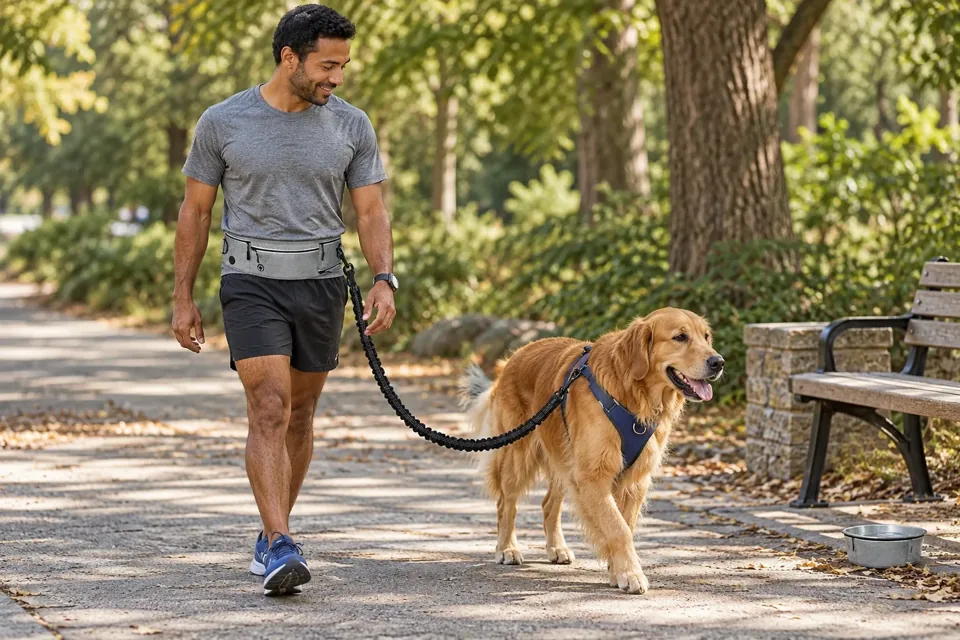
After the dog settles, check paws, nails, harness contact points, and gait. Note the route, conditions, and how quickly normal breathing and behavior returned. If recovery seems slower than usual, shorten the next outing or pause the program and consult your veterinarian.
Wash or wipe gear as directed, allow it to dry, and inspect the leash clips and belt stitching before storing.
Frequently Asked Questions
How old should a dog be before running?
There is no single age for every breed. Skeletal maturity varies, so ask your veterinarian when sustained running is appropriate for your individual dog.
Is a hands-free leash safer for running?
It can support a comfortable carrying setup, but safety still depends on fit, training, route, pace, hardware condition, and handler attention. It does not prevent pulling or falls.
Should my dog run in front of me?
For casual road or path running, keeping the dog near your side usually makes turns, traffic, and passing easier to manage. Specialized pulling sports require different equipment and instruction.
How far should the first run be?
Use short walk-jog intervals within a familiar walk rather than choosing a mileage goal. Stop while movement remains smooth and recovery is prompt.
Can my dog run every day?
Frequency depends on health, conditioning, intensity, surface, and recovery. Build rest into the plan and ask your veterinarian for an individualized schedule.
Conclusion
The best beginner run looks more like a structured walk with brief jogging than a race. Confirm readiness, establish loose-leash skills, increase one variable at a time, and let your dog's movement and recovery decide the next step.
Continue exploring
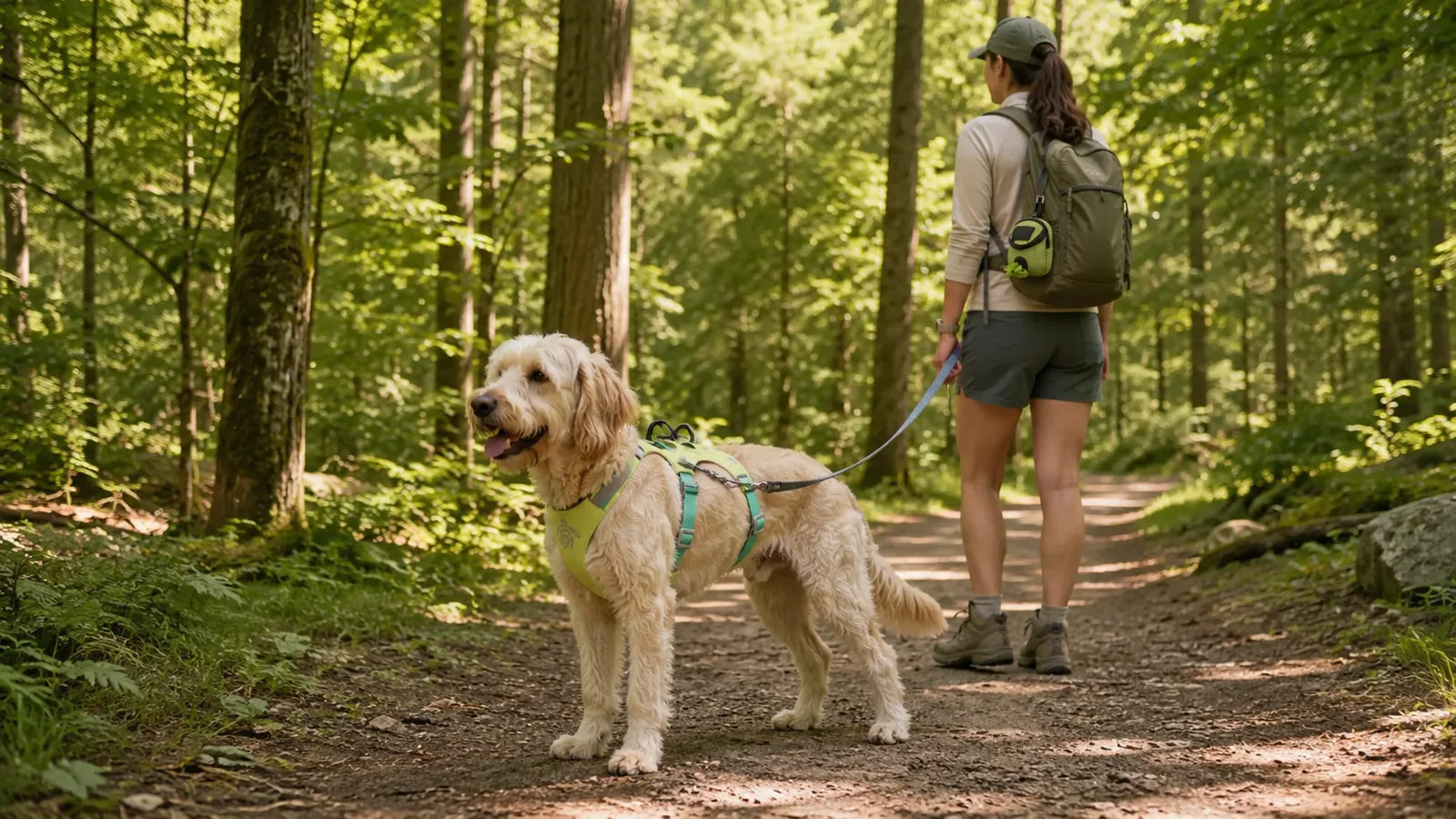
Walk & Explore
What to Pack for a Summer Day Hike With Your Dog
For a summer day hike with your dog, pack more than a leash and a shared water bottle. At minimum, bring water specifically for your dog, a portable drinking bowl, secure walking gear, current identification, waste bags, familiar treats, basic first-aid supplies, and a plan for shade and rest.
Read story
Walk & Explore
Is a Slip Lead Right for My Dog? A Practical Checklist
A slip lead is not the right default for every dog. Decide by how your dog walks, how comfortably they accept equipment, and whether you can avoid neck pressure. Persistent pulling, uncertain fit, or health concerns call for another setup or individual advice first.
Read story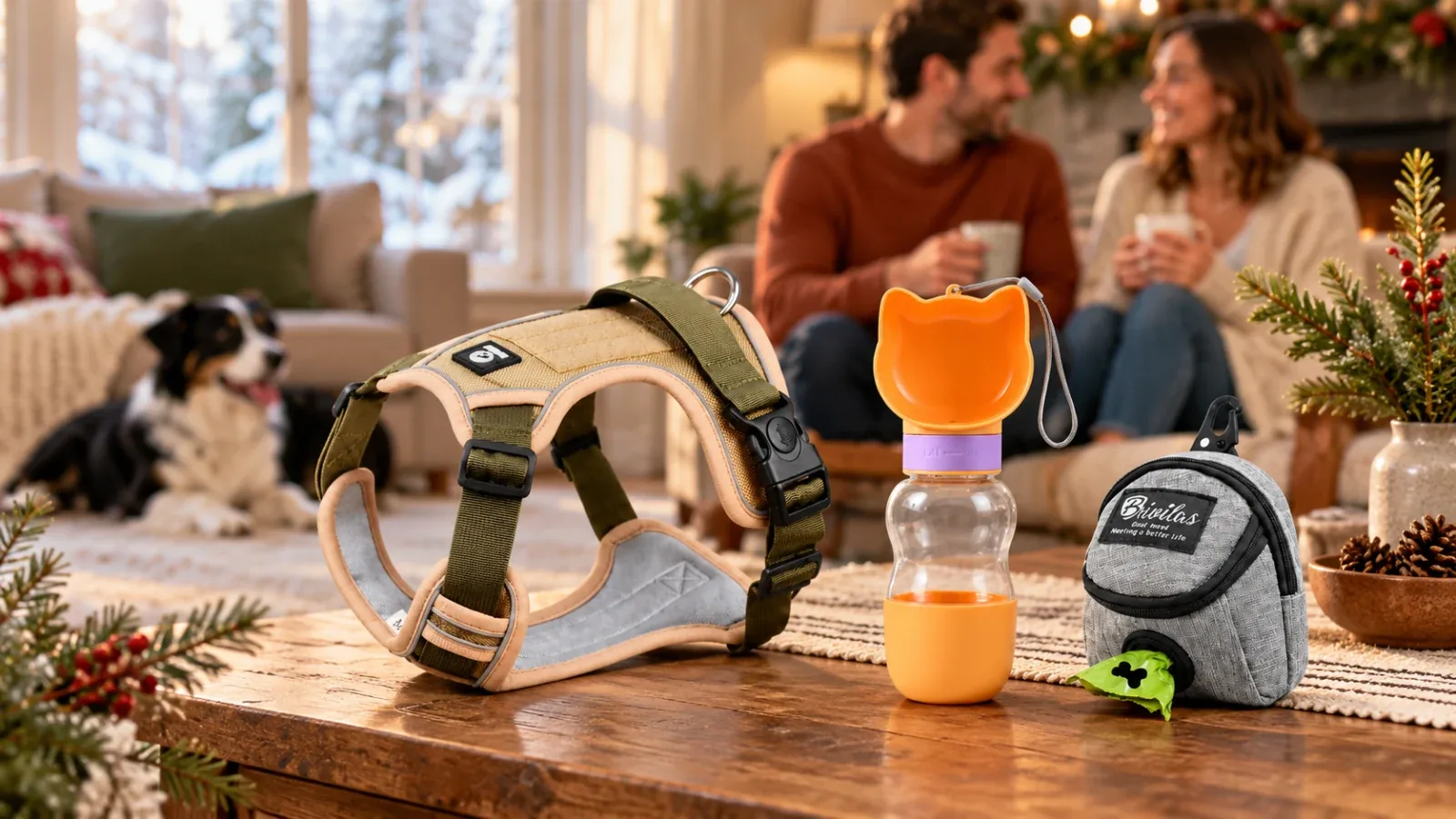
Walk & Explore
Holiday Walking Gifts for New Dog Owners: What to Choose
The most useful holiday walking gift for a new dog owner fits the dog and makes a daily task easier. If you know the dog's measurements and the owner's routine, a walking kit may work. If you do not, choose a lower-fit-risk item or select fitted gear together.
Read story