How to Walk a Dog in Hot Weather Safely
To walk a dog in hot weather, choose a cooler time, shorten the route, check the ground, bring water, and turn back if your dog seems uncomfortable. If heat or humidity is extreme, skip the outdoor walk.
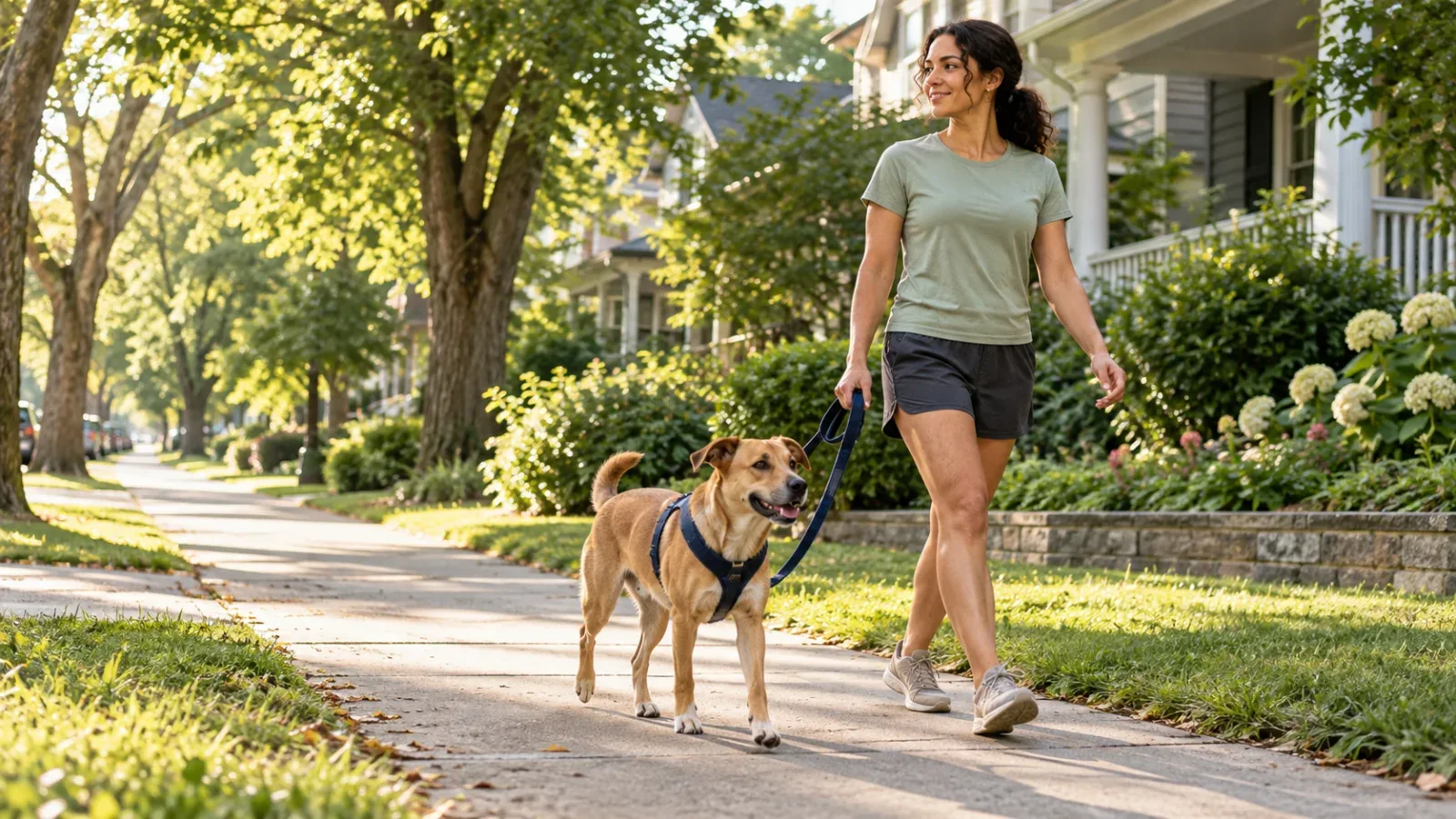
To walk a dog in hot weather, choose a cooler time, shorten the route, check the ground, bring water, and turn back if your dog seems uncomfortable. If heat or humidity is extreme, skip the outdoor walk.
There is no single temperature that makes every walk safe. Humidity, direct sun, pavement, fitness, age, body condition, coat, and health all matter. Use the conditions and your dog's behavior to decide whether to go, adjust, or stay home.
Start With a Go, Adjust, or Stay-Home Decision
Check the local forecast and conditions at your actual walking time, not only the day's high. The Cornell University College of Veterinary Medicine recommends limiting activity to cooler hours, using shade, avoiding strenuous exercise in hot or humid conditions, and keeping dogs indoors during extreme temperatures. Early morning or later evening may be more manageable, but a shaded route and a short outing can still be a better choice than a long walk.
Consider your individual dog. Cornell notes that all dogs can develop heatstroke, while short-nosed breeds, older dogs, dogs carrying excess weight, dogs with heart or breathing conditions, and some thick- or dark-coated dogs may need extra caution. If your dog has a health condition, is very young or old, or has struggled in warm weather before, ask your veterinarian what activity is appropriate.
Use this quick decision check:
| Conditions | Plan |
|---|---|
| Mild conditions, comfortable dog, shaded route | Take a normal but observant walk |
| Warm or humid conditions, limited shade | Choose a shorter route and frequent pauses |
| Extreme heat, very warm pavement, or dog already uncomfortable | Stay inside or choose a brief necessary outing |
These are planning choices, not medical thresholds. Change the plan if the forecast, surface, or your dog's behavior changes.
Check the Route and Ground Before You Leave
Look for shaded sidewalks, grass where dogs are allowed, access to water, and a simple way to return home. Avoid routes that require prolonged walking on exposed asphalt or have few places to pause. A loop close to home is easier to shorten than a route that leaves you far from shelter.
Pavement can become hotter than the air. Cornell explains that blacktop retains heat and can burn paw pads. Its guidance suggests checking whether you can keep your hand on the surface for about 10 seconds; if not, it is likely too hot for your dog's paws. Treat that as a quick caution check, not a guarantee that the entire route is comfortable. Shade, surface material, sun exposure, and temperature vary from block to block.
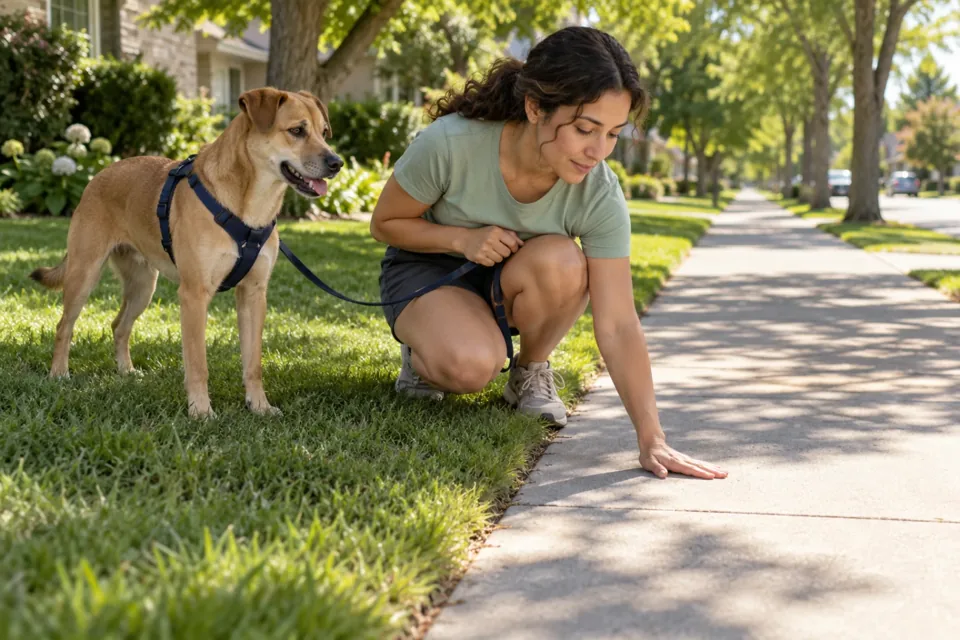
If the ground feels too hot, choose a cooler surface or postpone the walk. Do not try to solve a hot route by walking faster, carrying on because the distance is short, or relying on shoes or other gear as proof that conditions are safe. Check again after moving from shade to direct sun.
Pack Water and Keep the Outing Short
Bring enough clean water for your dog and for the length and conditions of the outing. Offer it during breaks, and do not wait until the dog is visibly distressed to find a water source. Cornell recommends frequent opportunities to drink and bringing water and a collapsible bowl when going out. The AVMA warm-weather guidance also advises bringing enough water for both you and your pet and taking frequent breaks.
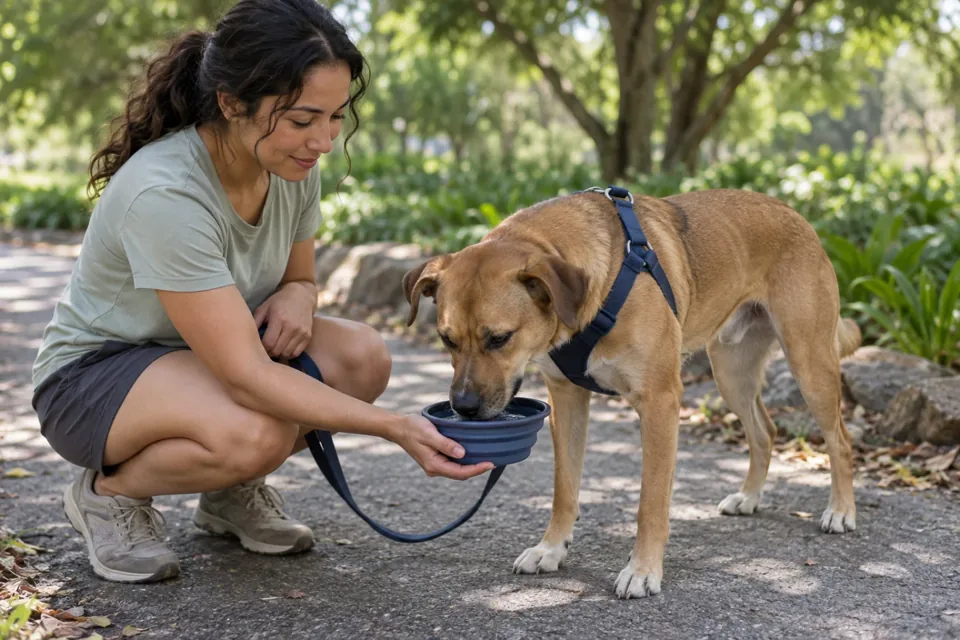
Choose a container you can reach quickly and use without setting up a long stop. The My FurMigo 2-in-1 Leakproof Dog Travel Water Bottle has a water chamber and built-in drinking trough, with a twist control and carry strap. It can make a planned water break easier to manage, but its listed capacity does not determine what your dog needs for a particular walk. Bring additional water when the route, weather, duration, or your dog's needs call for it.
Keep the walk easy enough that you can observe your dog rather than focusing on pace. Let the dog pause in shade, and head back while both of you still feel comfortable. A warm-weather walk does not need to reach a target distance to count as useful activity.
Watch for Changes and Stop Early
Pay attention to your dog's breathing, pace, posture, and willingness to continue. Cornell lists heavy panting, seeking shade, whining, reluctance to play, and drooling among possible early signs of overheating. These signs should prompt you to stop activity and move to a cooler place. Do not assume a dog will always stop before becoming unwell.
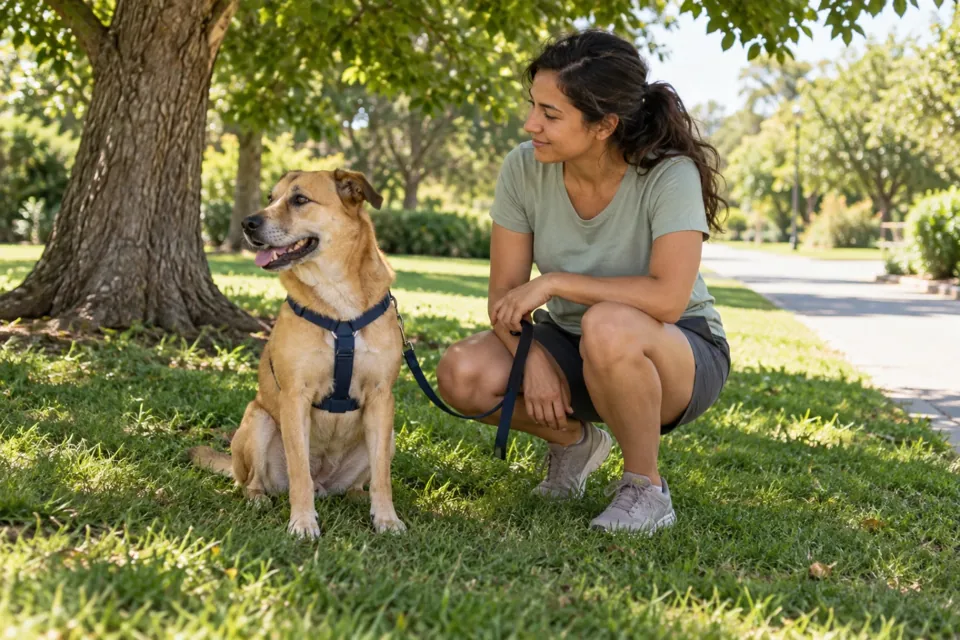
Move indoors or into air conditioning and offer water if your dog seems too warm. Cornell advises immediate veterinary attention when excessive panting or drooling continues, or when signs such as difficulty breathing, vomiting, weakness, confusion, seizures, or collapse occur. Heatstroke can be life-threatening; contact a veterinary hospital promptly if these signs appear.
Do not leave your dog alone in a parked car while you run an errand or finish a walk. The AVMA warns that warm-weather conditions can make a vehicle unsafe, even when outside temperatures may seem moderate. Plan the outing so your dog can return with you to a cool, supervised place.
A Simple Before-and-During Checklist
Before you leave
- Check the forecast and current conditions, including humidity and direct sun.
- Choose a short route with shade and an easy return.
- Test the pavement in the areas where your dog will walk.
- Bring clean water and a bowl or container your dog can use.
- Consider your dog's age, health, conditioning, and past response to heat.
During the walk
- Keep the pace relaxed and pause in shade.
- Offer water during breaks.
- Watch breathing, posture, pace, and interest in continuing.
- Turn back if the dog seeks shade, pants heavily, drools, slows, or appears uncomfortable.
- Skip hot or exposed sections even if they are part of the planned route.
Frequently Asked Questions
What time of day is best for walking a dog in hot weather?
Choose a cooler part of the day, often early morning or later evening, and check conditions at that time. Shade, humidity, the dog's health, and the ground temperature still matter.
How can I tell if pavement is too hot for my dog?
Cornell suggests checking whether you can keep your hand on the pavement for about 10 seconds. If it is too hot for your hand, choose another surface or wait. The check is a caution, not a guarantee that all nearby ground is cool.
Should I bring water on a short walk?
Consider the heat, humidity, route, and your dog's needs. In warm conditions, bringing water lets you offer a break without depending on a public fountain or stream. Ask your veterinarian about individual hydration needs.
What should I do if my dog starts panting heavily?
Stop the walk and move to a cooler place. If heavy panting continues or your dog has trouble breathing, vomits, becomes weak or confused, has a seizure, or collapses, contact a veterinary hospital immediately.
Is a short walk enough on a very hot day?
It can be more sensible to shorten or skip an outdoor walk when conditions are uncomfortable or extreme. Choose indoor activity or a brief necessary outing rather than trying to complete a usual distance.
Conclusion
Plan around the conditions you and your dog encounter, not a fixed mileage goal. Check the surface, carry water, use shade, and head home early when your dog or the weather calls for a change. When the day is too hot, postponing the walk is a practical part of good care.
Shop this story
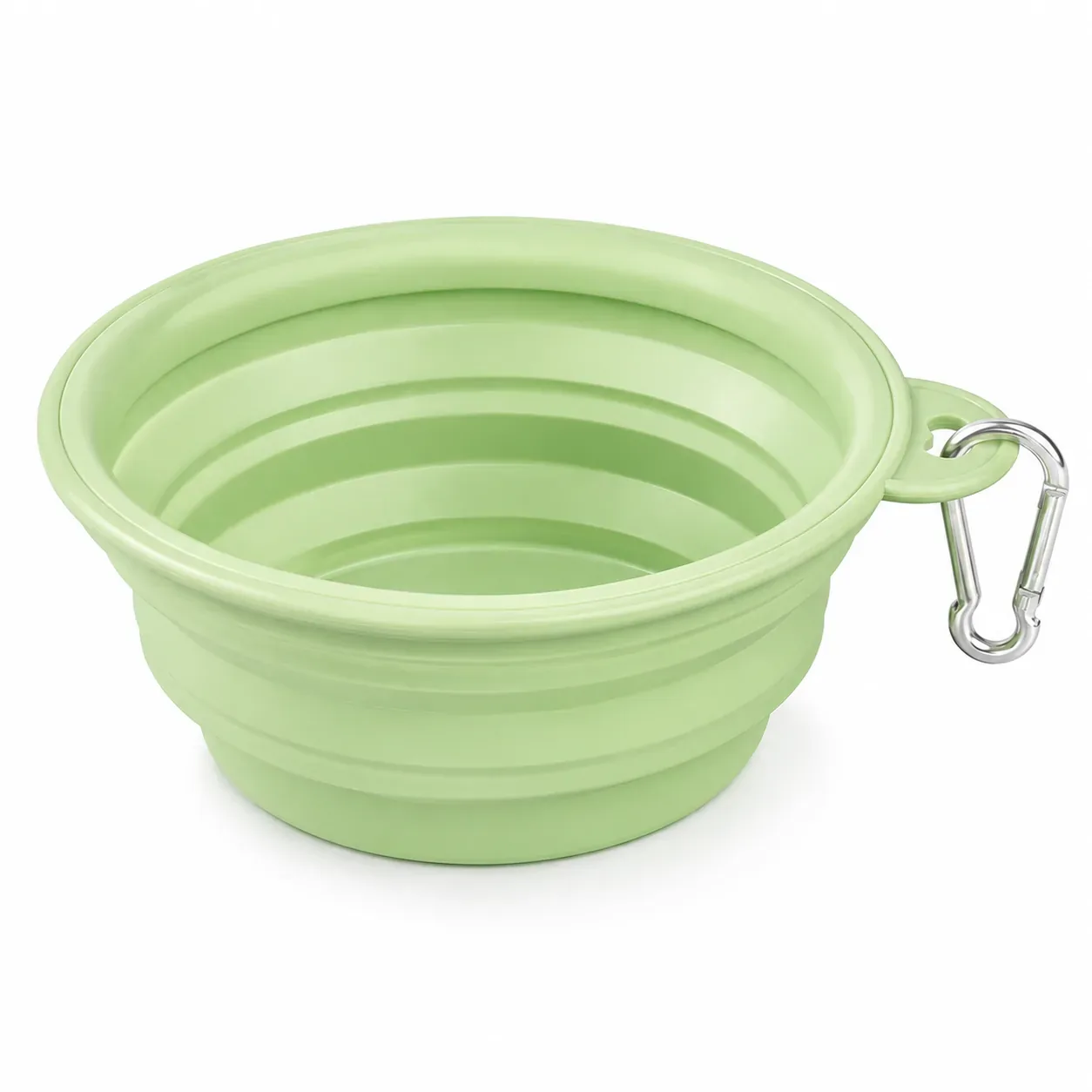
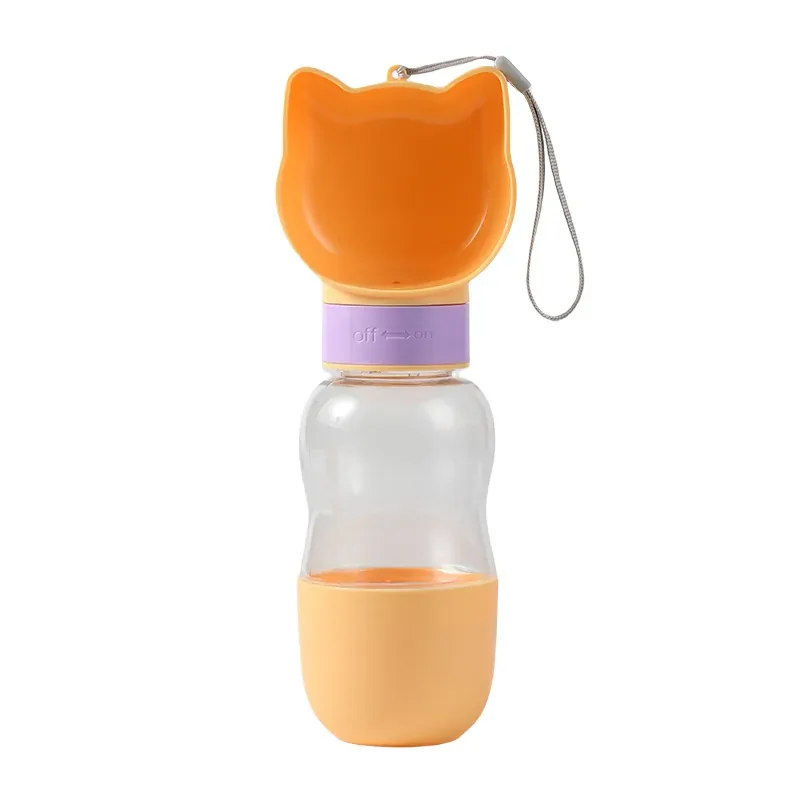 Some options unavailable
Adventure Gear
2-in-1 Leakproof Dog Travel Water Bottle
5.0 (2)$20.79
Some options are still available
Continue exploring
Walk & Explore
What to Pack for a Summer Day Hike With Your Dog
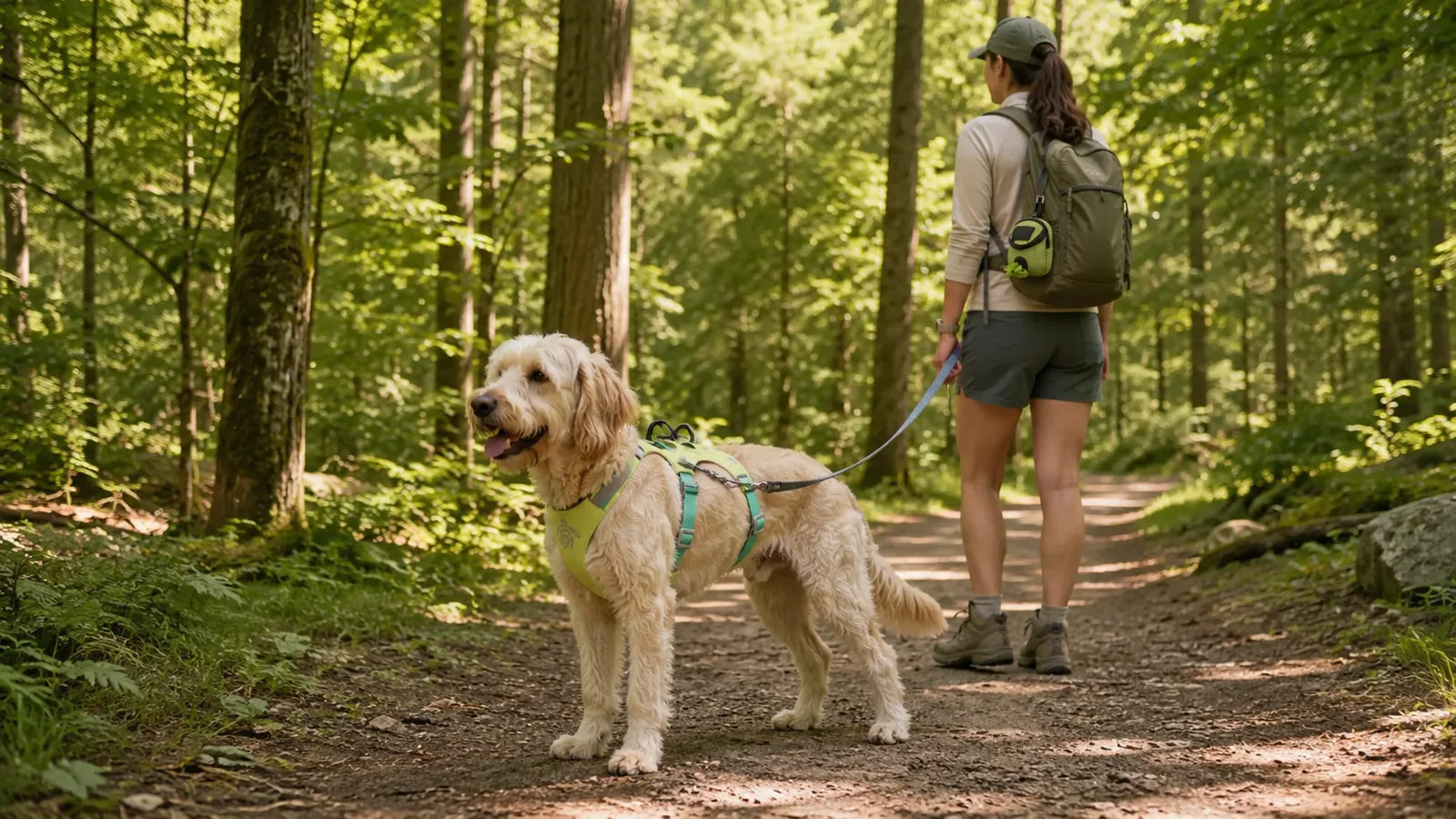
For a summer day hike with your dog, pack more than a leash and a shared water bottle. At minimum, bring water specifically for your dog, a portable drinking bowl, secure walking gear, current identification, waste bags, familiar treats, basic first-aid supplies, and a plan for shade and rest.
Read story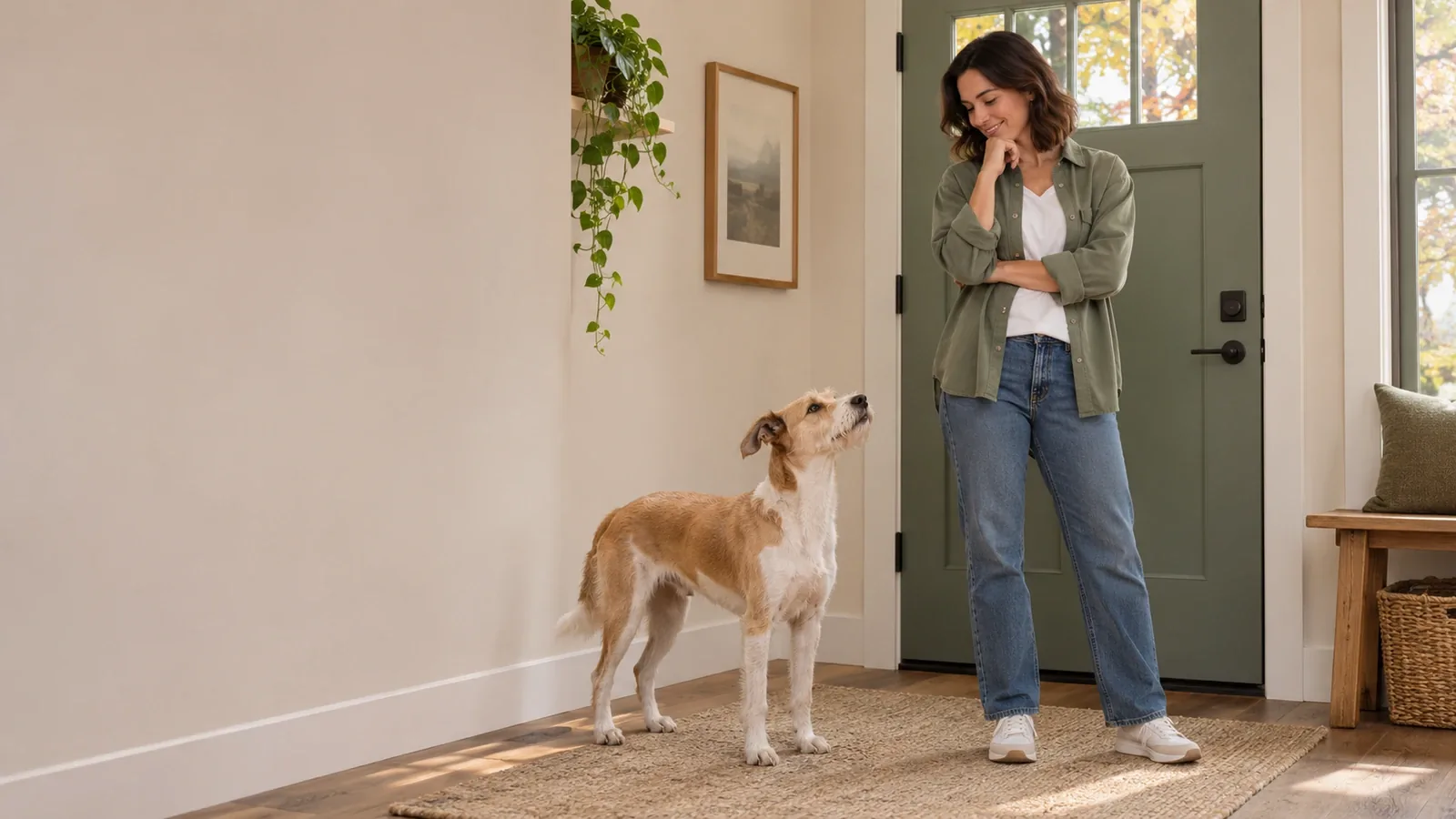
Walk & Explore
Is a Slip Lead Right for My Dog? A Practical Checklist
A slip lead is not the right default for every dog. Decide by how your dog walks, how comfortably they accept equipment, and whether you can avoid neck pressure. Persistent pulling, uncertain fit, or health concerns call for another setup or individual advice first.
Read story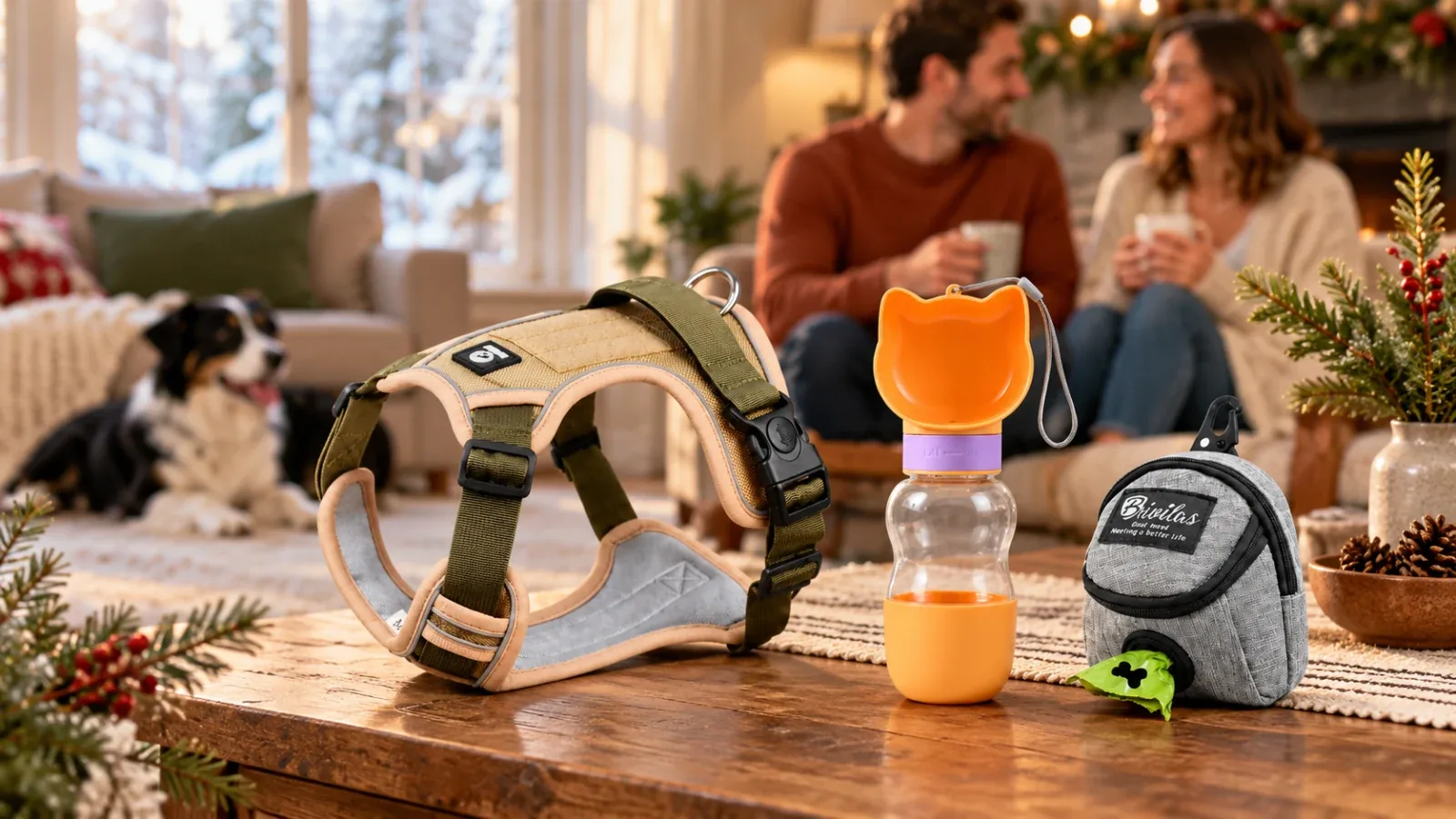
Walk & Explore
Holiday Walking Gifts for New Dog Owners: What to Choose
The most useful holiday walking gift for a new dog owner fits the dog and makes a daily task easier. If you know the dog's measurements and the owner's routine, a walking kit may work. If you do not, choose a lower-fit-risk item or select fitted gear together.
Read story