How to Measure a Small Dog for a Raincoat
Measure your small dog's neck, chest at its widest point, and back from the collar area to the base of the tail while your dog stands naturally. Record weight separately, compare every number with the brand's chart, and test movement before keeping the raincoat.
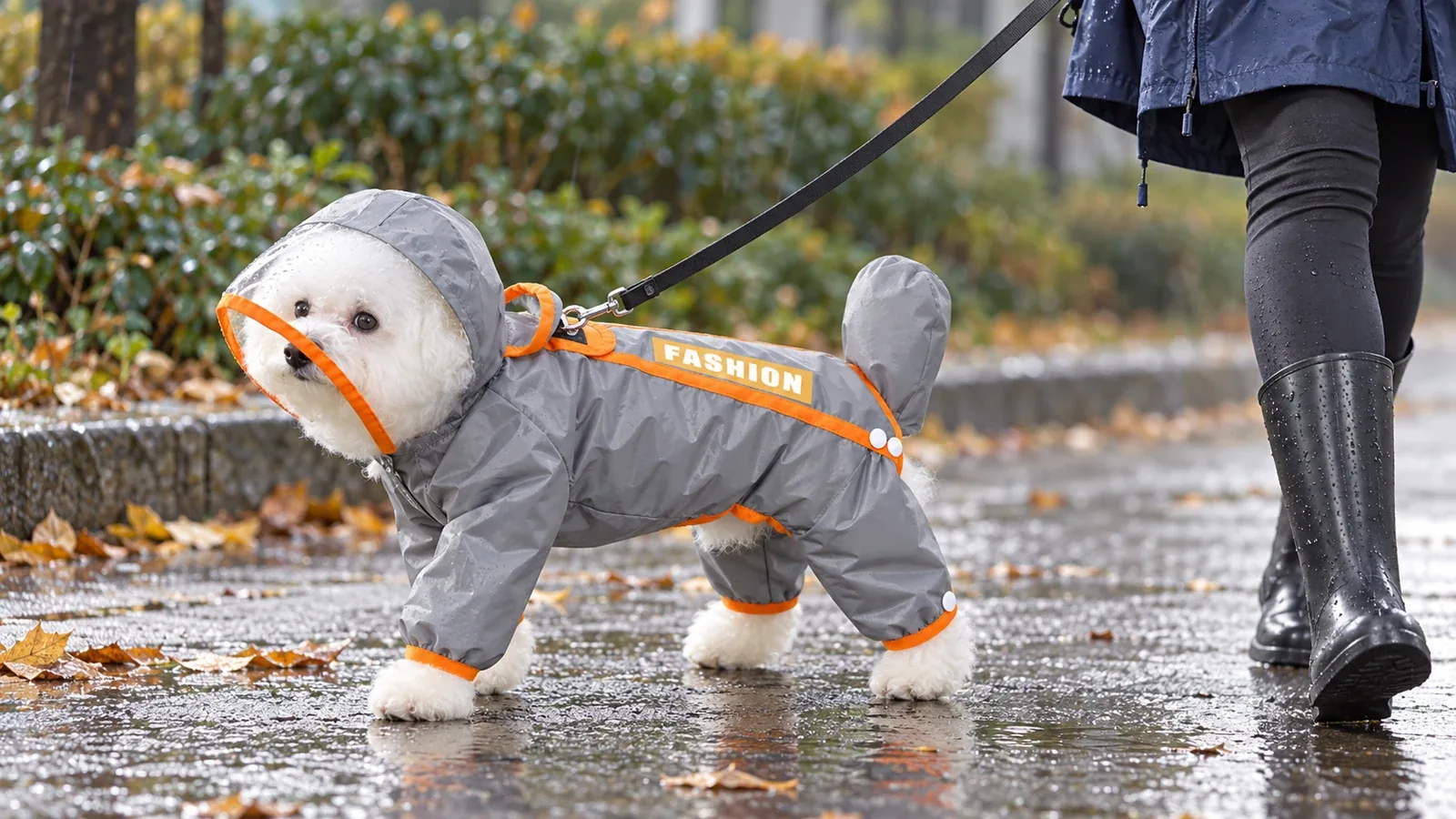
Measure your small dog's neck, chest at its widest point, and back from the collar area to the base of the tail while your dog stands naturally. Record weight separately, compare every number with the brand's chart, and test movement before keeping the raincoat.
Small dogs with equal weight can have different proportions. A useful raincoat size stays in place without tightening at the neck or chest, shortening the dog's stride, covering the eyes, or interfering with toileting.
Gather the Right Measuring Tools
You need only a few items:
- A soft tailor's measuring tape
- Your dog's current weight
- A note on your phone or paper
- A second person or a few treats if your dog has trouble standing still
- The exact size chart for the raincoat you plan to buy
Measure over the dog's coat, not a sweater or harness, unless instructed otherwise. Keep the tape flat without pulling tight. Take each measurement twice.
Do not estimate by breed. “Small,” “medium,” and “terrier mix” do not describe chest depth, back length, or neck shape accurately enough for clothing.
Take Three Measurements While Your Dog Stands
Have your dog stand squarely on a non-slip floor with the head in a neutral position. A sitting dog changes the chest and back shape, which can make the result less useful.
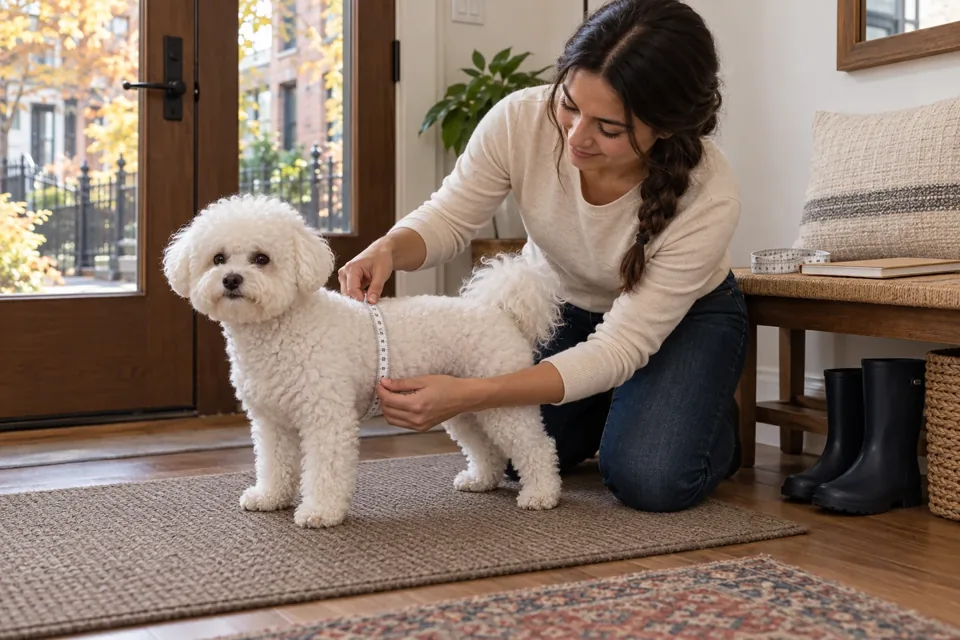
1. Measure the neck
Wrap the tape around the lower neck where a collar normally rests. Keep it level and do not measure high behind the ears. Record the circumference without adding your own allowance unless the product chart tells you to do so.
2. Measure the chest
Find the widest part of the rib cage, usually just behind the front legs. Pass the tape around the body, keep it parallel to the floor, and check that fur is not trapped under a twisted tape. Chest circumference often determines whether a coat can fasten without restricting the front legs.
3. Measure the back
Measure along the topline from the collar area at the base of the neck to the base of the tail—not to the tip of the tail. The tape should follow the back without dipping down the sides.
Both PDSA's dog-coat guide and the American Kennel Club's raincoat guidance identify neck, chest, and neck-to-tail length as useful measurements for fit.
Record Weight, but Do Not Use It Alone
Weight can narrow a size chart, but dogs at the same weight may have different chest depths, leg lengths, and back lengths.
Use this order when comparing a size chart:
| Check | Why it matters | What to do if it conflicts |
|---|---|---|
| Chest | Affects fastening and front-leg movement | Follow the brand's fit rule or ask the seller |
| Back length | Affects coverage and tail clearance | Avoid fabric extending beyond the intended endpoint |
| Neck | Affects comfort and hood position | Reject pressure or gaping that shifts the coat |
| Weight | Helps narrow the listed range | Do not let weight override incompatible measurements |
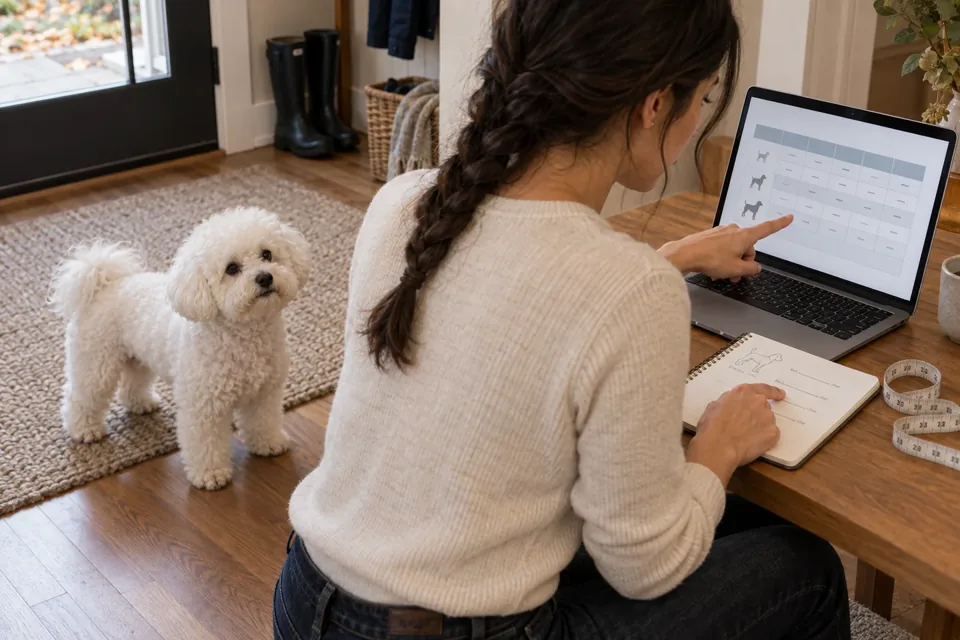
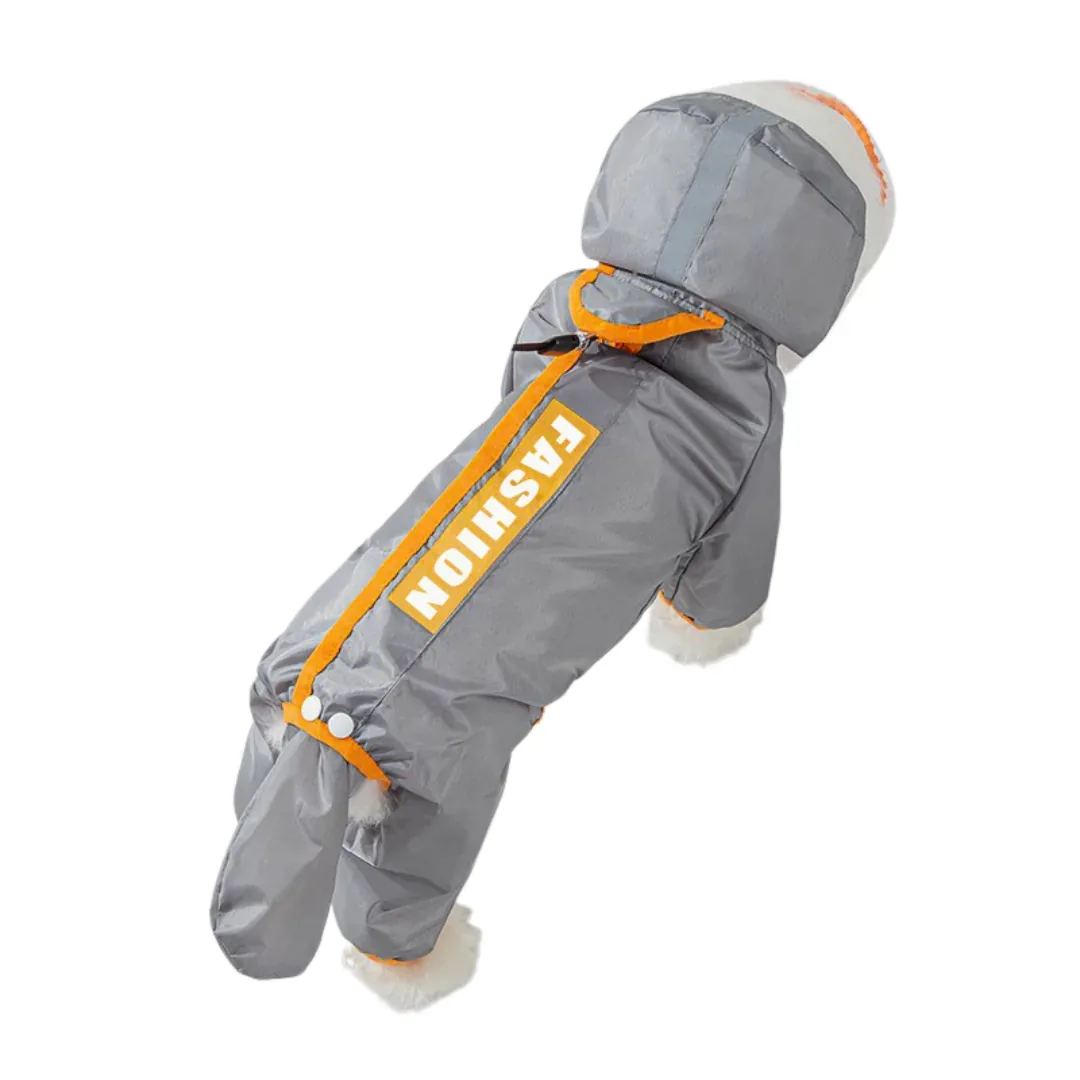
The My FurMigo Full-Cover Waterproof Dog Raincoat is currently listed in XS through XXL, with each size presented as a dog-weight band from 1–3 pounds (0.5–1.5 kg) through 17–22 pounds (7.5–10 kg). Treat those bands as a starting point. If your dog's body measurements do not fit the garment comfortably, weight alone does not make that size suitable.
If your dog falls between sizes, do not automatically size up or down. Look at the product's adjustment method and ask the seller which body measurement takes priority. A larger full-cover coat can create excess fabric around the legs or tail; a smaller one can limit stride or pull at the closures.
Test the Raincoat Indoors Before a Wet Walk
Keep tags and packaging during a clean indoor fit test. Let your dog inspect the coat, then put it on without forcing the legs or hood.
The first test should answer five questions:
- Can your dog stand with a normal posture?
- Can your dog walk, turn, sit, and lie down without shortened steps?
- Do the neck, chest, and leg openings stay flat without digging in?
- Can your dog urinate and defecate without fabric in the way?
- Does the coat remain centered instead of rotating or sliding forward?
PDSA advises that a dog should be able to move and perform normal activities in a coat. Scratching at the coat, biting it, or rubbing against the floor or furniture can indicate irritation or poor fit.
Check Every Full-Cover Component
A full-cover raincoat needs extra checks because its hood, legs, tail area, and leash path can each affect fit.
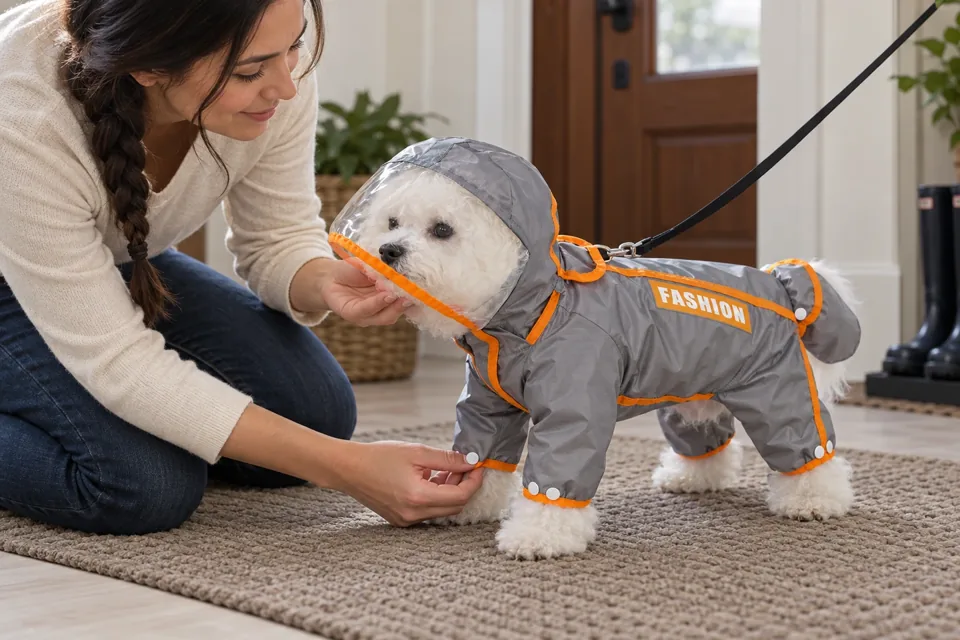
Hood and vision
Check the hood with your dog looking forward, down, and to both sides. It should not press on the eyes, fold across the nose, or prevent normal head movement. Transparent material does not guarantee correct positioning; fit still determines whether the face remains clear.
Front and rear legs
Watch your dog walk toward you, away from you, and across the room. Openings should not pull into the armpits or change the natural stride. Trouser sections should not drag on the ground or twist around a leg.
Tail and toileting clearance
Lift and lower any detachable tail section as directed, then confirm that the coat does not press on the tail base or cover toileting areas. A tail cover is optional coverage, not a reason to accept restricted movement.
Harness and leash access
The My FurMigo raincoat has a hidden leash opening intended for access to a harness beneath the coat. Put on the exact harness your dog will use, route the leash through the opening, and check that neither item pulls the other out of position. Do not clip a leash to fabric, trim, or another point unless the product explicitly identifies it as load-bearing.
The product page lists polyester taffeta with an EVA hood, reflective strips, quick-drying fabric, and a detachable tail cover. These are construction details, not a substitute for fit, a secure leash setup, supervision, or judgment about whether the weather suits your dog.
Run a Short Dry-Walk Test
Before walking in rain, test indoors or in a dry area. Watch from the front, back, and side while your dog:
- Walks at a normal pace
- Turns in both directions
- Steps over a low curb or threshold
- Stops to sniff
- Squats or lifts a leg as they normally would
Stop if the coat slips, catches a paw, causes repeated shaking or freezing, blocks vision, or changes the gait. Repositioning the same poor fit throughout a walk is not a solution.
Recheck Fit During the First Rain Walk
Choose a short familiar route for the first wet-weather test. Wet fabric can sit differently than dry fabric, and a dog may move differently around puddles or wind.
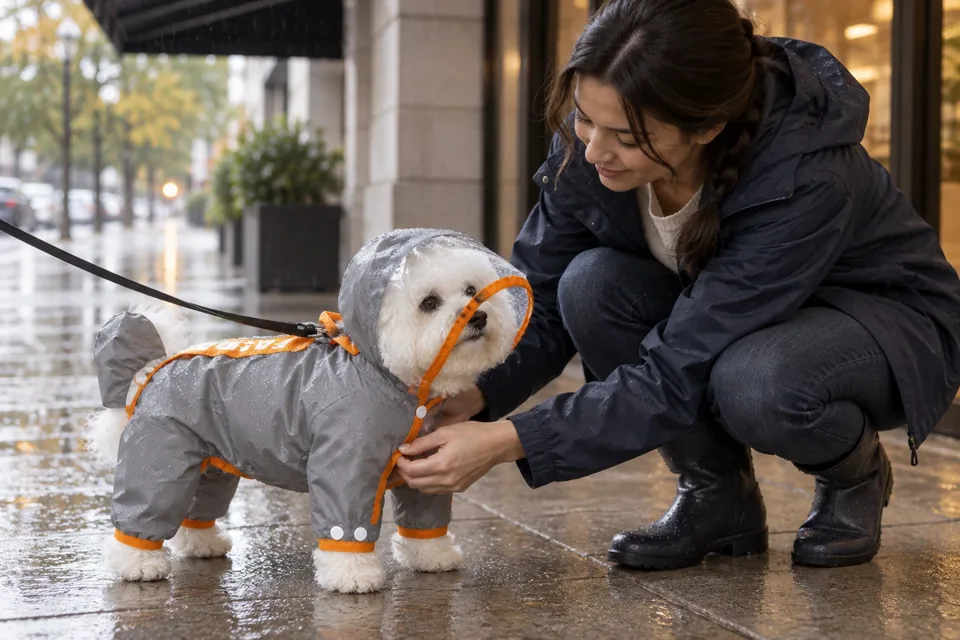
After a few minutes, pause under cover and check the hood, neck, chest, leg openings, leash path, and tail area. Keep your dog on lead near roads. The Blue Cross road-safety guidance also recommends considering reflective collars, harnesses, and leads to help dogs be seen in darkness; reflective trim on a coat does not guarantee that every road user will notice you.
End the walk if your dog appears uncomfortable, cold, distressed, or unwilling to continue. Individual tolerance varies with health, coat, size, wind, temperature, and rain intensity. Ask your veterinarian about wet- or cold-weather outings if your dog has a medical condition or unusual sensitivity.
Remove, Dry, and Inspect the Coat
After the walk, remove the coat before your dog settles indoors. Check the skin and fur around the neck, chest, armpits, legs, and tail base for dampness or rubbing. A fit that looked acceptable at the start may still create friction during movement.
Follow the product's current care instructions. My FurMigo directs owners to hand wash this raincoat in cold water with mild detergent, hang it to dry, and store it completely dry. Do not bleach, tumble dry, or iron it.
Small-Dog Raincoat Fit Checklist
- Neck, chest, back length, and weight recorded
- Exact brand size chart checked
- Dog can stand, walk, turn, sit, and lie normally
- Hood leaves eyes, nose, and head movement clear
- Leg openings do not pull, twist, or drag
- Tail and toileting areas remain unobstructed
- Harness and leash opening align without tension
- Coat stays centered during a dry test walk
- Fit is checked again after the fabric gets wet
- Coat is removed, cleaned as directed, and dried fully
Frequently Asked Questions
Where should I measure a dog's chest for a raincoat?
Measure around the widest part of the rib cage, usually just behind the front legs. Keep the soft tape level and snug against the fur without tightening it.
Is weight enough to choose a dog raincoat size?
No. Weight can narrow the options, but dogs of equal weight can have different neck, chest, back, and leg proportions. Compare body measurements and follow the brand's sizing instructions.
How tight should a dog raincoat be?
It should stay centered without squeezing the neck, chest, or leg openings. Your dog should move, sit, lie down, and toilet normally. Use the maker's fit instructions rather than adding an arbitrary allowance.
What if my dog is between two sizes?
Check which measurement the brand prioritizes and contact the seller if that is unclear. Do not assume larger is always better, especially with full-leg clothing that can drag or twist when oversized.
Should a raincoat hood cover a dog's ears?
Follow the product design, but confirm that the hood does not press on the eyes, obstruct the nose, or limit normal head movement. Remove or reposition it if your dog cannot see and move comfortably.
Why does my dog freeze or walk strangely in a raincoat?
The garment may feel unfamiliar or may restrict movement. Remove it, inspect the fit, and introduce clothing gradually in short indoor sessions. Persistent distress means the current coat or design may not suit your dog.
Conclusion
Measure first, use weight only as a starting point, and let movement decide whether a small-dog raincoat fits. Check the neck, chest, back, hood, legs, tail area, and leash path indoors, then repeat the inspection during a short wet walk before relying on the coat for regular outings.
Shop this story
Continue exploring
Walk & Explore
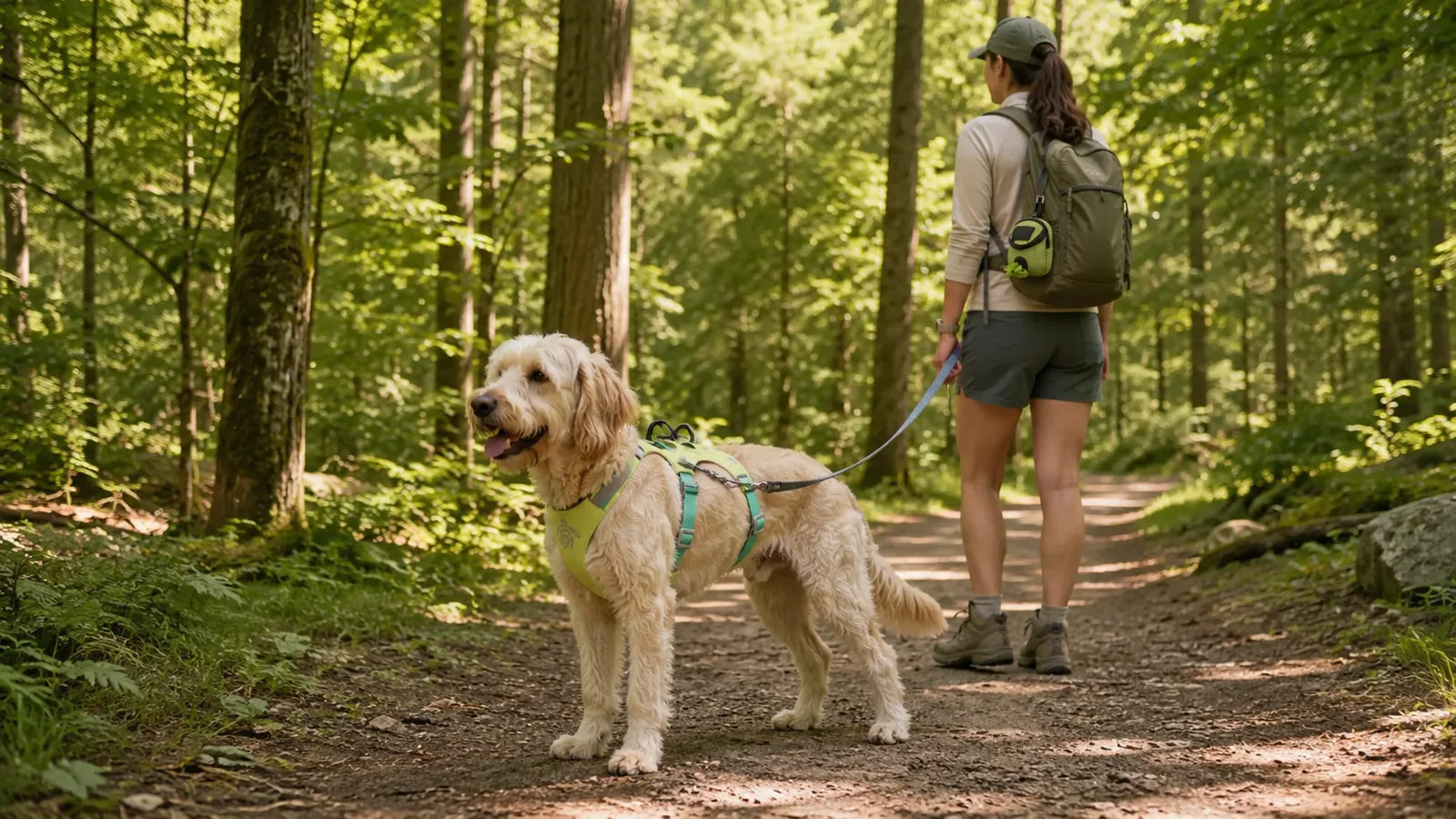
What to Pack for a Summer Day Hike With Your Dog
For a summer day hike with your dog, pack more than a leash and a shared water bottle. At minimum, bring water specifically for your dog, a portable drinking bowl, secure walking gear, current identification, waste bags, familiar treats, basic first-aid supplies, and a plan for shade and rest.
Read story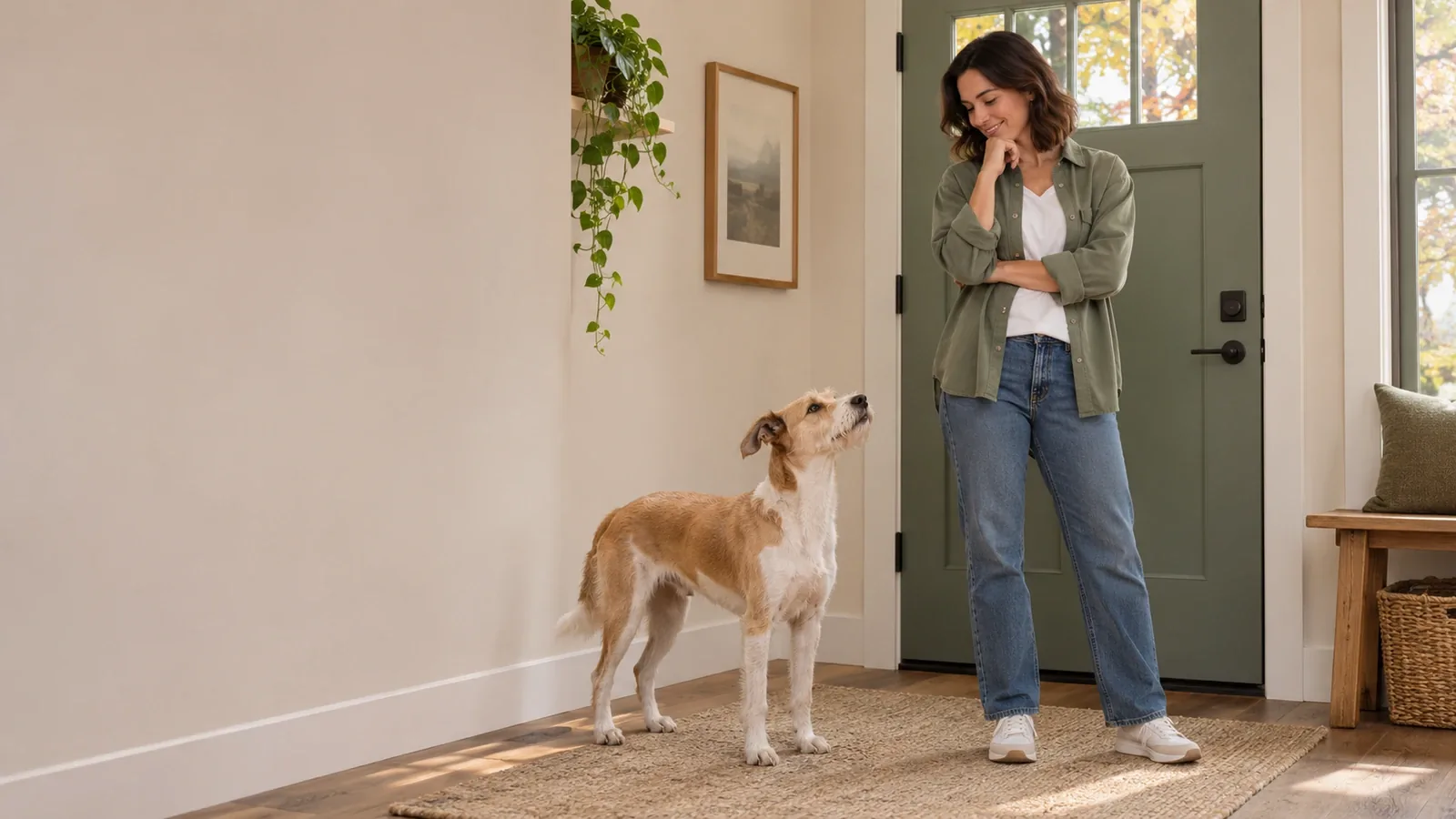
Walk & Explore
Is a Slip Lead Right for My Dog? A Practical Checklist
A slip lead is not the right default for every dog. Decide by how your dog walks, how comfortably they accept equipment, and whether you can avoid neck pressure. Persistent pulling, uncertain fit, or health concerns call for another setup or individual advice first.
Read story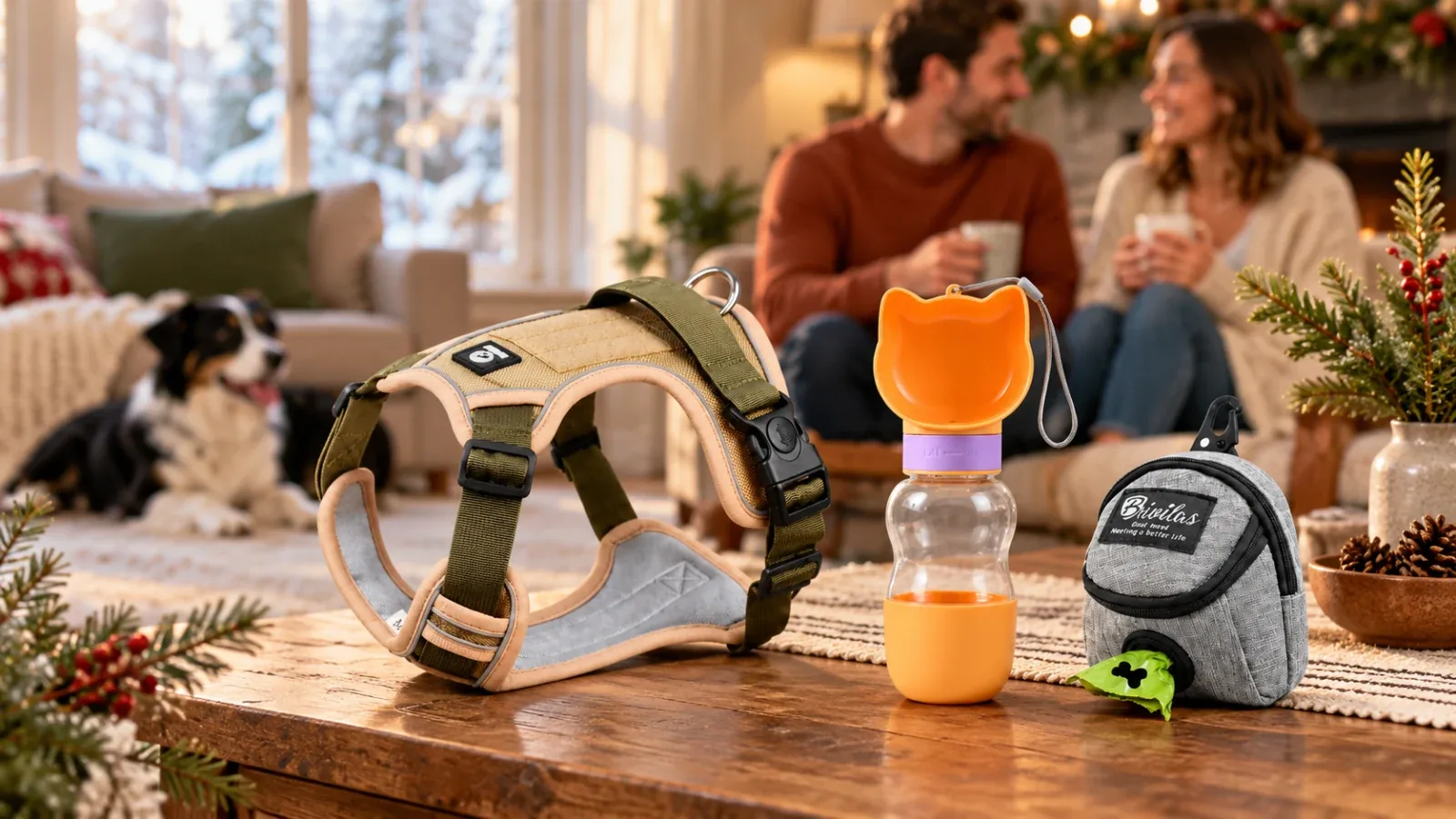
Walk & Explore
Holiday Walking Gifts for New Dog Owners: What to Choose
The most useful holiday walking gift for a new dog owner fits the dog and makes a daily task easier. If you know the dog's measurements and the owner's routine, a walking kit may work. If you do not, choose a lower-fit-risk item or select fitted gear together.
Read story