How Tight Should a Dog Harness Be?
A dog harness should sit snugly enough that it does not rotate, gap, or slide over the head, but loosely enough for normal breathing, shoulder movement, and skin comfort. Start with two flat fingers under a strap, then confirm the fit while your dog stands, walks, turns, and sits.
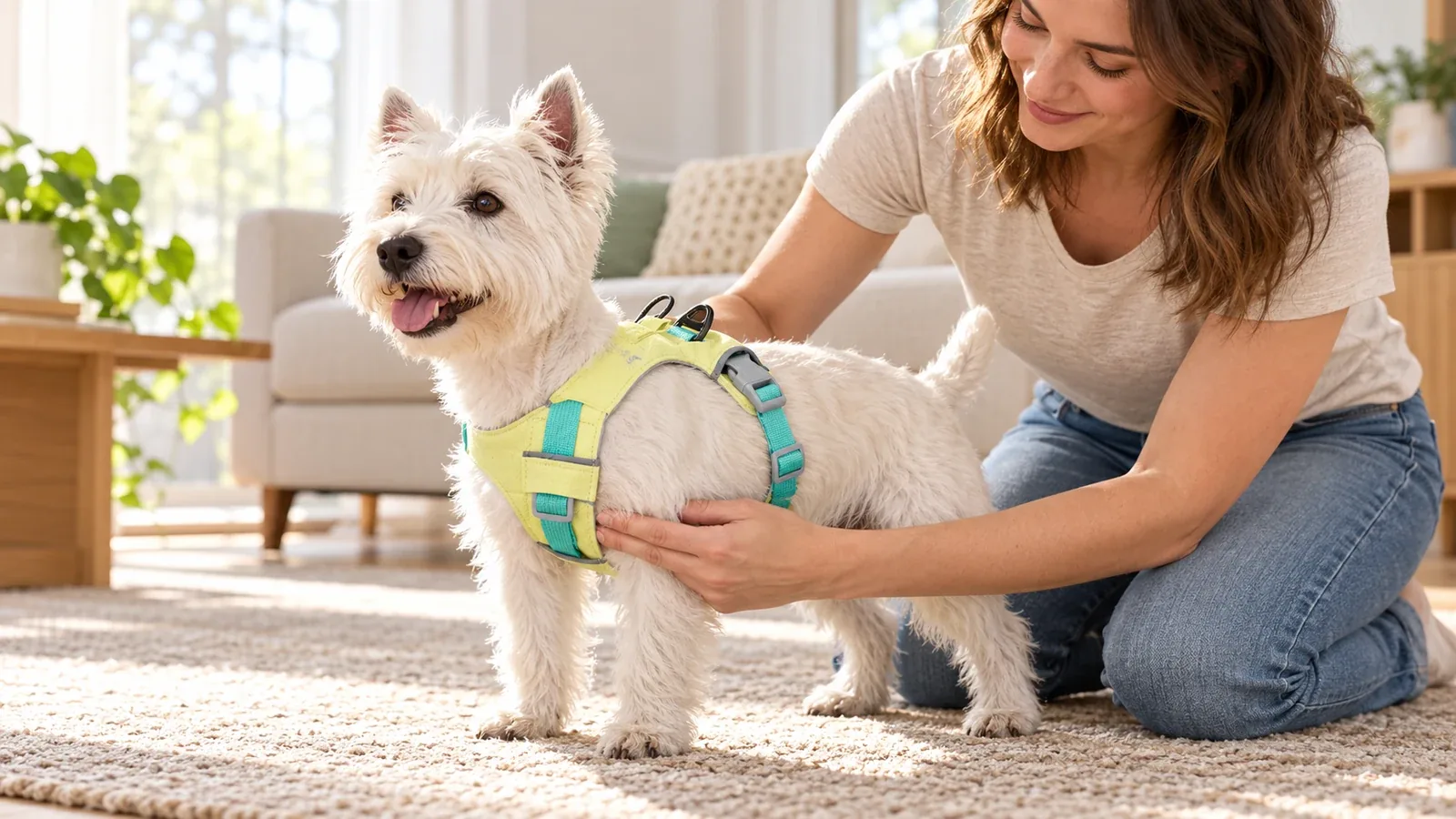
A dog harness should sit snugly enough that it does not rotate, gap, or slide over the head, but loosely enough for normal breathing, shoulder movement, and skin comfort. Start with two flat fingers under a strap, then confirm the fit while your dog stands, walks, turns, and sits.
Finger spacing alone cannot account for coat thickness, body shape, strap width, or harness design. A reliable fit check combines measurements, strap position, movement, and a skin inspection after the walk.
Measure Before Adjusting
Use the manufacturer's size guide rather than choosing by weight alone. With your dog standing naturally, measure around the widest part of the chest, usually just behind the front legs. If the harness also lists a neck measurement, measure where that opening will actually sit instead of using the collar line automatically.
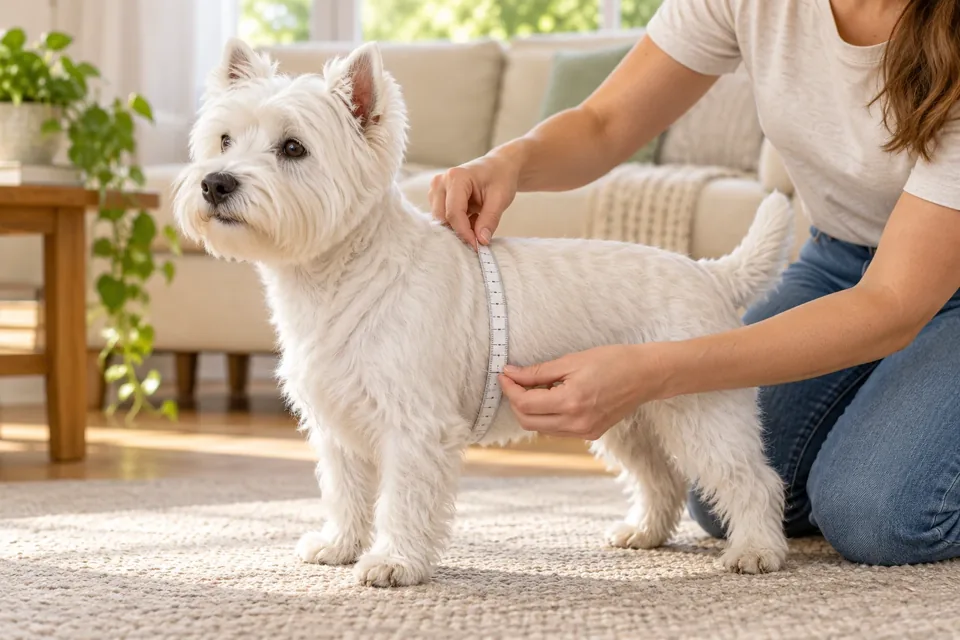
Keep the tape level and close to the coat without compressing it. Record the measurement and compare it with the current product chart. If your dog falls between sizes, check which size keeps the dog inside the adjustable range at both the neck and chest. Do not assume the larger or smaller option will always be better.
Recheck growing dogs, dogs whose weight changes, and dogs with seasonal coat changes. A harness that fit over a winter coat may rotate after shedding; a previously comfortable strap can become tight after growth or weight gain.
Use the Two-Finger Check as a Starting Point
The common two-finger check is useful, but it is not a complete test. Slide two flat fingers between the strap and the dog's body. They should move without force, yet the strap should not stand away from the coat or allow the whole harness to twist freely.
Finger size varies, and thick fur can create false space. More importantly, different areas of a harness behave differently. A chest strap may need enough room for expansion during breathing, while an overly loose neck opening can create an escape route. Continue with the four-zone check.
Check Four Fit Zones
1. Neck opening
The opening should sit on the lower neck or upper chest as the design intends, not press into the throat. Gently move the harness forward. It should not slip easily over the dog's head or cover the base of the ears.
2. Shoulder area
Look for straps or panels crossing the front of the shoulder joint. Ask your dog to take several natural steps. The shoulder should move without a strap digging in, pulling backward, or forcing a shortened stride.
3. Chest and armpits
The chest strap should lie flat rather than curl or pinch. Keep the edge behind the front legs with enough clearance to avoid repeated rubbing in the armpits. The exact distance depends on the dog's build and the harness shape.
4. Buckles, rings, and adjustment points
Buckles should lie flat and close fully. Webbing should not be twisted, and loose strap ends should not dangle into the dog's legs. Pull gently at the leash ring: the harness may shift slightly, but it should not roll dramatically to one side.
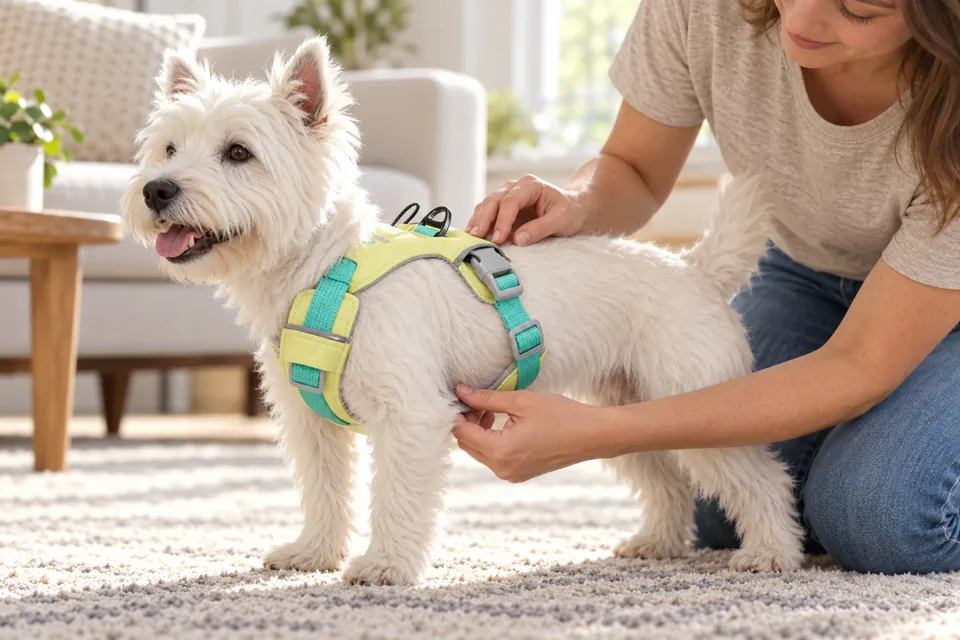
Run a Short Movement Test
Fit the harness indoors and attach the leash. Ask your dog to walk, turn both directions, sit, stand, and take a few steps backward. Watch the harness rather than pulling the leash tight throughout the test.
Look for:
- normal, even front-leg reach;
- a centered chest panel;
- straps that remain flat;
- no coughing, gagging, freezing, or repeated scratching;
- no leg slipping through an opening;
- no buckle contacting the elbow or armpit.
Then take a short, calm walk in a low-distraction area. Recheck the straps after several minutes because webbing can settle into the coat. If the harness repeatedly rotates, tighten in small equal steps where the design allows. If tightening stops rotation but creates rubbing or restricts movement, the shape or size may be wrong.
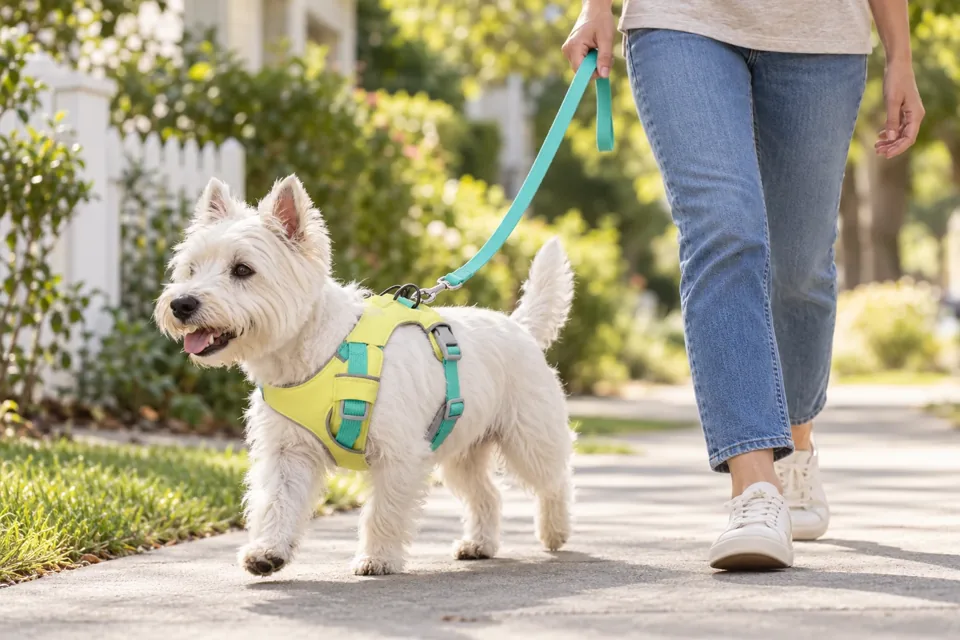
Recheck under gentle leash tension
A harness can look centered while the leash is slack and shift when the dog reaches the end of the line. In a quiet area, apply only light, steady leash tension from directly behind, then from each side. Watch where the chest panel and neck opening move. Release immediately; this is a fit observation, not a pulling exercise.
The harness should return near center rather than remain twisted. A buckle should not roll into the armpit, and the neck opening should not climb into the throat. If normal walking produces large shifts, first confirm that paired adjustment points are even. When adjustment cannot solve the problem without creating pressure elsewhere, choose another size or shape.
Inspect the Coat and Skin After the Walk
Remove the harness and part the coat at the chest, under the front legs, around the neck opening, and beneath buckles. Mild temporary coat flattening can occur. Redness, broken hair, damp friction spots, tenderness, or a repeated pattern of scratching means the setup needs attention.
Check hardware and stitching at the same time. Replace a harness with cracked buckles, torn webbing, loose stitching, or a damaged leash ring. Washing will not correct structural wear.
When a Different Harness Is the Better Fix
Do not keep tightening a design that conflicts with your dog's body. Consider another size or cut when:
- the neck fits but the chest cannot be adjusted correctly;
- the chest fits but the dog can back out through the neck;
- the panel sits directly in the armpits in every adjustment;
- the harness rotates even during loose-leash walking;
- your dog changes gait or avoids movement while wearing it.
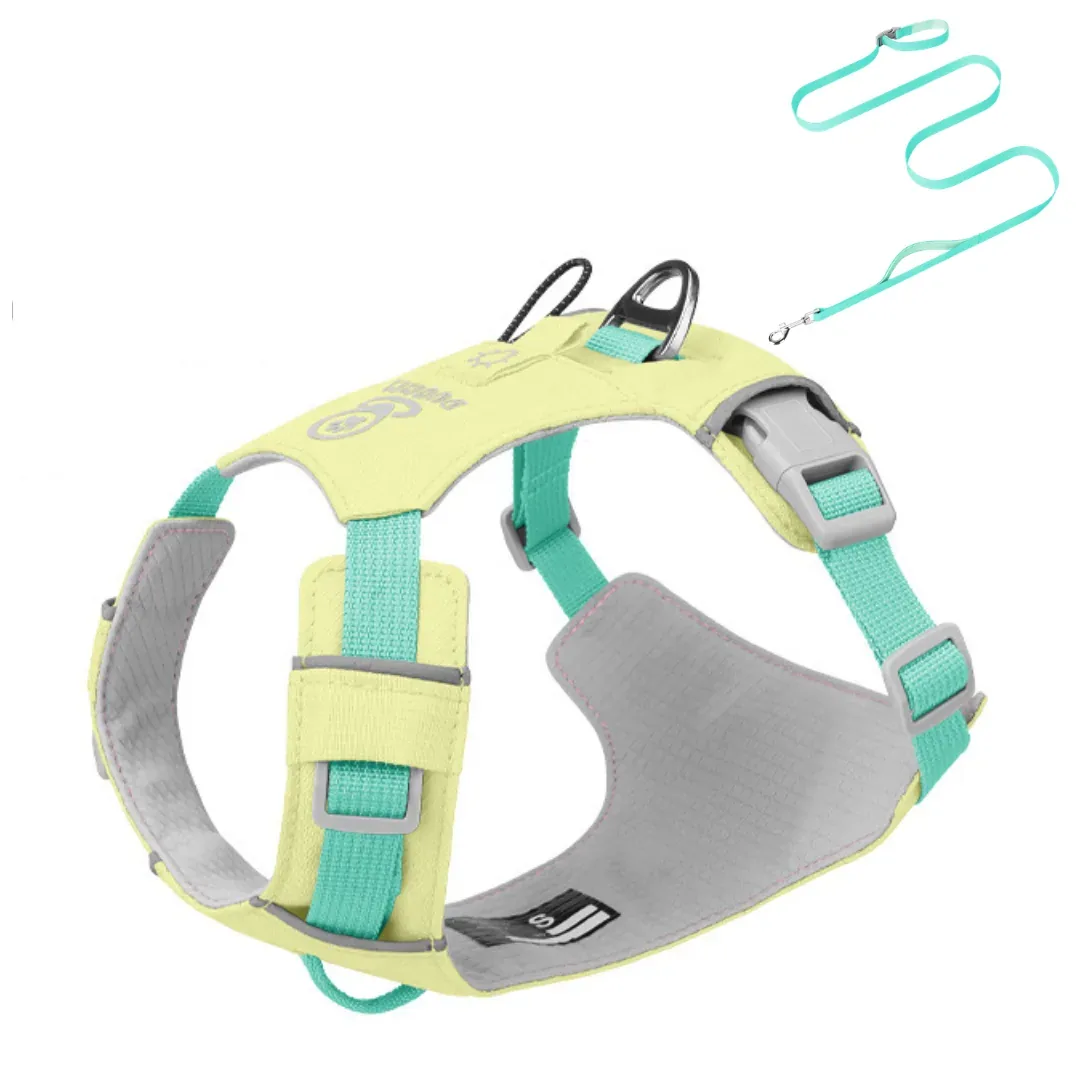
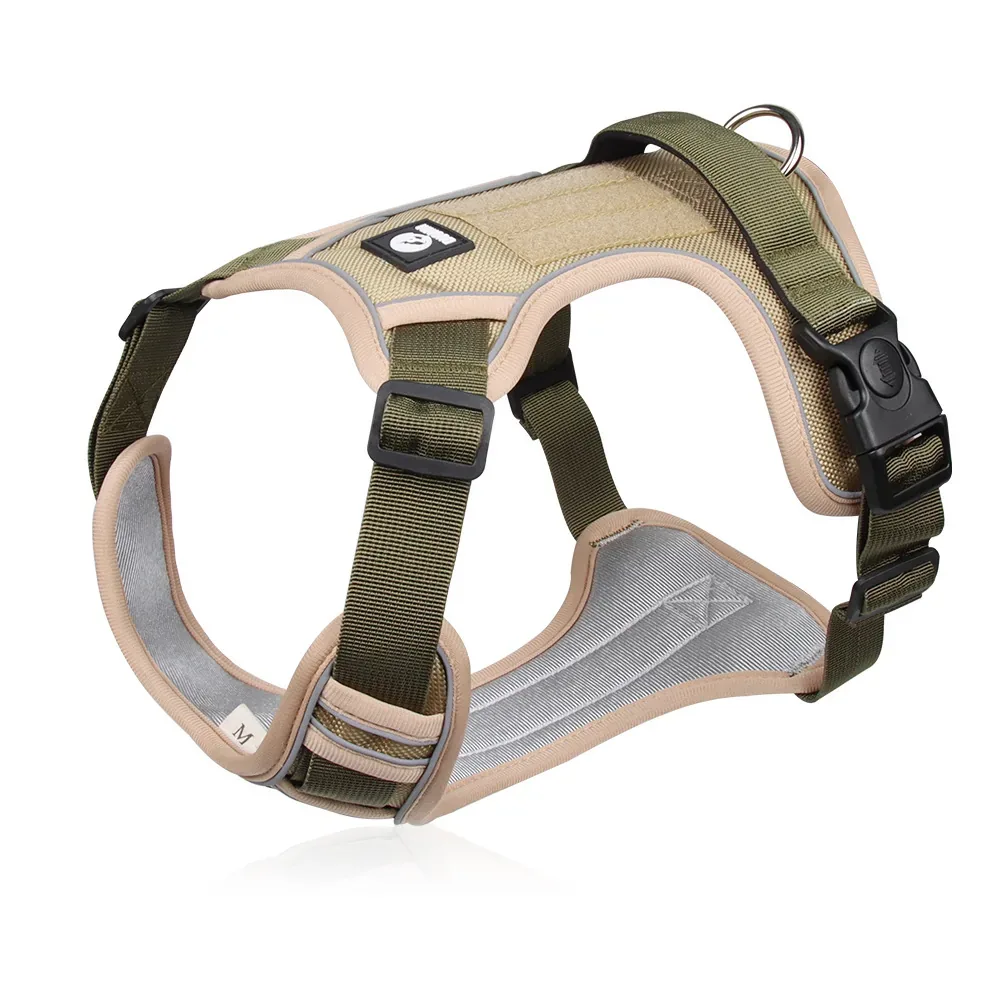
The Lightweight Breathable Dog Harness is one adjustable everyday option. Its page lists polyester construction, breathable mesh, a quick-release buckle, adjustable straps, a back D-ring, and sizes XS through XL. Use its current chart for selection, then perform the same standing and movement checks; a listed size range does not guarantee an individual fit.
If your dog shows pain, persistent skin irritation, breathing difficulty, or an unexplained gait change, stop using the harness and ask your veterinarian for guidance.
Frequently Asked Questions
Can a dog harness be too loose?
Yes. Gaping openings, major rotation, a leg entering the wrong opening, or the harness sliding toward the head can reduce control and create escape or rubbing risk.
Can a dog harness be too tight even if two fingers fit?
Yes. Straps may still cross the shoulder, sit in the armpit, or create pressure under load. Use the finger check together with movement and skin checks.
Should I leave a harness on all day?
An everyday walking harness is best removed when it is no longer needed unless a veterinarian or qualified professional advises otherwise. Removal lets you inspect the skin and prevents unsupervised snagging or chewing.
Why does my dog's harness keep turning sideways?
Common causes include uneven strap adjustment, too much room around the chest, a leash pulling consistently from one side, or a harness shape that does not match the dog's build.
How often should I recheck fit?
Check before every walk for obvious looseness or damage, and perform a fuller fit check after growth, weight change, grooming, washing, or seasonal coat change.
Conclusion
A properly fitted harness stays centered, clears the throat and armpits, allows full shoulder movement, and remains secure through a short walk. Measure first, adjust in small steps, and let your dog's movement and skin—not one finger rule—confirm the fit.
Shop this story
Continue exploring
Walk & Explore
What to Pack for a Summer Day Hike With Your Dog
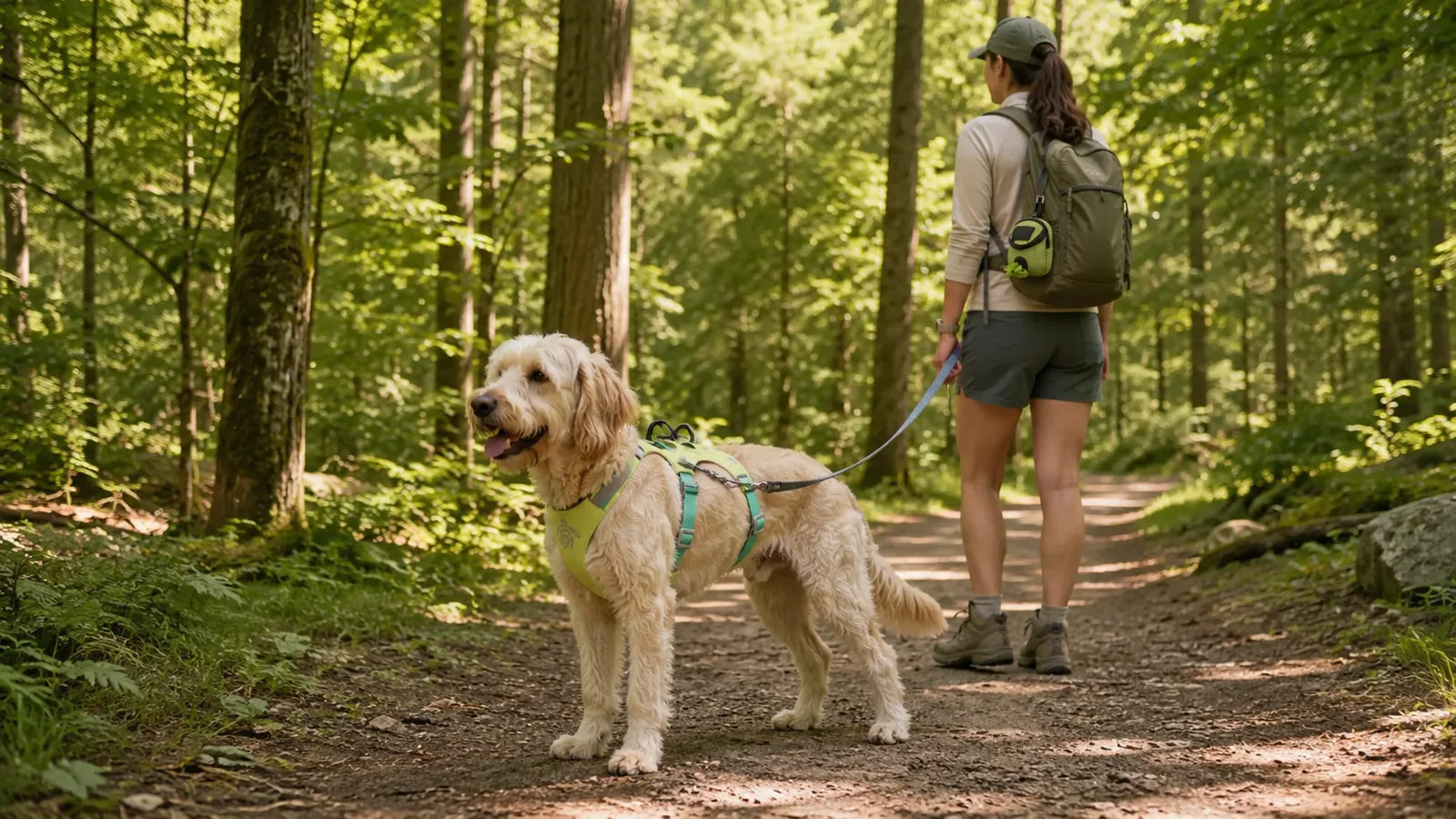
For a summer day hike with your dog, pack more than a leash and a shared water bottle. At minimum, bring water specifically for your dog, a portable drinking bowl, secure walking gear, current identification, waste bags, familiar treats, basic first-aid supplies, and a plan for shade and rest.
Read story
Walk & Explore
Is a Slip Lead Right for My Dog? A Practical Checklist
A slip lead is not the right default for every dog. Decide by how your dog walks, how comfortably they accept equipment, and whether you can avoid neck pressure. Persistent pulling, uncertain fit, or health concerns call for another setup or individual advice first.
Read story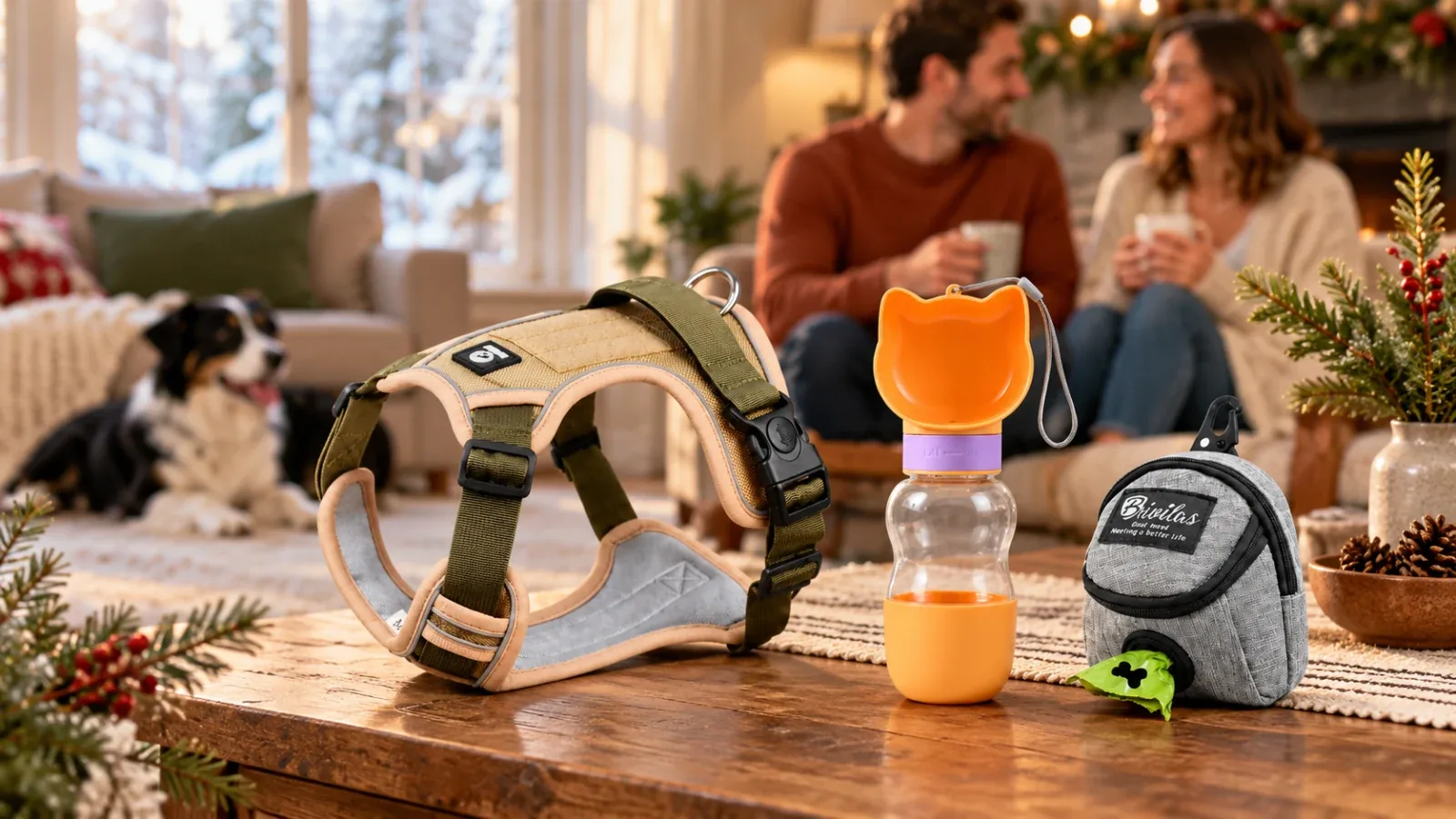
Walk & Explore
Holiday Walking Gifts for New Dog Owners: What to Choose
The most useful holiday walking gift for a new dog owner fits the dog and makes a daily task easier. If you know the dog's measurements and the owner's routine, a walking kit may work. If you do not, choose a lower-fit-risk item or select fitted gear together.
Read story