What to Put in a Dog Walking Treat Bag
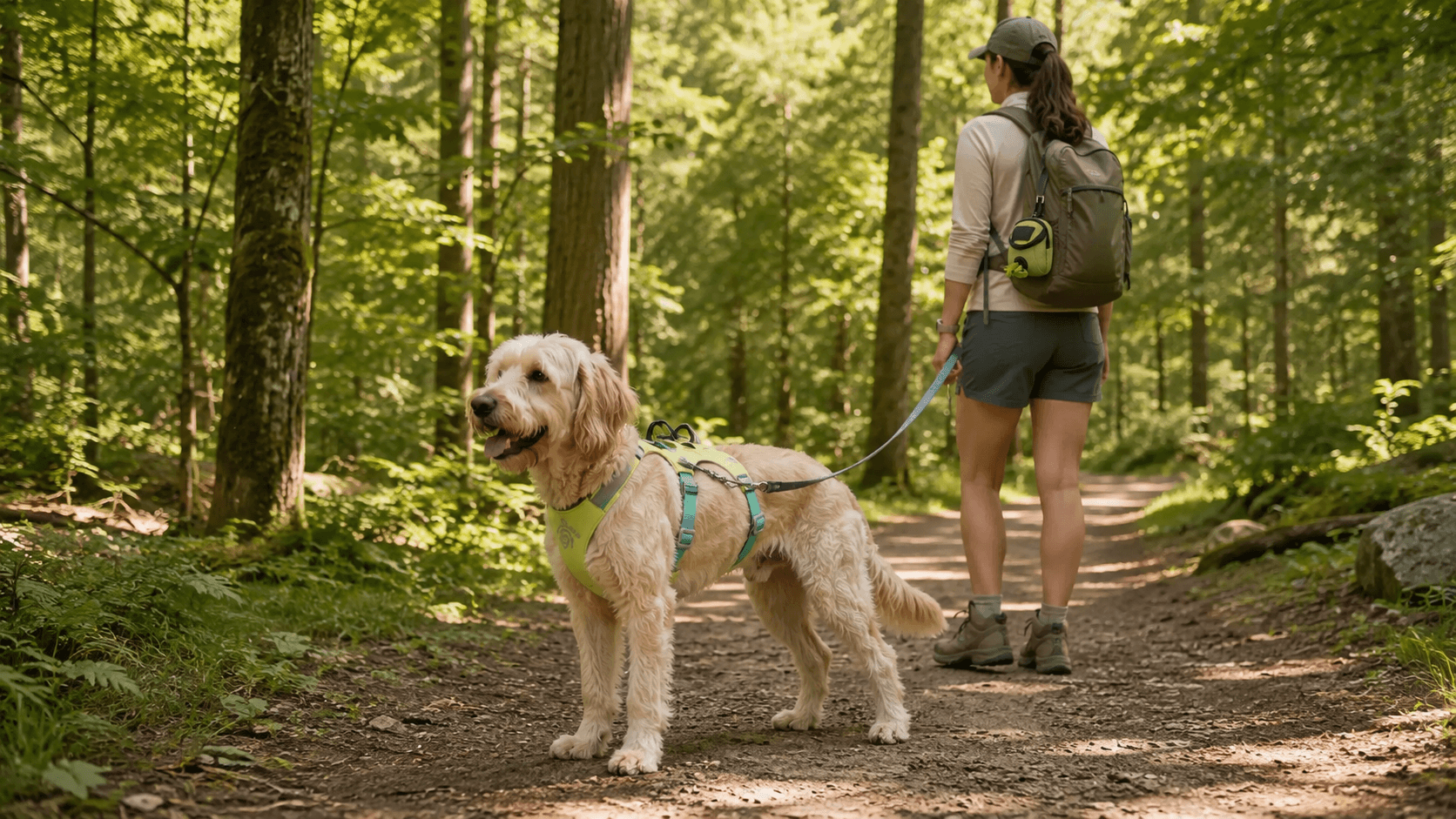
Pack small familiar treats, at least one waste-bag roll, and only the backup items your route may require. Keep food separate from cleanup supplies, place the fastest-use items within one-hand reach, and reset the pouch after every walk.
Start With Three Simple Zones
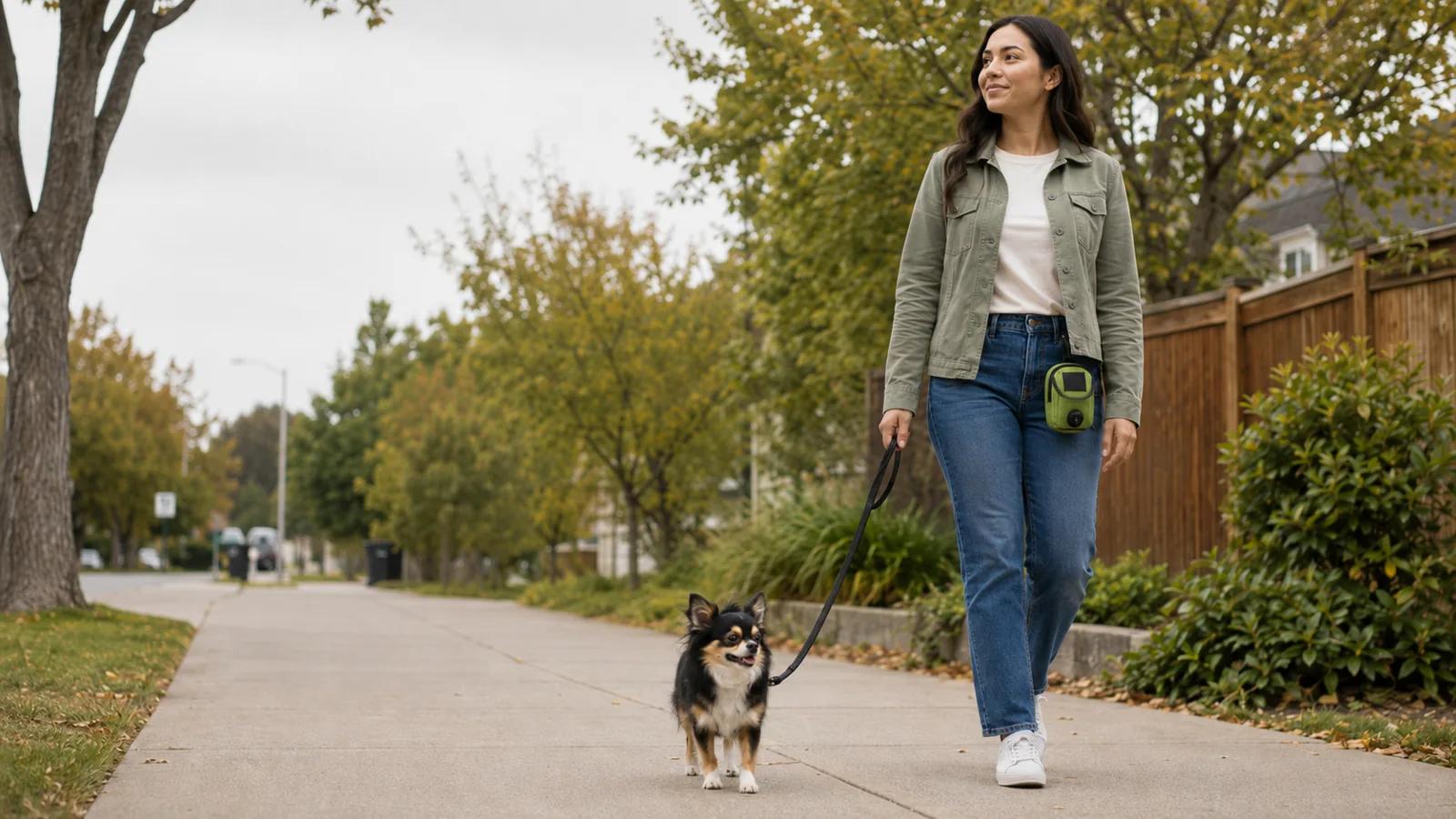
Before choosing individual items, divide the job into three zones:
| Zone | What goes there | Access priority |
|---|---|---|
| Reward | Small familiar treats | Immediate |
| Cleanup | Waste-bag roll and one loose backup bag | Immediate |
| Backup | Key, ID card, folded tissue, or route-specific item | Occasional |
This separation prevents treats from sharing a compartment with used bags, keys, or damp items. It also makes shortages obvious: if the dispenser is empty or the reward compartment is low, you can see the problem before leaving.
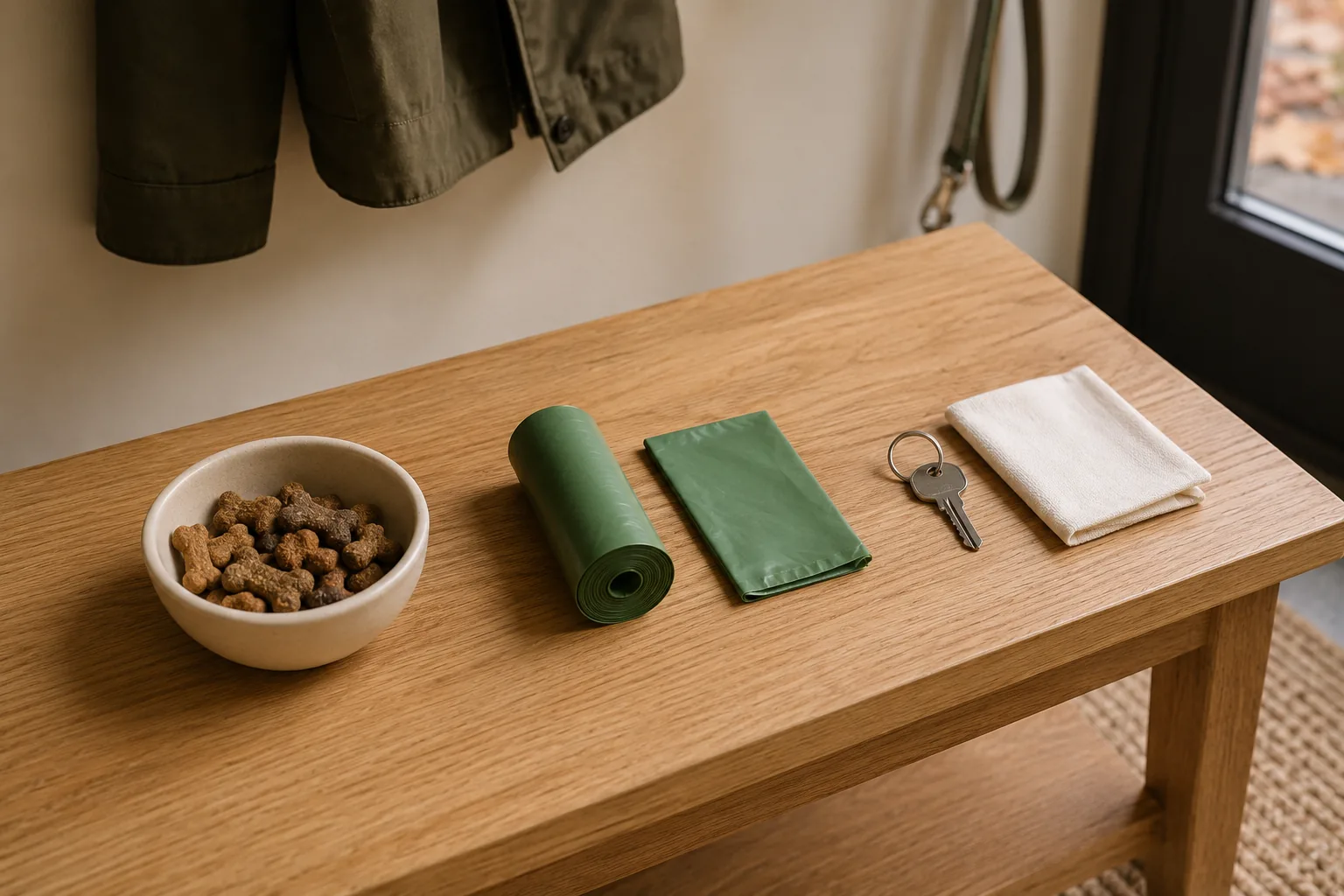
Keep the core kit the same for routine walks. Add route-specific items only when conditions change. A 15-minute neighborhood loop and a two-hour park outing should not require identical packing.
Pack Rewards Your Dog Already Knows
Choose small, familiar treats that your dog can eat quickly without stopping for a long chew. The appropriate amount depends on the dog, treat, diet, walk, and training plan. If your dog has allergies, a medical condition, or a prescribed diet, ask your veterinarian what rewards fit that plan.
For ordinary practice, pack enough for the behaviors you realistically expect to reinforce, such as:
- Checking in with you
- Walking past a distraction calmly
- Waiting before crossing
- Returning attention after sniffing
- Moving away from something on cue
Do not fill the pouch days in advance. Fresh or moist food may leave residue, and food quality can change with heat and time. Load the reward compartment shortly before the walk, then empty and clean it afterward according to the pouch's care instructions.
Make the reward easy to reach
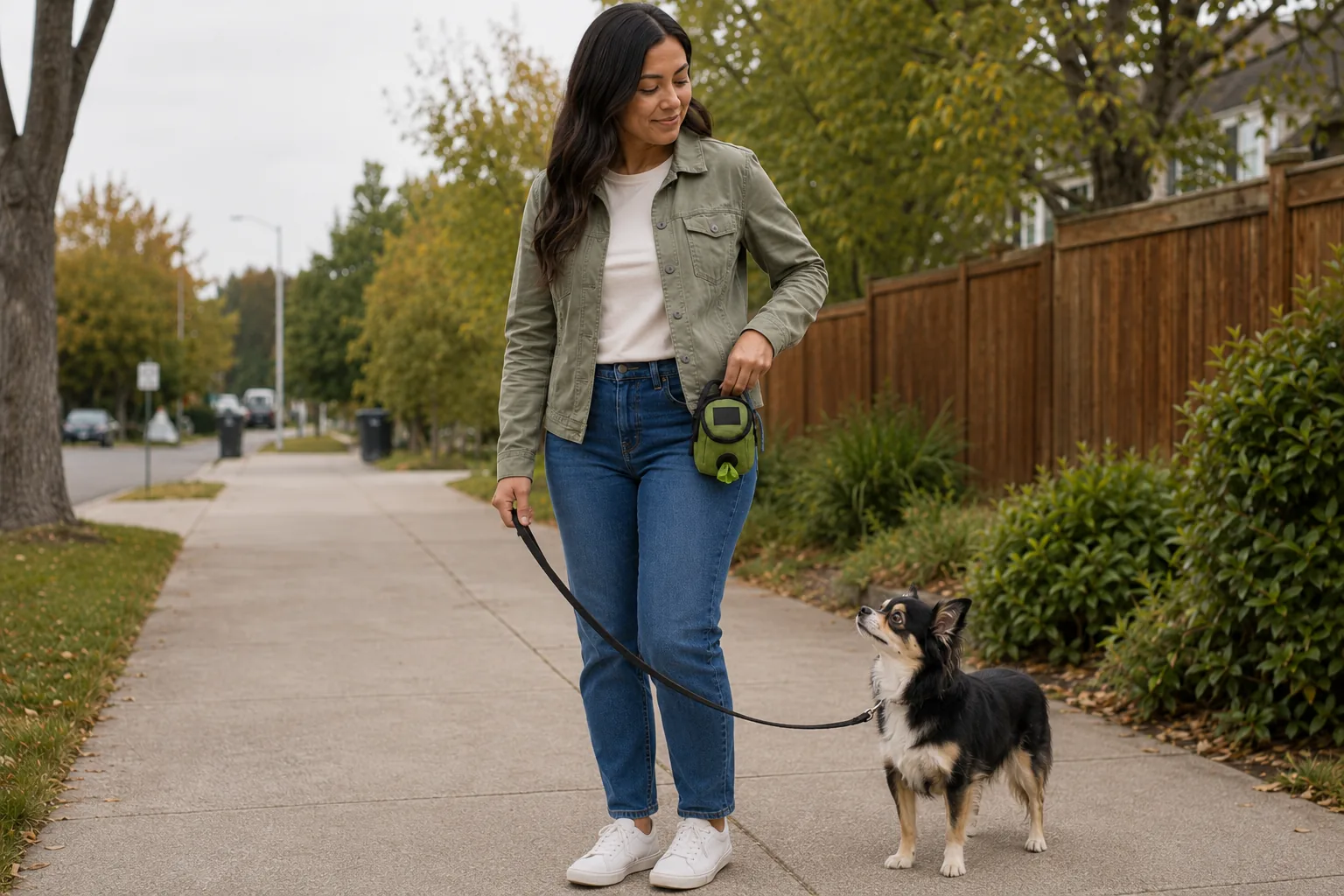
You should be able to take one treat without looking down for several seconds or opening every compartment. Practice at home with the leash in one hand. If the bag twists, spills, or requires both hands, change its position or reduce what you carry.
Fast access does not mean keeping the pouch permanently open. Close it when you are not actively training so treats do not fall out or become an invitation for the dog to nose into the bag.
Carry More Than One Waste Bag
A single bag is not a reliable plan. The roll may be near its end, one bag may tear, or your dog may go more than once. Keep a roll in the dispenser and one loose backup in a clean non-food area.
Before each walk:
- Pull the leading edge through the dispenser.
- Confirm that at least several bags remain on the roll.
- Tear one off to check that the perforation works.
- Replace damaged or brittle bags.
- Follow local rules for tying and disposing of pet waste.
The outside dispenser should release one bag without requiring you to open the food compartment. If it pulls out several bags at once, rewind the roll rather than stuffing the excess into the opening.
Keep Food and Cleanup Supplies Separate
Separation is the most important organizational rule. Treats belong in their own clean compartment or in a food-safe liner inside that compartment. Unused waste bags, keys, tissues, and personal items belong elsewhere.
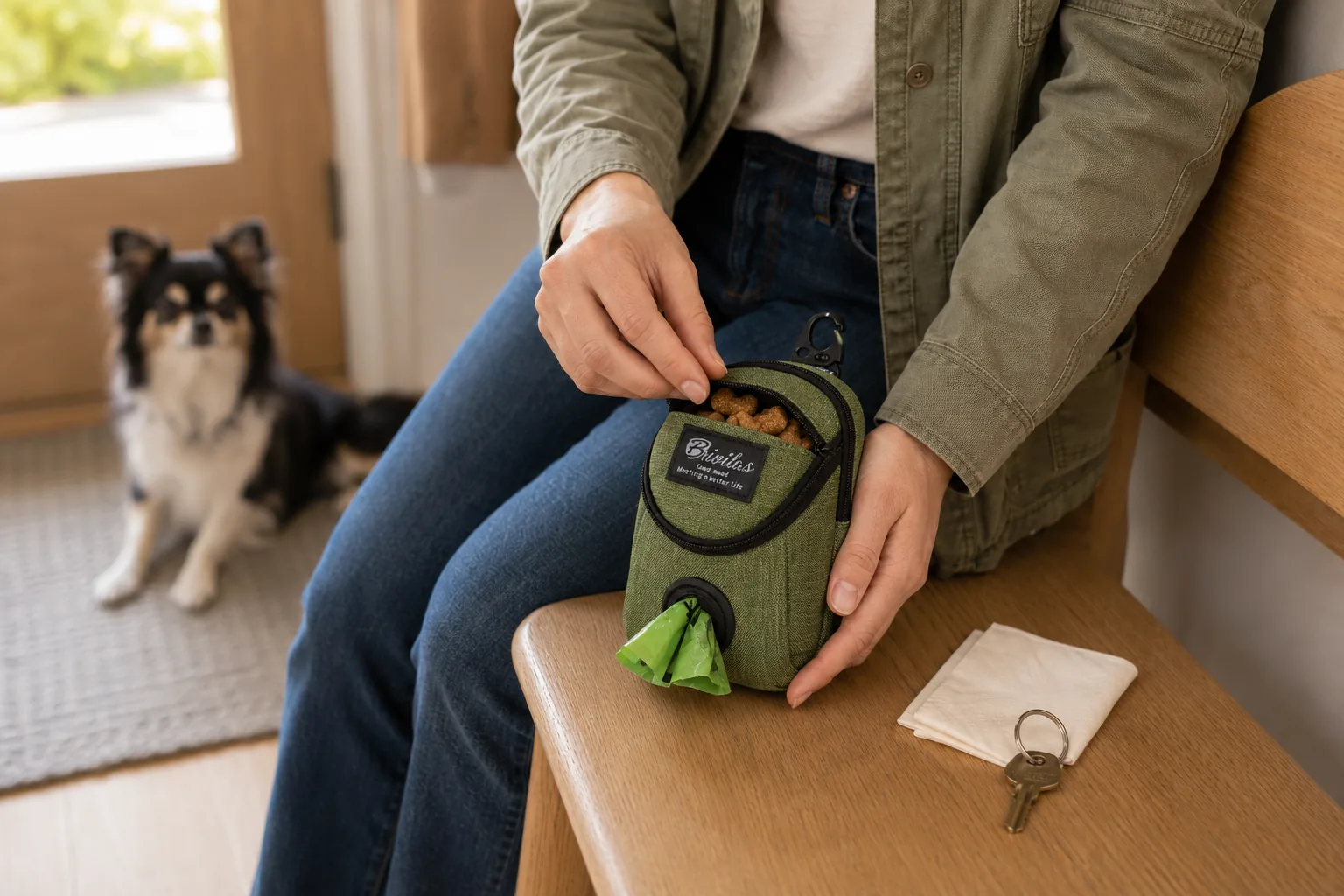
The My FurMigo 2-in-1 Dog Treat & Waste Bag Pouch has two separate compartments and a built-in external waste-bag dispenser. The current product page says the pouch uses Oxford fabric with reinforced stitching and can attach using its carabiner or belt loop. Waste bags are not included.
Those features fit a two-zone daily setup: treats in one section, then the unused roll and non-food essentials in the other. Do not place a used bag inside the pouch. Tie it securely and use an appropriate waste bin as local rules require.
Add Only Route-Specific Backups
Once rewards and waste bags are packed, ask what could reasonably be needed before you return home. Useful options may include:
- House key
- Identification or emergency contact card
- One folded tissue or small clean cloth
- A few pieces of regular kibble if that is your dog's planned reward
- A small light for a walk that may finish after dark
Avoid carrying sharp objects loose beside the waste-bag roll. Keep medication in its original labeled container and follow veterinary instructions; a treat pouch is not a substitute for appropriate medical storage.
Water usually deserves a separate system rather than taking over a small treat compartment. For longer outings, plan the amount and drinking method in advance. My FurMigo's published guide explains how to carry and serve water while traveling with your dog.
Attach the Pouch Where It Will Not Swing
Choose the attachment method based on your clothing and movement. A carabiner is quick to move between a leash, backpack, belt, or waist bag. A belt loop can keep the pouch closer to your body. Whichever you use, check that the attachment is fully engaged and does not interfere with holding the leash.
Position the bag on the side opposite your primary leash hand when that makes reward access easier. The exact side is less important than consistency: using the same position helps you reach the right compartment without looking away from the route.
Run a short movement test before leaving:
- Walk briskly across the room
- Bend and stand again
- Take several stairs if they are part of your route
- Reach for a treat with one hand
- Pull one waste bag through the dispenser
The pouch should not strike the dog, drag on the leash, open unexpectedly, or bounce enough to spill its contents.
Practice One-Hand Access Before the Walk
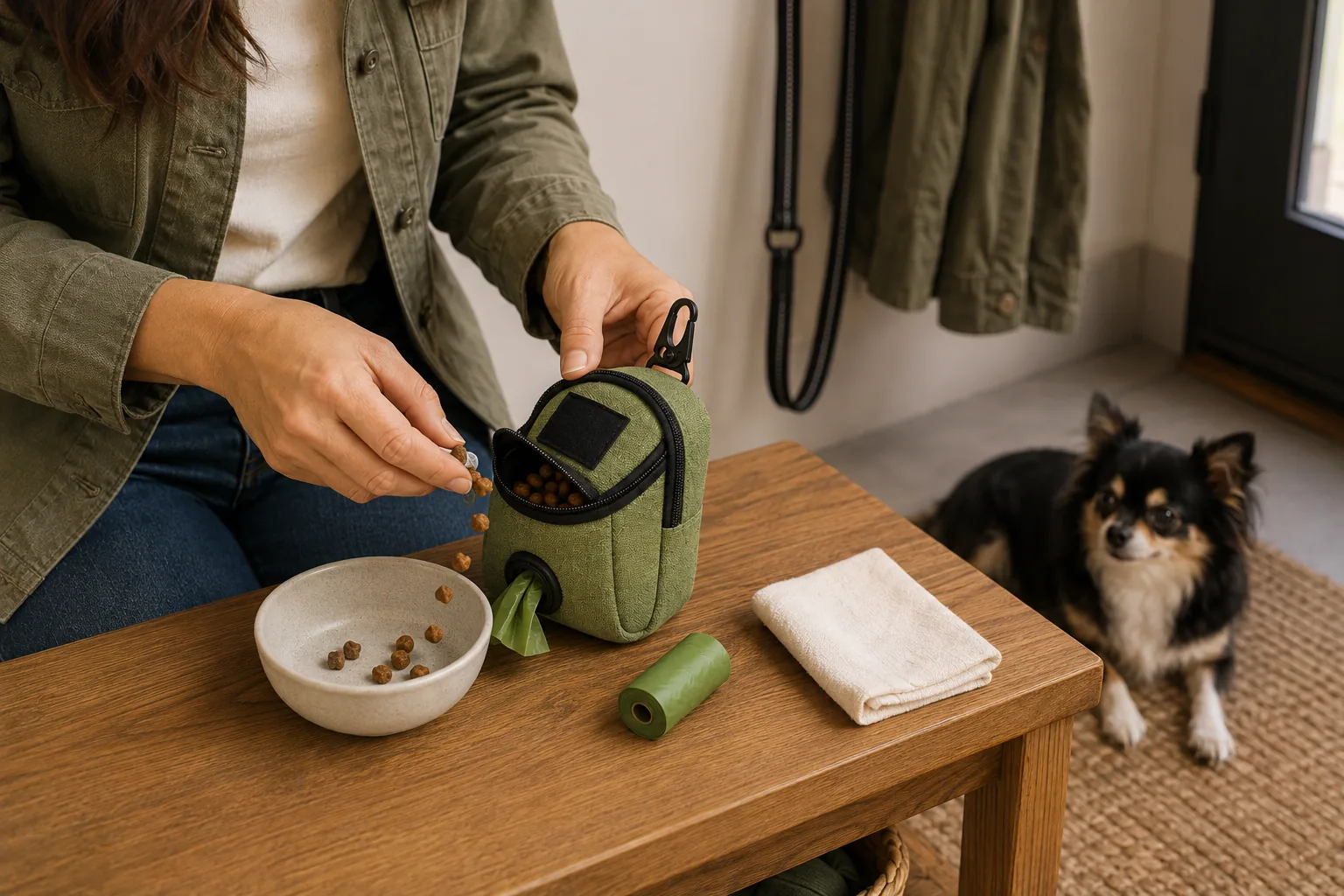
Set up a simple rehearsal with your dog safely indoors. Hold the leash as you normally would, take one reward, close the compartment, then pull one waste bag from the dispenser.
Keep your eyes up between actions. Looking into the pouch while moving can make it harder to notice driveways, cyclists, dogs, children, uneven pavement, and other changes around you.
Near roads, use a secure lead and keep the dog away from the curb. The Blue Cross road-safety guidance recommends keeping dogs on lead beside roads and positioning them on the inside of the sidewalk. The pouch should support leash handling, never compete with it.
Adjust the Kit for the Route
Use the core kit as a baseline, then make one deliberate adjustment rather than adding everything “just in case.”
Short neighborhood loop
Carry rewards, waste bags, and a key. If you remain close to home in mild conditions, that may be enough.
Training-focused walk
Pack more of the dog's planned reward, but keep pieces small and account for them within the dog's feeding plan. Choose a location where you can stop without blocking other people.
Park or longer walk
Add water and a drinking method outside the small pouch, plus any route-specific identification or light. Check park rules before leaving.
Evening walk
Add a compact light if useful and wear appropriate visible gear. Reflective or lighted equipment can support visibility, but it does not replace attentive road crossing, a secure leash, or awareness of vehicles.
Reset the Pouch After Every Walk
A one-minute reset keeps the next departure simple:
- Remove all remaining food.
- Dispose of used tissues or damaged bags.
- Check how many bags remain on the roll.
- Wipe crumbs or residue from the food area.
- Let damp fabric dry completely before storage.
- Return the empty pouch to the same place near the leash.
Inspect the carabiner, belt loop, zippers, seams, and dispenser opening periodically. Stop using the pouch if an attachment or closure is damaged enough that the bag may fall or open during a walk.
Dog Walking Treat Bag Checklist
- Small familiar rewards packed shortly before departure
- Waste-bag roll checked and threaded through dispenser
- One loose backup bag stored outside the food area
- Key or essential personal item secured
- Food and cleanup items kept in separate zones
- Pouch attachment fully engaged
- One-hand treat and waste-bag access tested
- Route-specific water or light carried separately if needed
- Remaining food removed after the walk
- Pouch cleaned, dried, and restocked for next time
Frequently Asked Questions
How many treats should I put in a dog walking bag?
Pack enough small pieces for the behaviors you plan to reward, not a full compartment by default. The right amount depends on the dog, treat, diet, and training plan. Ask your veterinarian about dietary restrictions.
Can treats go directly into the pouch?
Follow the product's care and food-contact instructions. A removable food-safe liner can simplify cleanup when appropriate. Empty crumbs and residue after every walk rather than storing food in the pouch.
How many waste bags should I carry?
Carry more than one. A roll plus one loose backup covers an empty roll, tear, or additional cleanup need without adding much bulk.
Where should I attach a dog treat pouch?
Attach it where you can reach it with one hand without weakening your leash grip. Test the carabiner or belt loop indoors and confirm the pouch does not swing into the dog or interfere with the leash.
Should I carry water in a treat pouch?
Usually not in a compact pouch. Water and its drinking method need enough capacity for the outing and should not leak into treats or personal items. Use a separate travel-water setup when the route requires it.
What should not go in a dog walking pouch?
Do not store used waste bags with supplies, leave perishable food inside between walks, or carry loose sharp objects. Avoid overpacking anything that makes the pouch swing, spill, or distract you from handling the leash.
Conclusion
The best dog walking treat bag carries a small repeatable core: familiar rewards, multiple waste bags, and only the backups your route needs. Separate food from cleanup items, attach the pouch securely, practice one-hand access, and reset it after every walk so the next outing starts ready.
Shop this story