How to Set Up a Dog Rest Area for a Road Trip
Set up a portable dog rest area with a familiar mat, water, leash, waste bags, and a quiet position away from traffic. Practice the setup at home, use it only at safe planned stops, and repeat the same settle-and-release routine after arrival.
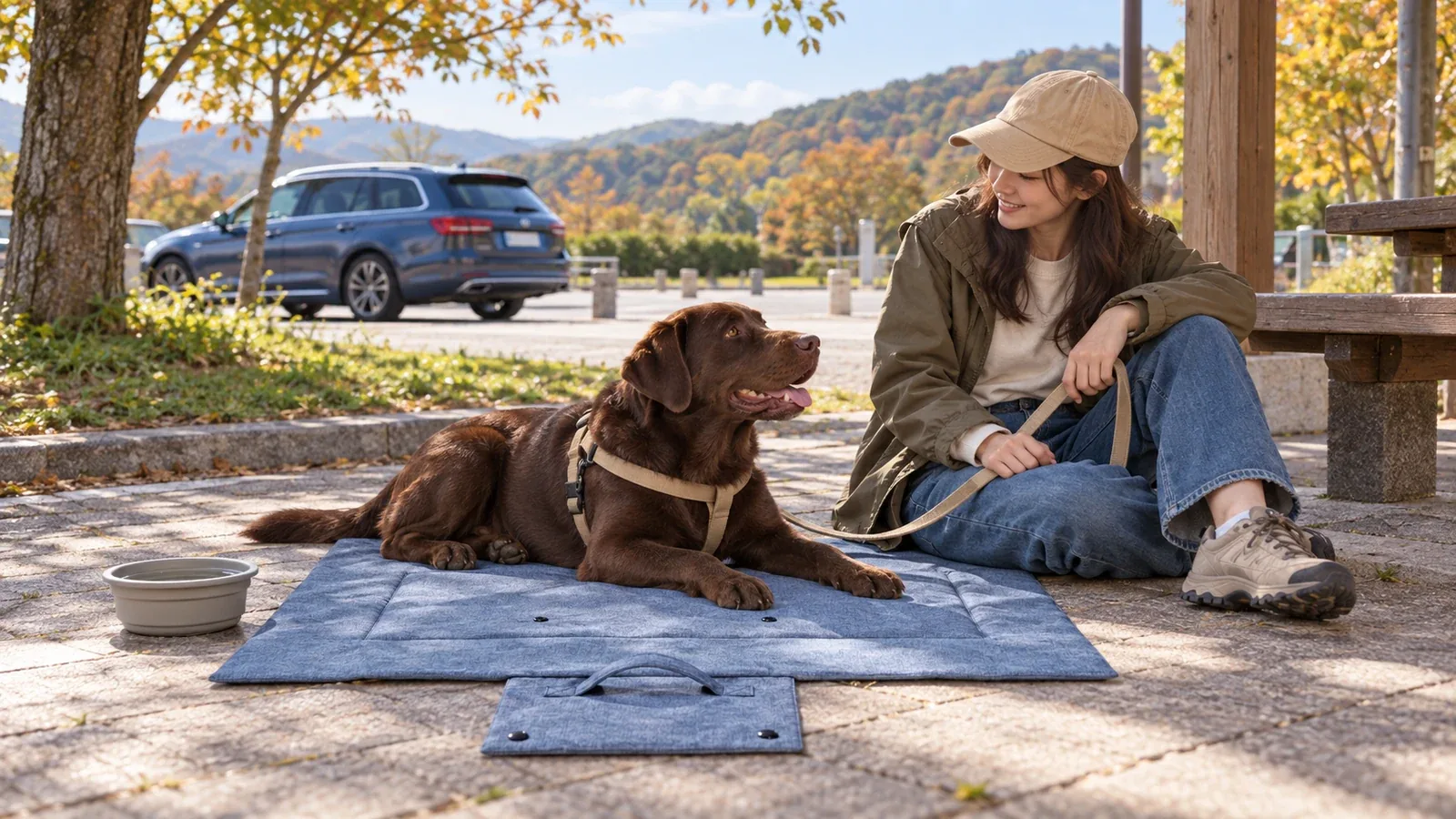
Set up a portable dog rest area with a familiar mat, water, leash, waste bags, and a quiet position away from traffic. Practice the setup at home, use it only at safe planned stops, and repeat the same settle-and-release routine after arrival.
This rest area does not replace a secured vehicle setup. It is a supervised place to pause outside the car or settle at a destination—not a reason to leave a dog unattended in a parked vehicle.
Pack One Small Rest Kit
Keep the items together so the setup is quick and consistent:
- a washable, appropriately sized mat;
- water and a clean bowl;
- a standard leash and fitted harness or collar;
- waste bags;
- a towel for wet or dirty paws;
- a few familiar rewards; and
- any trip-specific medication prescribed by your veterinarian.
The dog should be able to lie in a natural position on the mat. Check dimensions before travel rather than discovering at a rest stop that the surface is too small.
Teach the Mat Routine at Home
Unfold the mat on a stable floor. Reward your dog for looking at it, stepping onto it, and choosing to sit or lie down. Add a cue such as “settle” after the behavior becomes predictable.
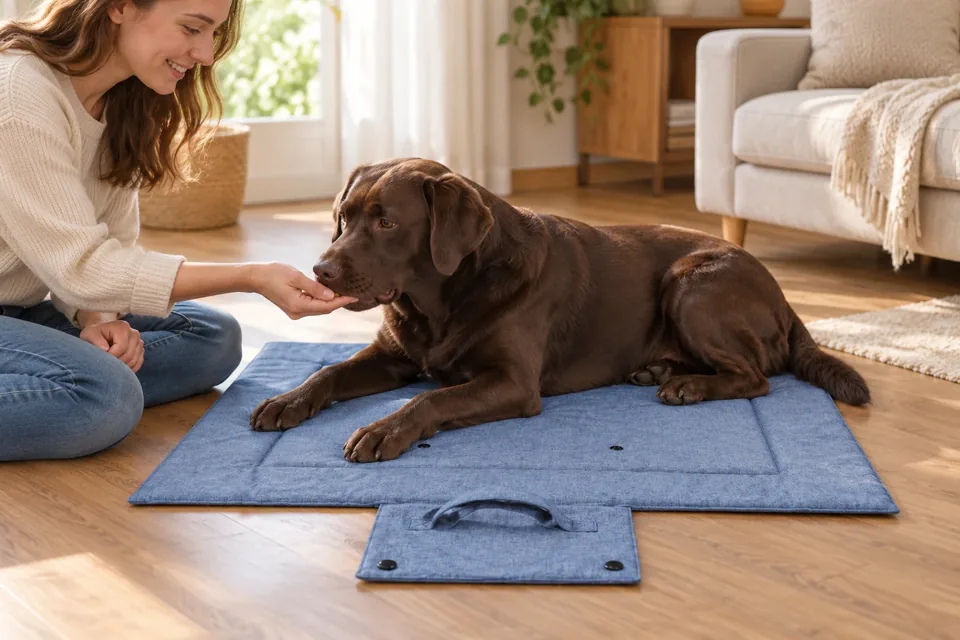
Keep the first practices brief. Release the dog with a separate cue so the mat does not become forced confinement. Repeat in another room, then near the parked car. Familiarity makes the object useful when the environment changes.
Choose a Safe Stop Location
Plan stops before departure. Use designated pet-relief areas or quiet spaces where dogs are permitted. Park away from moving traffic when possible, leash the dog before opening a door, and check the ground for broken glass, hot pavement, ice, spilled fluids, food scraps, and sharp debris.
Never place the mat in a driving lane, beside a fuel pump, or where the leash crosses a walkway. Look for shade and airflow, but do not tie the dog and walk away.
Use a quick location screen before unloading:
| Check | Choose | Avoid |
|---|---|---|
| Traffic | A pet area separated from vehicle flow | Shoulders, loading zones, fuel lanes |
| Ground | Level, clean, stable footing | Glass, spills, food waste, hot asphalt, ice |
| Weather | Shade and airflow suited to conditions | Direct sun, standing water, exposed storm areas |
| Space | Room for a short leash and full mat | Doorways, narrow sidewalks, picnic crowds |
If no suitable area is available, keep the dog secured in the vehicle only while you relocate promptly; never leave the dog unattended while you go inside. A planned stop is useful only when the location itself is appropriate.
The AVMA advises acclimating pets to car travel with short rides, securing them during travel, and never leaving them unattended in a car. Review the full dog car safety checklist before the trip.
Use the Same Break Sequence
At each stop:
- Secure the leash before opening the vehicle.
- Walk to the relief area and allow time to eliminate.
- Move to the selected rest position.
- Lay the mat flat with no folded edges.
- Offer water and a quiet pause.
- Inspect paws and behavior before returning to the car.
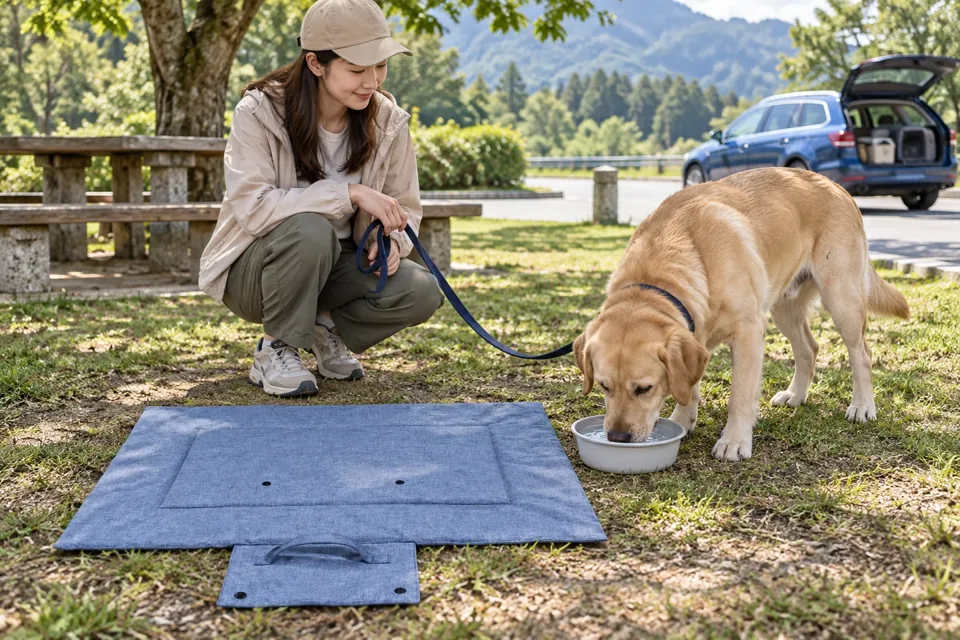
Keep food routines consistent with your veterinarian's advice. Do not encourage vigorous play immediately around vehicles or ask an overheated dog to settle in direct sun. Heavy panting, weakness, vomiting, diarrhea, breathing difficulty, disorientation, or collapse requires urgent veterinary attention.
For water planning, use this dog travel hydration guide.
Adjust the setup for rain or cold
In rain, choose legal shelter without blocking entrances or accessible routes. Place the waterproof side as directed, wipe paws before the dog lies down, and keep the leash from tangling in a folded edge. Waterproof backing can reduce moisture coming through the ground; it does not keep the top dry in active rain.
In cold conditions, shorten stationary breaks and monitor the individual dog. A thin travel mat is a familiar clean surface, not verified insulation for every temperature. If the dog shivers, repeatedly lifts paws, seeks the vehicle, or cannot settle, end the outdoor pause.
Recreate the Zone After Arrival
At a hotel, rental, campsite, or family home, place the mat in a low-traffic corner away from exterior doors, cooking areas, cords, and other pets' resources. Add the same water bowl and towel nearby, then guide your dog through the familiar settle-and-release routine.
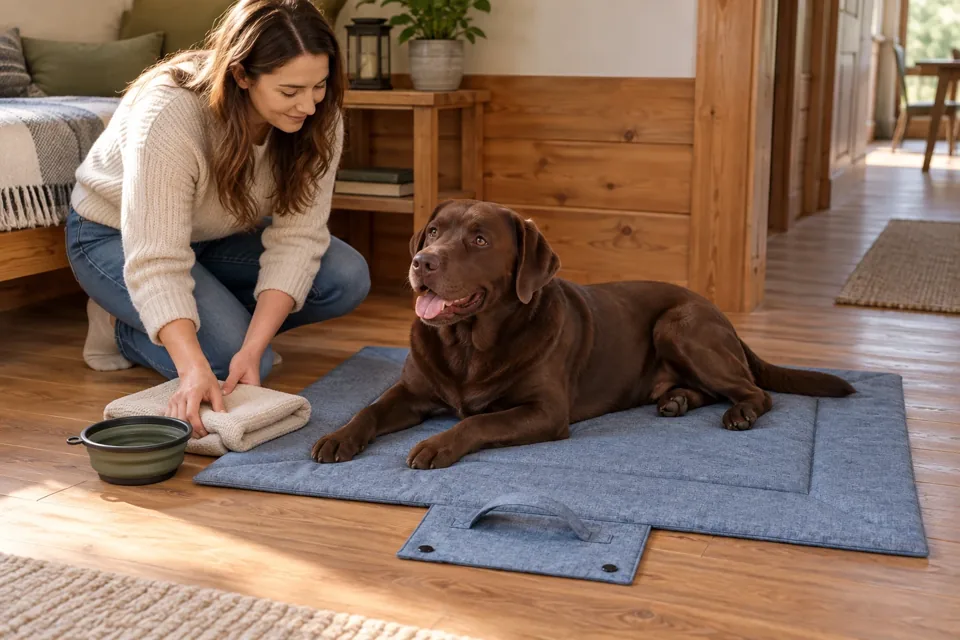
Do not assume a settled dog is ready to be left alone in an unfamiliar room. Supervise the first rest period and watch for pacing, persistent vocalizing, scratching at doors, panting unrelated to heat, or inability to lie down.
Select and Maintain the Mat
Prioritize adequate surface area, a bottom suited to the location, easy cleaning, and a folded format that does not take over the travel kit. A mat should lie flat without sliding or creating a trip edge.
The Portable Pet Travel Mat has a waterproof bottom, fold-and-carry design, built-in handle, and S/M options. Its instructions say to unfold it on a clean surface, shake off debris, wipe or hand wash as needed, and air-dry completely before storage. Waterproof backing helps manage ground moisture; it does not make every surface or temperature suitable.
After each use, remove debris and check for torn fabric, damaged fasteners, damp filling, or contamination. Store only when dry.
Keep the kit reachable without unloading the full trunk. Water, leash, waste bags, and mat should not be buried beneath luggage. Before driving again, fold and secure the mat so it cannot move around the cabin, and confirm that the dog has returned to the separate vehicle-restraint setup.
Frequently Asked Questions
Can the rest mat go on a car seat while driving?
A mat may protect a surface or provide familiarity, but it is not a restraint. Use a separate vehicle setup designed to secure the dog.
How often should a dog stop on a road trip?
There is no universal interval. Age, health, medication, normal bathroom routine, weather, and trip length matter. Ask your veterinarian about your dog and plan conservatively.
Should I feed my dog at every stop?
Maintain the normal feeding plan recommended for the trip. Water, bathroom opportunities, and quiet observation are usually the core break tasks.
What if my dog will not lie on the mat?
Do not force the dog down. Reward standing or sitting near it, reduce distractions, and practice again at home. The mat is a cue and familiar surface, not a restraint.
Can I leave my dog on the mat outside a store?
No. Keep the dog supervised and under your control. A portable rest zone does not make tethering or unattended waiting safe.
Conclusion
A useful road-trip rest area is small, familiar, and repeatable. Practice the mat cue before departure, choose stops away from traffic and hazards, offer water and observation, then rebuild the same calm zone when you arrive.
Continue exploring
Travel Together
How to Travel With Your Dog’s Water: A Simple Hydration Packing Guide
Taking your dog out for a walk, hike, or road trip is easier when water is part of the plan from the start. The challenge is not simply remembering to bring water. You also need a practical way to carry it, make it available to your dog, and keep the rest of your bag or car organized.
Read story
Travel Together
How to Set Up a Campsite Sleeping Area for a Small Dog
Set up your small dog's campsite sleeping area on flat, dry ground near your own tent, with shade, ventilation, familiar bedding, water nearby, and a leash or other control plan. Measure first, practice at home, and never treat a portable pet tent as unattended shelter.
Read story
Travel Together
How to Teach a Dog to Catch a Frisbee Safely
Teach your dog to catch a Frisbee by first building a calm retrieve: introduce the disc, practice “take” and “drop,” roll it along the ground, then add short, low tosses. Keep all four paws down at first and stop before your dog becomes tired or overexcited.
Read story