Dog Car Safety: A Practical Pre-Drive Checklist
The simplest dog car safety routine is to secure your dog in the back seat with an appropriate vehicle restraint or secured carrier, keep the dog away from the driver, close or only slightly crack the windows, and check every strap and attachment before the car moves. Add bedding, noise-management gear, and other...
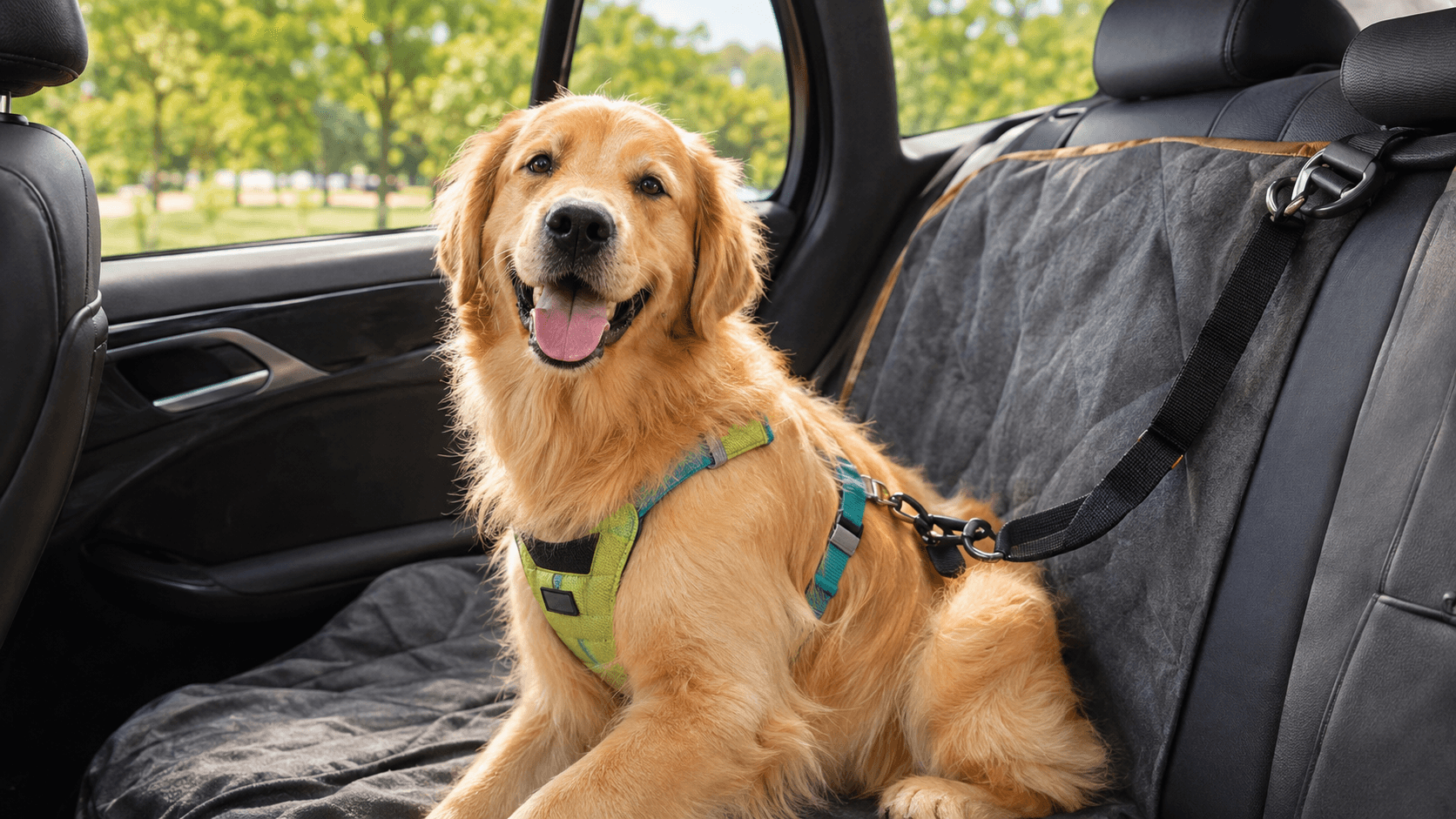
Start With the Dog Car Safety Hierarchy
Use this quick hierarchy when setting up your car:
| Priority | What to do | What it solves |
|---|---|---|
| 1. Restrain | Use an appropriate secured carrier, crate, or vehicle restraint attached as directed | Limits free movement inside the vehicle |
| 2. Position | Put the dog in the rear passenger area, away from the driver | Reduces interference with steering, pedals, and attention |
| 3. Inspect | Check the harness, clips, buckles, straps, and anchor point | Catches loose fittings and visible wear before departure |
| 4. Control access | Use child locks where appropriate and keep the dog fully inside the vehicle | Helps prevent door, window, and exit problems |
| 5. Add comfort | Add a stable sitting surface or familiar comfort item without blocking restraint hardware | Makes the setup easier for the dog to settle into |
The American Kennel Club's dog car safety guidance recommends securing dogs in a crate or with a crash-tested dog seat belt and keeping windows closed or only cracked. In Great Britain, Highway Code Rule 57 says animals should be suitably restrained so they cannot distract the driver or cause injury during a quick stop. Requirements vary by location, so check the rules for every place you drive.
Choose Restraint Before Comfort
A restraint should prevent your dog from wandering between seats or climbing toward the driver. The right system depends on the dog, vehicle, and product instructions. Common options include a secured crate, a carrier designed for vehicle use, or a dog vehicle harness and compatible tether.
If you use a tether, attach it to a properly fitted harness—not a collar—unless the manufacturer expressly directs otherwise. Neck attachment can concentrate force where you do not want it. The tether should be short enough to limit roaming but long enough for the dog to maintain a natural seated or lying position.
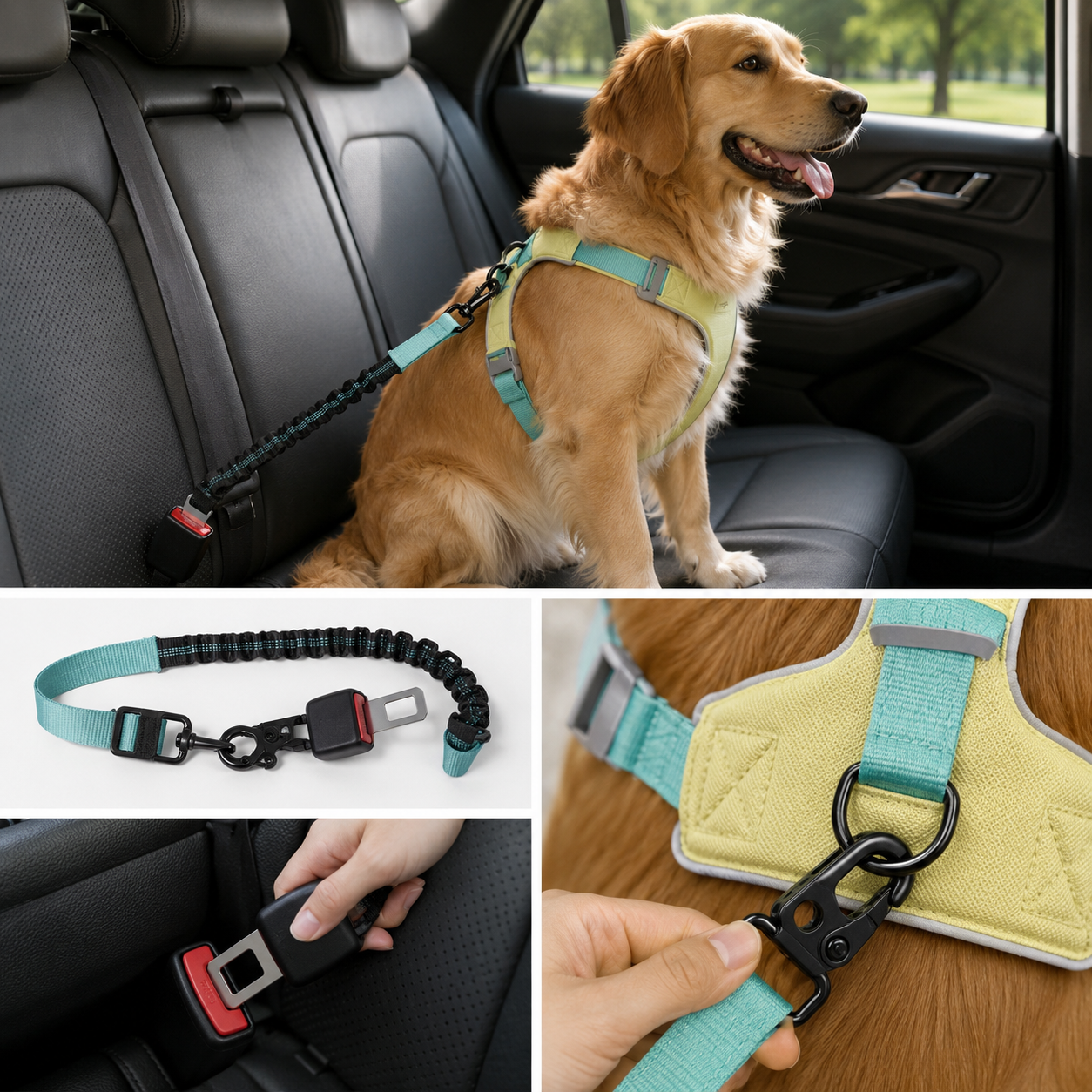
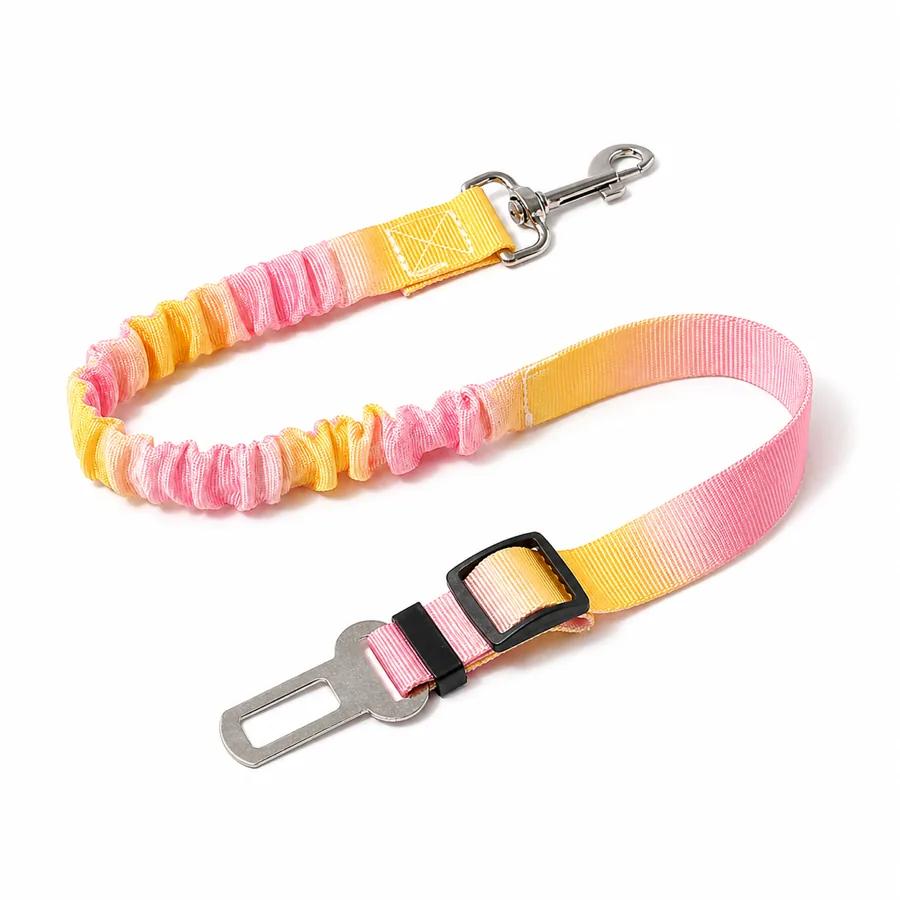
The My FurMigo Adjustable Dog Car Seat Belt Tether is made with nylon webbing, an elastic bungee section, an adjustable strap, a seat-belt buckle, and a zinc-alloy swivel clip. Its instructions specify clipping it to a harness, inserting the buckle into the vehicle's seat-belt receiver, and adjusting the length so the dog can sit or lie down without excessive movement.
Compatibility is not automatic. The page says the buckle fits most standard receivers, so confirm it locks into your own vehicle before relying on it. Inspect the webbing, stitching, clip, and buckle before every trip. The product page does not state that this tether is crash-tested or certified, so it should not be represented as such.
Build a Stable Back-Seat Setup
Once the restraint plan is set, create a stable surface that does not cover or obstruct the buckle and anchor points you need. A shifting bed or loose cushion can make it harder for a dog to settle and may tempt you to reach into the back seat while driving.
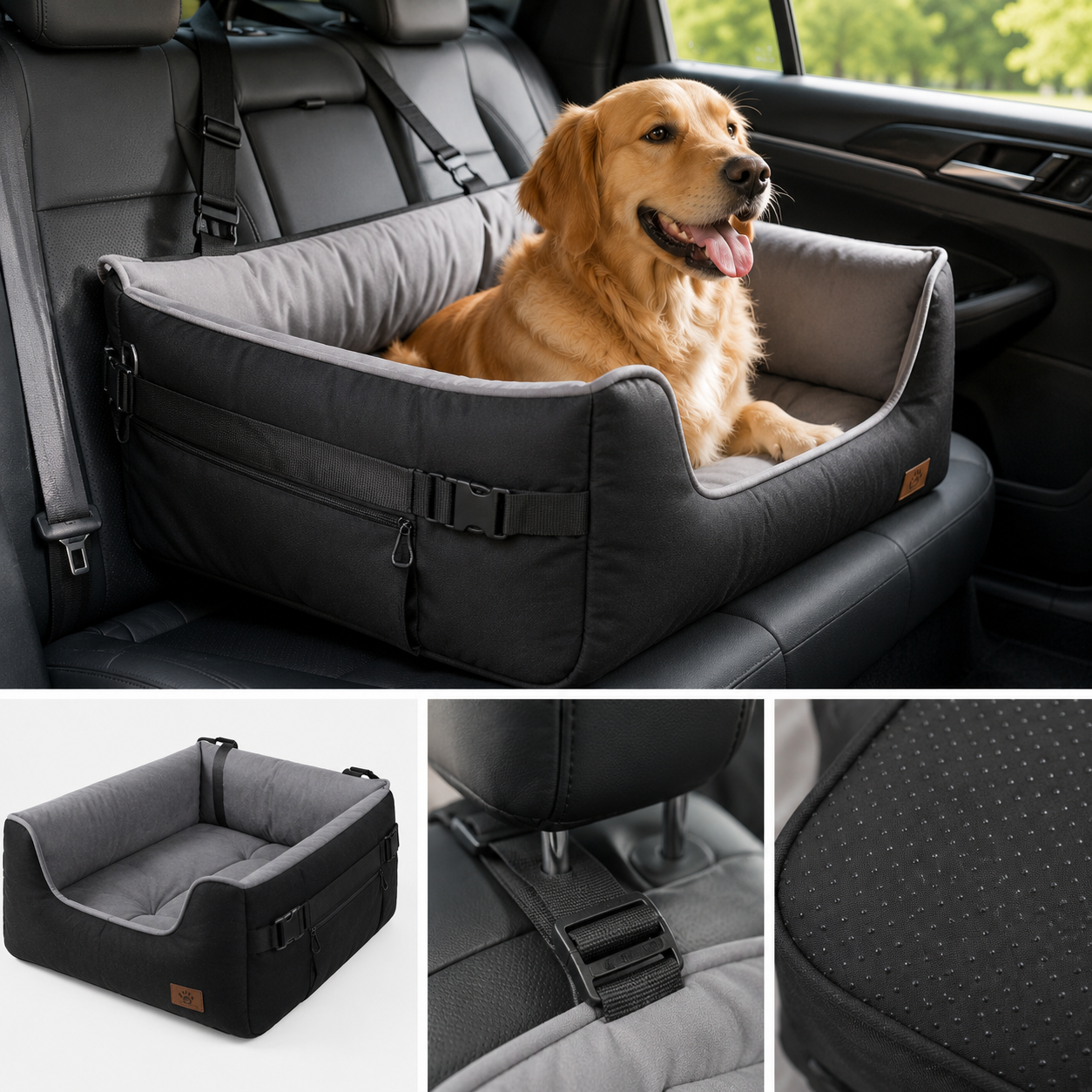
The My FurMigo Premium Pet Car Seat is listed for small to medium-sized dogs and cats. Its verified structure includes a wear-resistant seat-cover surface, resilient filling, adjustable headrest straps, and a non-slip bottom. The product instructions say to lay it on the rear seat, secure the straps around the headrests, smooth the base, and make sure it does not impede seat-belt buckles.
Use it as a comfort and upholstery layer, not as a standalone restraint. Secure the pet separately with an appropriate system, and confirm that the added seat does not change the tether angle, cover a receiver, or loosen when the dog turns around.
Run a fit check while the car is parked
Before the first real trip:
- Install the full setup in a parked car.
- Put the harness on your dog and check its fit.
- Connect the restraint exactly as directed.
- Ask the dog to sit, stand, turn, and lie down.
- Confirm the dog cannot reach the driver or door controls.
- Check that straps stay flat and the seat surface stays in place.
- Take a short practice drive before planning a long journey.
Introduce the setup gradually if your dog is new to car travel. Let the dog explore the parked car, then practice with the engine on, and only then try a short drive. Do not rush from first exposure to a full road trip.
Keep Your Dog's Head Inside the Car
An open window can introduce flying debris and create an escape route. The ASPCA's pet travel safety guidance advises against letting a pet ride with their head out the window. Use child locks if your dog could operate a window or door control.
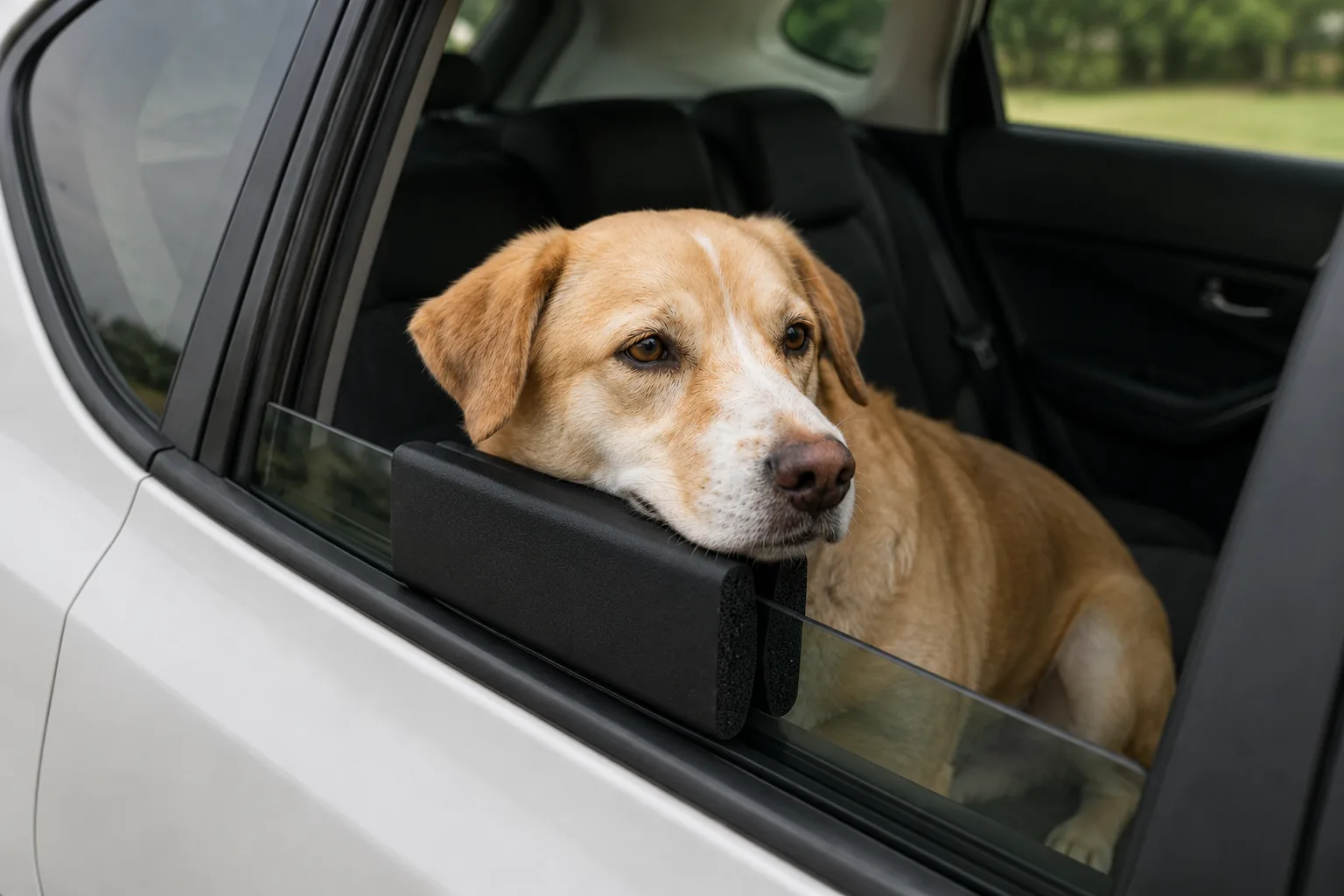
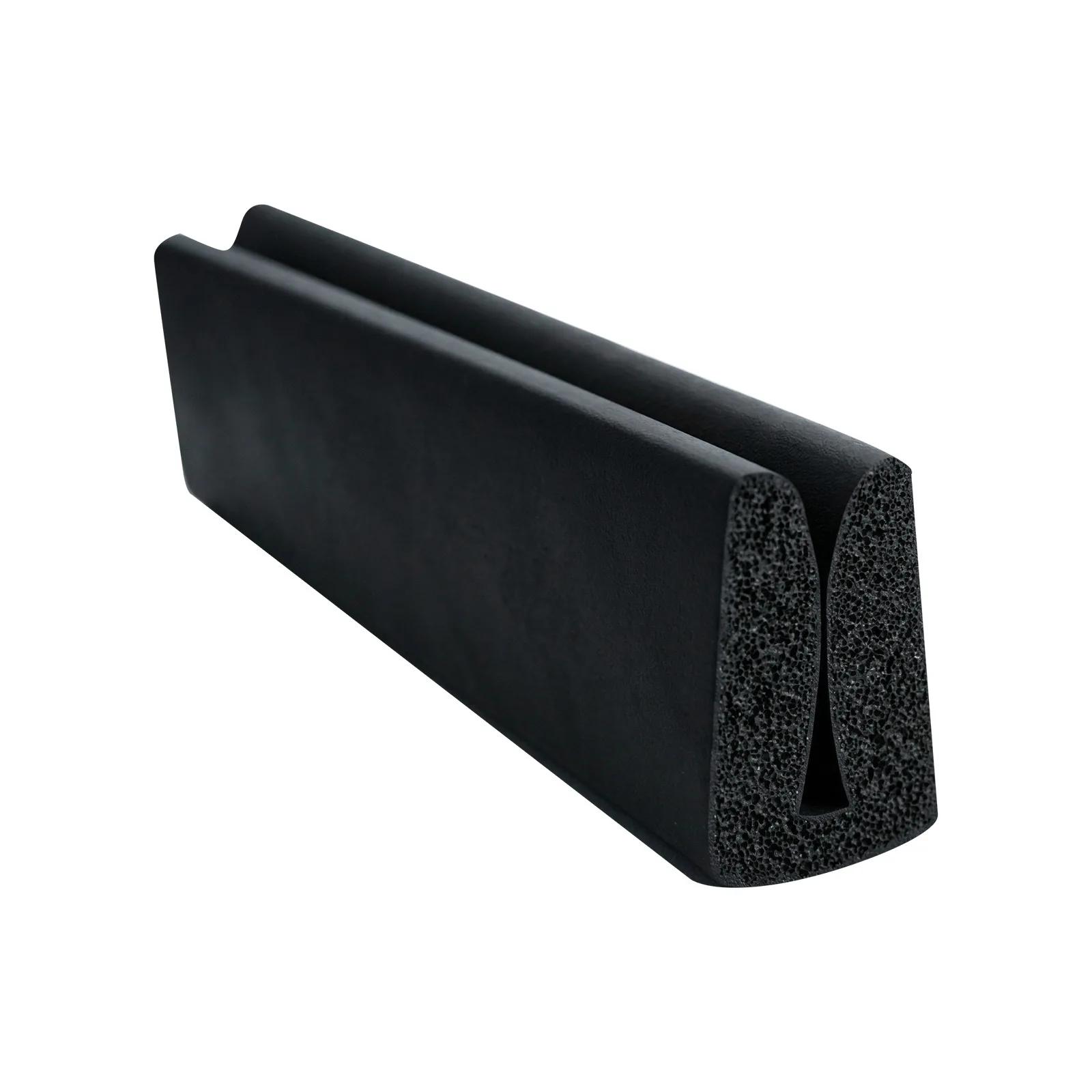
My FurMigo also lists a Car Window Dog Headrest Cushion. It is a compact EPDM foam cushion that slides onto the top edge of a slightly opened window. The listed size is 7.87 × 0.7 × 1.14 inches (20 × 1.8 × 2.9 cm), and its care instructions call for wiping with a damp cloth and air-drying.
This cushion is a comfort accessory, not a restraint or protective barrier. It should never encourage a dog to put its head outside a moving vehicle. If your dog cannot use it while remaining fully inside, properly restrained, and away from the controls, leave it off while driving.
Treat Calming Gear as Support, Not a Safety System
Whining, panting, drooling, trembling, or refusing to enter the car can have different causes, including fear or motion sickness. A comfort item cannot diagnose or treat those causes. If car distress is persistent, severe, or accompanied by vomiting or other concerning signs, speak with your veterinarian.
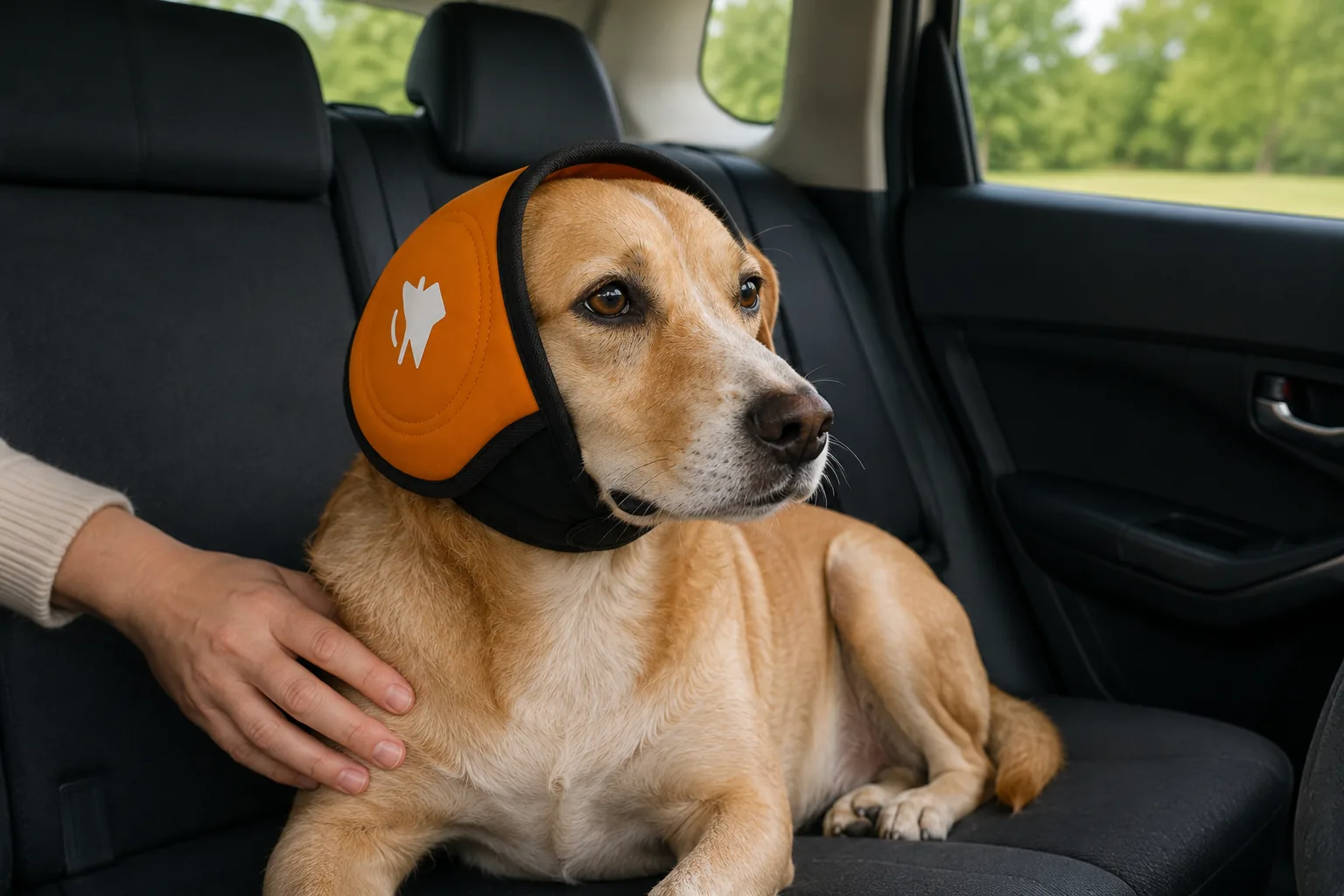
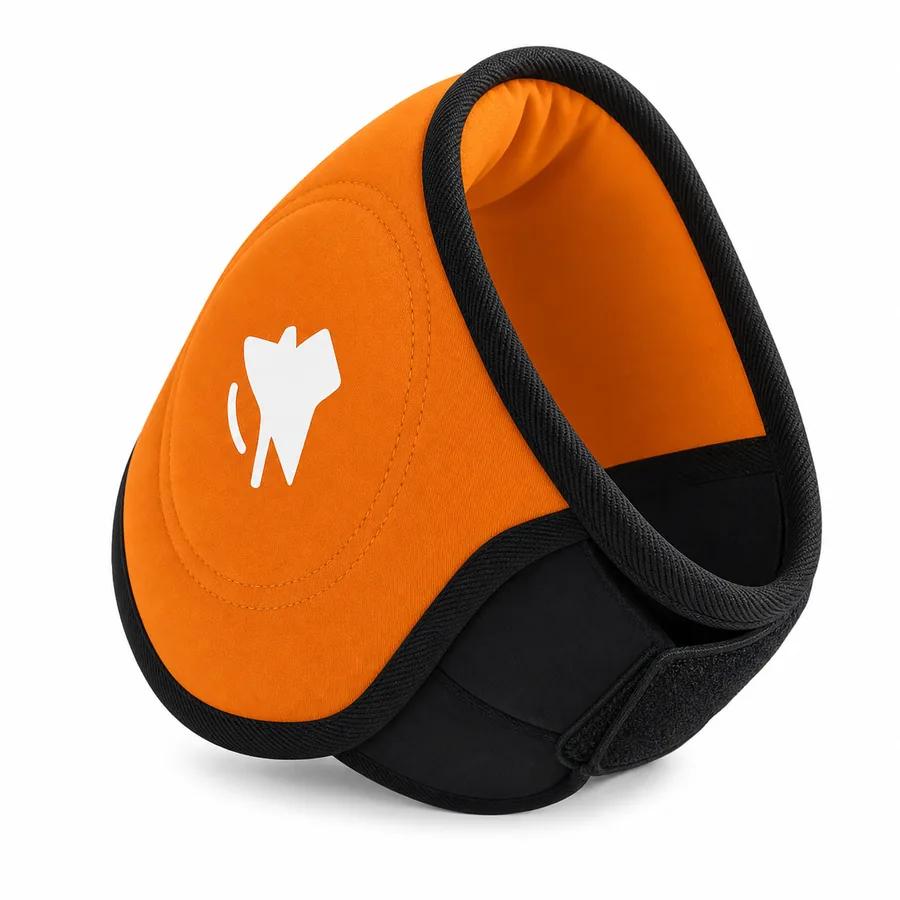
The My FurMigo Dog Calming Ear Muffs are positioned as a soft neoprene comfort item for car rides and other stressful situations. The product page lists orange, blue, and gray options in S, M, and L. It does not provide a measured noise-reduction rating, so do not promise a specific sound-blocking performance.
Introduce any wearable at home before using it in the car. Check the product's current fit instructions, supervise your dog, and remove it if it shifts, restricts normal breathing or movement, or increases distress. Ear muffs do not replace a vehicle restraint and should not make it harder to inspect the harness or tether.
Use a Repeatable Routine for Every Drive
Short trips deserve the same basic setup as long ones. Most mistakes happen when the routine changes because the destination is close.
Before the car moves
- Confirm the dog is in the rear passenger area.
- Check the harness fit and restraint connection.
- Make sure the dog cannot reach the driver, doors, or controls.
- Confirm the window position and child-lock setting.
- Remove loose objects that could slide or roll.
- Set the cabin temperature before departure.
- Keep a leash ready for a controlled exit.
During a road trip
Plan safe stops for water, bathroom needs, and movement. Keep water accessible so you do not have to unpack the car at every stop. The My FurMigo guide on how to travel with your dog's water offers a separate hydration-packing routine.
Never leave your dog unattended in a parked vehicle. Weather, shade, and cabin temperature can change quickly, and a cracked window is not a substitute for supervision.
At the destination
Attach the leash before releasing the restraint or opening the exit fully. Ask for a pause, check the surroundings, and release the dog only when you can control the exit. This helps prevent a fast jump into a parking lot or roadside area.
Where Each Car Safety Product Fits
All four products in the current My FurMigo Car Safety category have different jobs:
| Product | Appropriate role in the routine | What it does not replace |
|---|---|---|
| Adjustable Dog Car Seat Belt Tether | Adjustable connection from a dog harness to most standard seat-belt receivers | Vehicle compatibility checks or documented crash-test certification |
| Premium Pet Car Seat | Stable padded rear-seat surface with headrest straps and a non-slip base | A dedicated pet restraint |
| Dog Calming Ear Muffs | Supervised wearable comfort support for some dogs | Restraint, training, or veterinary care |
| Car Window Dog Headrest Cushion | Compact window-edge comfort accessory when it can be used with the dog fully inside | Restraint, a window barrier, or permission for head-out-the-window riding |
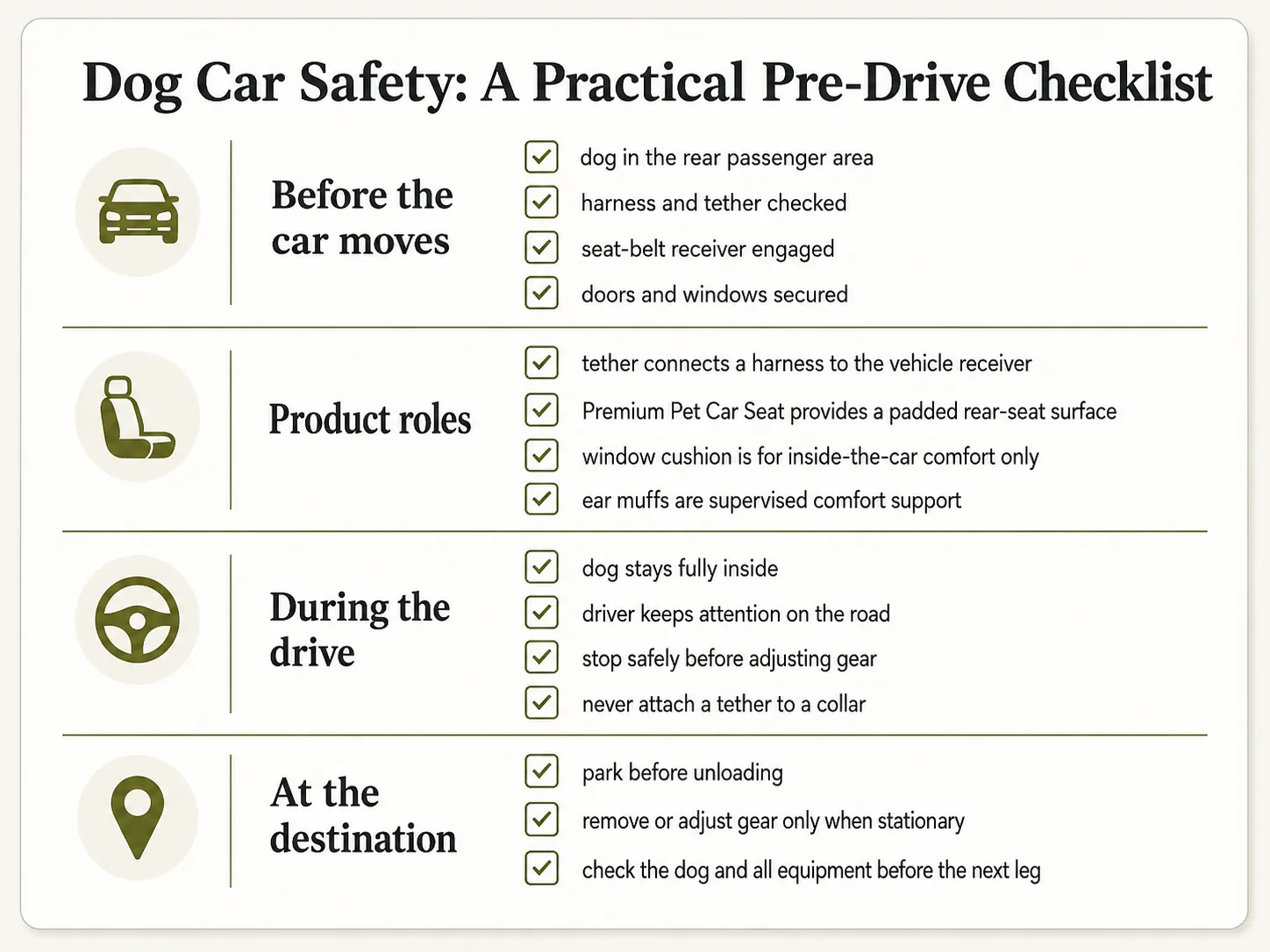
Dog Car Safety Checklist
- Dog is positioned away from the driver
- Carrier, crate, or restraint is installed as directed
- Tether is attached to a harness, not a collar
- Harness fit is secure and comfortable
- Clips, webbing, stitching, and buckles show no visible damage
- Dog can sit or lie down but cannot roam through the cabin
- Seat-belt receivers and anchor points remain accessible
- Windows and child locks are set
- Dog's head and body will remain fully inside the vehicle
- Loose items are secured
- Leash, identification, water, and waste bags are accessible
- Safe rest stops are planned for longer trips
- Dog will not be left alone in the parked car
Frequently Asked Questions
Should a dog ride in the front or back seat?
The rear passenger area is generally the better choice because it keeps the dog away from the driver and front airbags. Use an appropriate restraint or secured carrier and follow the instructions for your vehicle and pet equipment.
Can I attach a dog seat-belt tether to a collar?
The My FurMigo Adjustable Dog Car Seat Belt Tether instructions say to attach its clip to a harness and specifically state that it is not intended for collars. Follow that direction and check the harness fit before driving.
Is a pet car seat enough on its own?
Not necessarily. The My FurMigo Premium Pet Car Seat provides a padded surface, headrest straps, and a non-slip base, but its product page does not describe it as a crash-tested restraint. Treat it as a comfort layer and use an appropriate separate restraint.
Is it safe for a dog to put their head out the window?
No. Flying debris, sudden movement, and the possibility of escape make this unsafe. Keep your dog fully inside the vehicle even when using a window-edge comfort accessory.
What if my dog is anxious or gets sick in the car?
Start with short, gradual practice sessions and avoid forcing a distressed dog through a long trip. Ask your veterinarian about repeated vomiting, severe anxiety, or other concerning symptoms. Comfort gear can support a routine, but it is not medical treatment.
Do dog car-restraint laws differ by location?
Yes. Rules differ across countries, states, and local jurisdictions. Check the requirements for your route and destination rather than assuming your home rules apply everywhere.
Conclusion
Dog car safety is easier to manage when the order stays consistent: restrain, position, inspect, then add comfort. Keep your dog in the rear passenger area, prevent access to the driver and open windows, test the setup while parked, and repeat the same check before every drive.
My FurMigo's car products can support different parts of that routine, but they are not interchangeable. Use the tether as directed with a harness, treat the padded seat and wearables as comfort layers, and keep the window cushion secondary to the rule that your dog stays fully inside. Browse the current My FurMigo Car Safety collection after deciding which role your setup actually needs.
Choosing gear for this route? Compare fit, capacity, and product limits in our dog car-safety gear buying guide.
Shop this story

Continue exploring
Travel Together
How to Travel With Your Dog’s Water: A Simple Hydration Packing Guide
Taking your dog out for a walk, hike, or road trip is easier when water is part of the plan from the start. The challenge is not simply remembering to bring water. You also need a practical way to carry it, make it available to your dog, and keep the rest of your bag or car organized.
Read story
Travel Together
How to Set Up a Campsite Sleeping Area for a Small Dog
Set up your small dog's campsite sleeping area on flat, dry ground near your own tent, with shade, ventilation, familiar bedding, water nearby, and a leash or other control plan. Measure first, practice at home, and never treat a portable pet tent as unattended shelter.
Read story