How to Set Up a Campsite Sleeping Area for a Small Dog
Set up your small dog's campsite sleeping area on flat, dry ground near your own tent, with shade, ventilation, familiar bedding, water nearby, and a leash or other control plan. Measure first, practice at home, and never treat a portable pet tent as unattended shelter.
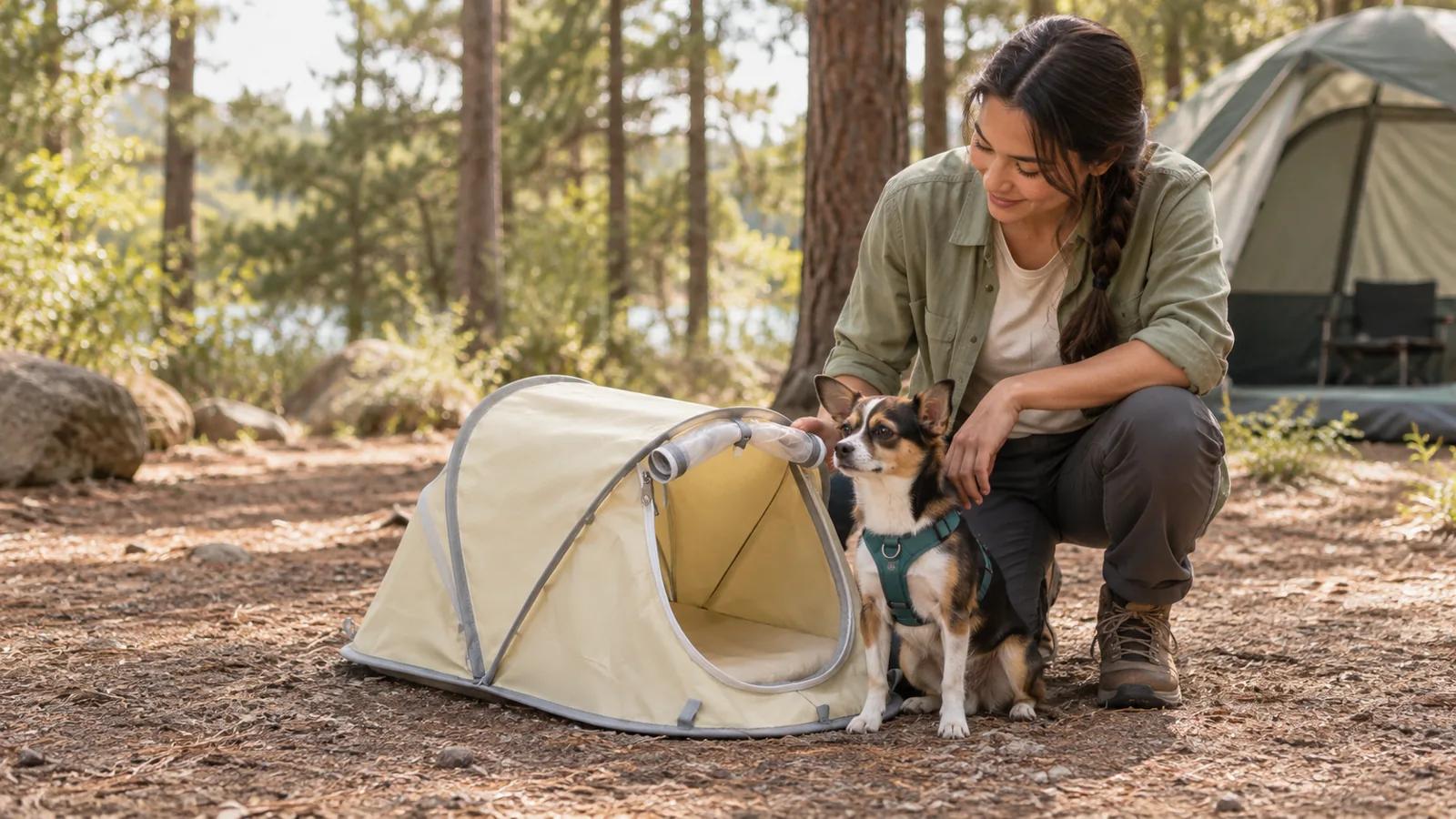
Use Five Zones Instead of a Pile of Gear
A workable dog camping setup has five small zones. They can sit close together, but each has a separate job.
| Zone | What belongs there | Quick check |
|---|---|---|
| Rest | Sized mat, blanket, or supervised pet tent | Dog can turn and lie naturally |
| Water | Clean water and a stable bowl | Easy for you to refill and monitor |
| Control | Harness, leash, and allowed tether point | Dog cannot enter roads or other sites |
| Storage | Sealed food, treats, and waste | Meets that campground's wildlife rules |
| Exit | Leash, light, towel, and waste bags | Reachable without unpacking everything |
Keep the rest zone close enough that you can see and hear your dog. Do not place it beside a fire ring, cooking area, vehicle path, standing water, thorny brush, or the edge of another campsite.
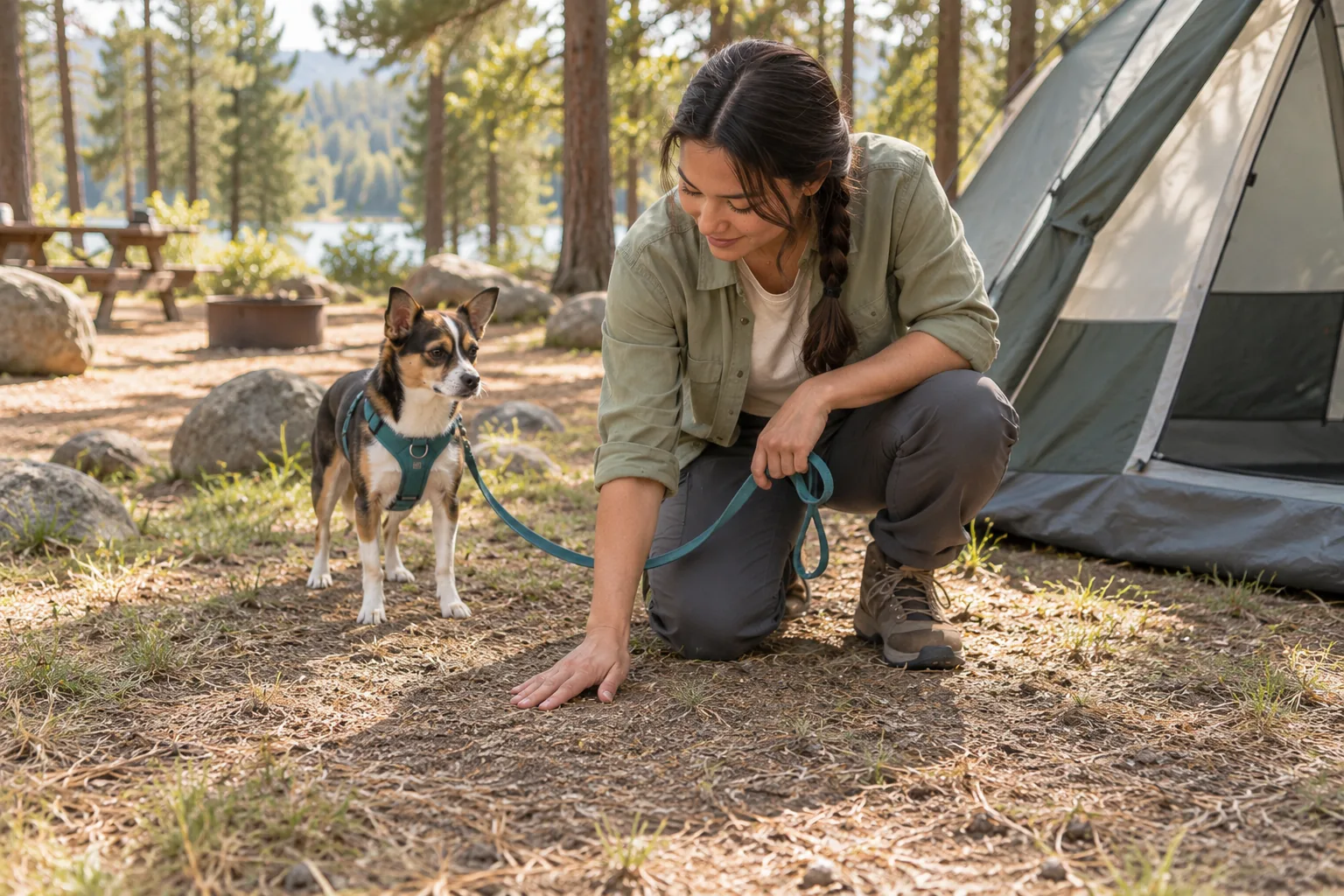
The National Park Service camping-with-pets guide recommends checking whether pets are allowed, considering whether the trip suits the individual animal, and packing food, water, and bowls. Rules vary by park and campground, so verify the exact site rather than relying on a general “dog-friendly” label.
Decide Whether the Trip Fits Your Dog
A portable sleeping area cannot make every camping trip appropriate. Consider your dog's sleep, mobility, noise sensitivity, temperature tolerance, health, and behavior around animals. Delay or change the trip if your dog cannot settle during practice or repeatedly tries to escape a soft enclosure. Ask your veterinarian for guidance when a health issue could affect the trip.
Start with an easy format: a familiar campground, mild forecast, vehicle nearby, and one night rather than a remote multi-day route. A nearby exit is useful if the weather changes or your dog does not settle.
Choose Flat, Dry Ground With a Fast Exit
Before placing bedding, inspect the ground in daylight. Look for sharp sticks, burrs, hot gravel, pooled water, animal waste, and anything your dog may chew or swallow.
Choose a spot that is:
- Within your occupied campsite and beside your own sleeping area
- Flat enough that the bed or pet tent does not rock or slide
- Dry and clear of runoff channels
- Shaded during expected rest periods but still ventilated
- Away from food preparation, flames, guy lines, and traffic
- Easy to reach quickly with a leash and flashlight
The NPS advises campers to check with rangers or campground hosts about wildlife, weather, flooding, damaged trees, and other alerts. Reassess the area after wind or rain.
Measure the Dog and the Rest Area
Product category labels such as “small dog” are only a starting point. Measure your dog while standing and while lying in a normal sleeping position. Then compare those measurements with the usable interior, entrance, and floor area of the gear—not just the package photo.
Your dog should be able to enter voluntarily, turn around, and lie naturally with bedding in place. If the entrance is cramped or turning space disappears, choose a larger setup.
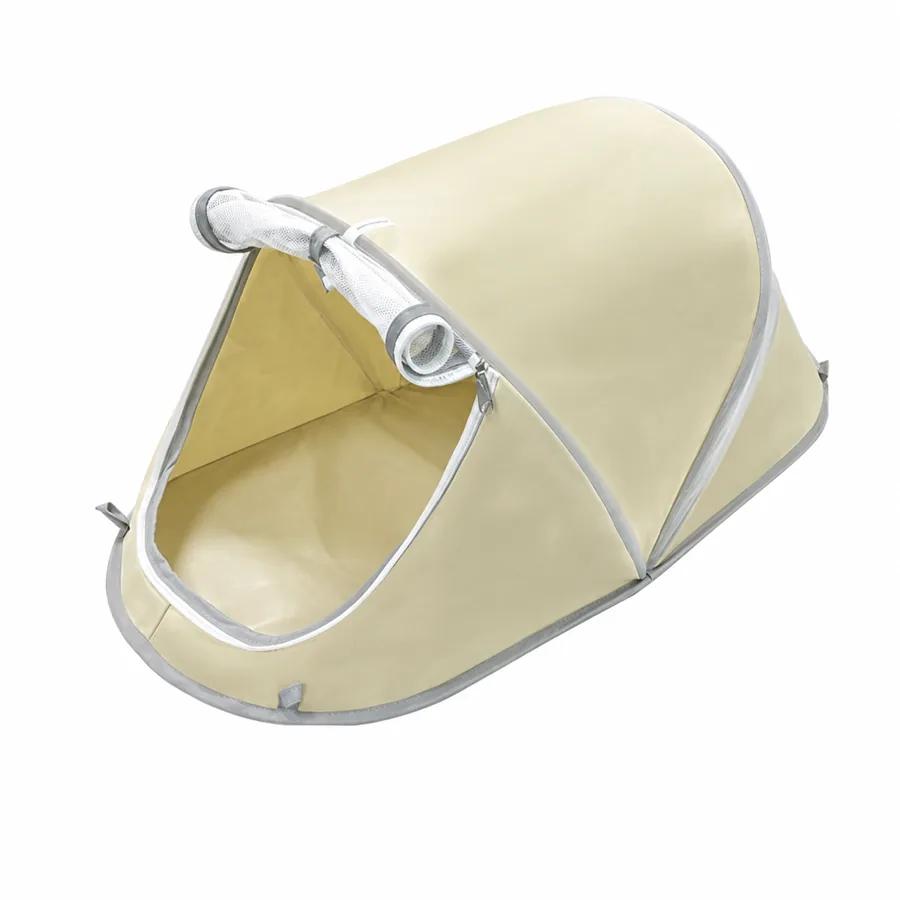
The My FurMigo Pop-Up Pet Tent measures 26.8 × 13.8 × 11.8 inches (68 × 35 × 30 cm) and weighs 1.1 pounds (0.49 kg). It opens into shape without tools, folds for storage, and comes with a carry bag. Those details make it easy to pack, but its dimensions—not its portability—should decide whether it fits your dog.
The product page describes breathable, scratch-resistant fabric and directs users to place the tent on a flat, level surface. It does not identify the tent as a weatherproof human shelter, restraint, crate, or wildlife barrier. Use it as a supervised rest nook in suitable conditions, not as the only protection from rain, cold, heat, or animals.
Practice the Full Setup at Home
Do not make the campsite your dog's first encounter with a pop-up sound, new fabric, zipper, or enclosed shape. Rehearse the exact setup at home several days before departure.
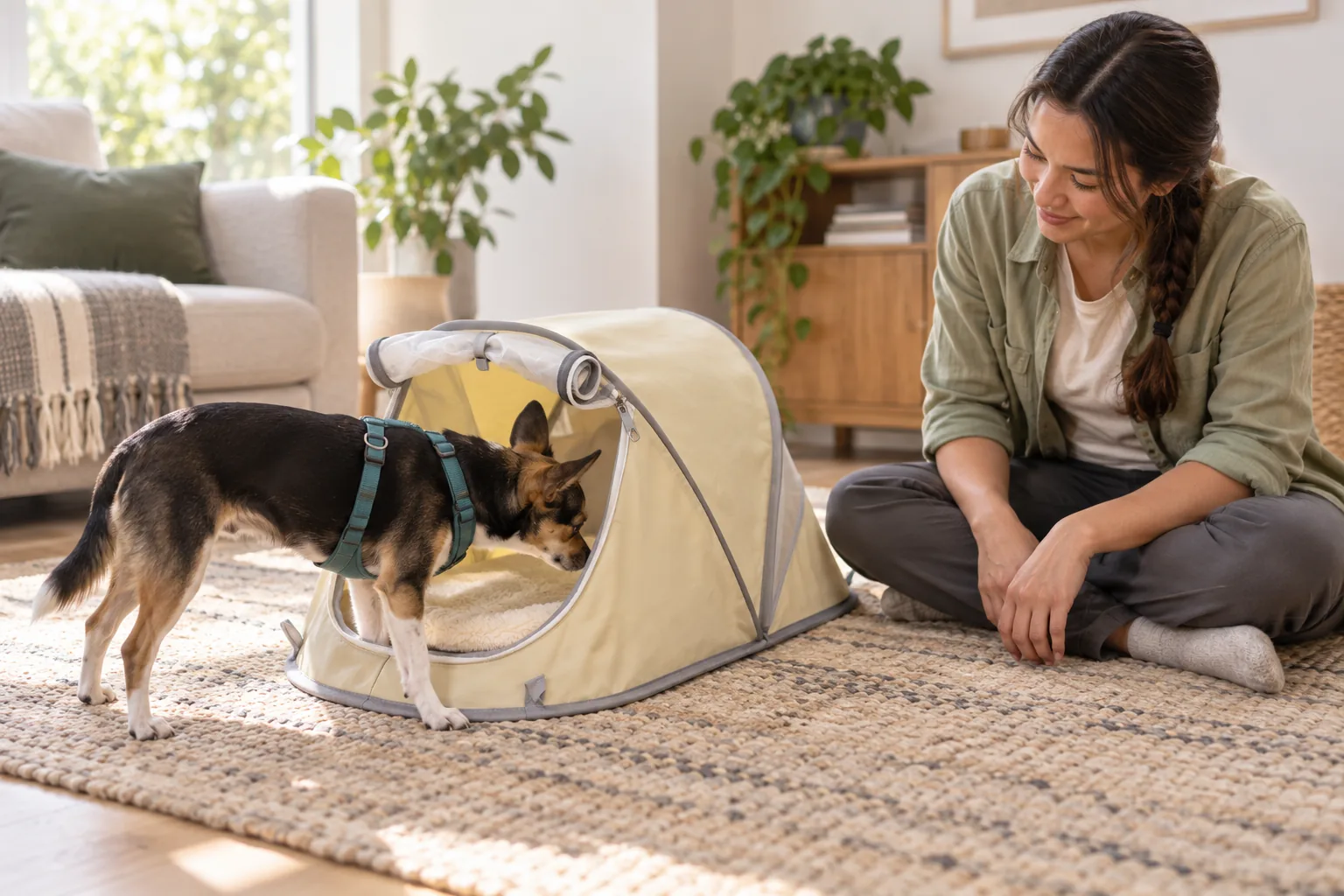
- Open the gear away from your dog so the movement does not startle them.
- Place it on a stable floor with the entrance fully open.
- Add a familiar, clean blanket that still leaves adequate space.
- Let your dog approach voluntarily; do not push or zip them inside.
- Reward calm investigation and settling.
- Repeat outdoors in a controlled familiar area.
Watch the dog's response rather than a timer. If your dog scratches, chews, pants heavily, or repeatedly tries to leave, shorten the session and reconsider whether a soft pet tent suits them.
Build the Campsite Rest Area in the Right Order
At camp, unpack the dog's area before the site becomes busy or dark:
- Inspect and clear the ground.
- Place the rest surface or pet tent on the level spot you selected.
- Stabilize the product only as its instructions and campground rules allow.
- Add a thin familiar layer without blocking airflow or the entrance.
- Put water nearby but where spills will not soak the sleeping surface.
- Remove food and treats after use and store them according to local rules.
- Walk your dog through the site on leash before asking them to settle.
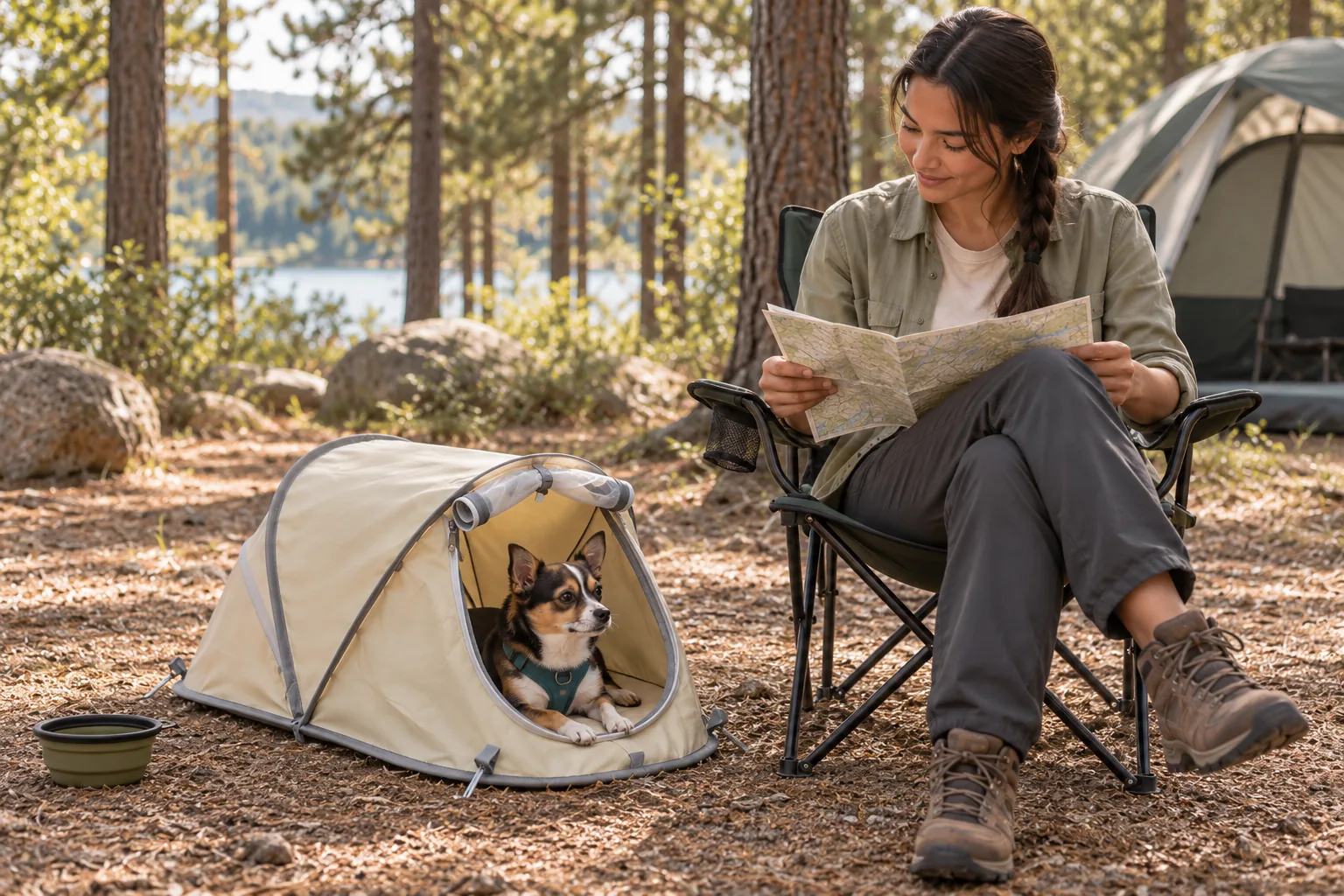
Supervise any dog using the Pop-Up Pet Tent outdoors. Keep the entrance and airflow unobstructed, inspect the fabric and frame after setup, and stop use if the structure is damaged or unstable. The brand's care instructions call for wiping it with a damp cloth or using mild soap and water, then air-drying it fully before storage.
Plan Where Your Dog Will Sleep Overnight
A daytime rest nook and an overnight plan are not automatically the same. At night, keep your dog under control in a setup allowed by the campground and suited to local conditions.
Do not leave a dog alone in a soft pet tent outside your occupied shelter. It does not prevent escape, wildlife contact, or temperature changes. If your dog will sleep in your main tent, rehearse where the leash, water, and exit will be.
Keep food, treats, bowls, and scented waste out of the sleeping zone when the campground requires protected storage. Follow the instructions at that specific site; the NPS notes that some campgrounds require lockers or other food-storage methods rather than ordinary vehicle storage.
Use a Simple Evening and Morning Check
Run the same check before sleep and after waking:
- Look over paws, coat, ears, harness areas, and skin you can see
- Check for burrs, cuts, irritation, dampness, and attached ticks
- Confirm the dog is drinking and behaving normally
- Remove food residue and pack waste as required
- Dry damp gear completely before folding it for storage
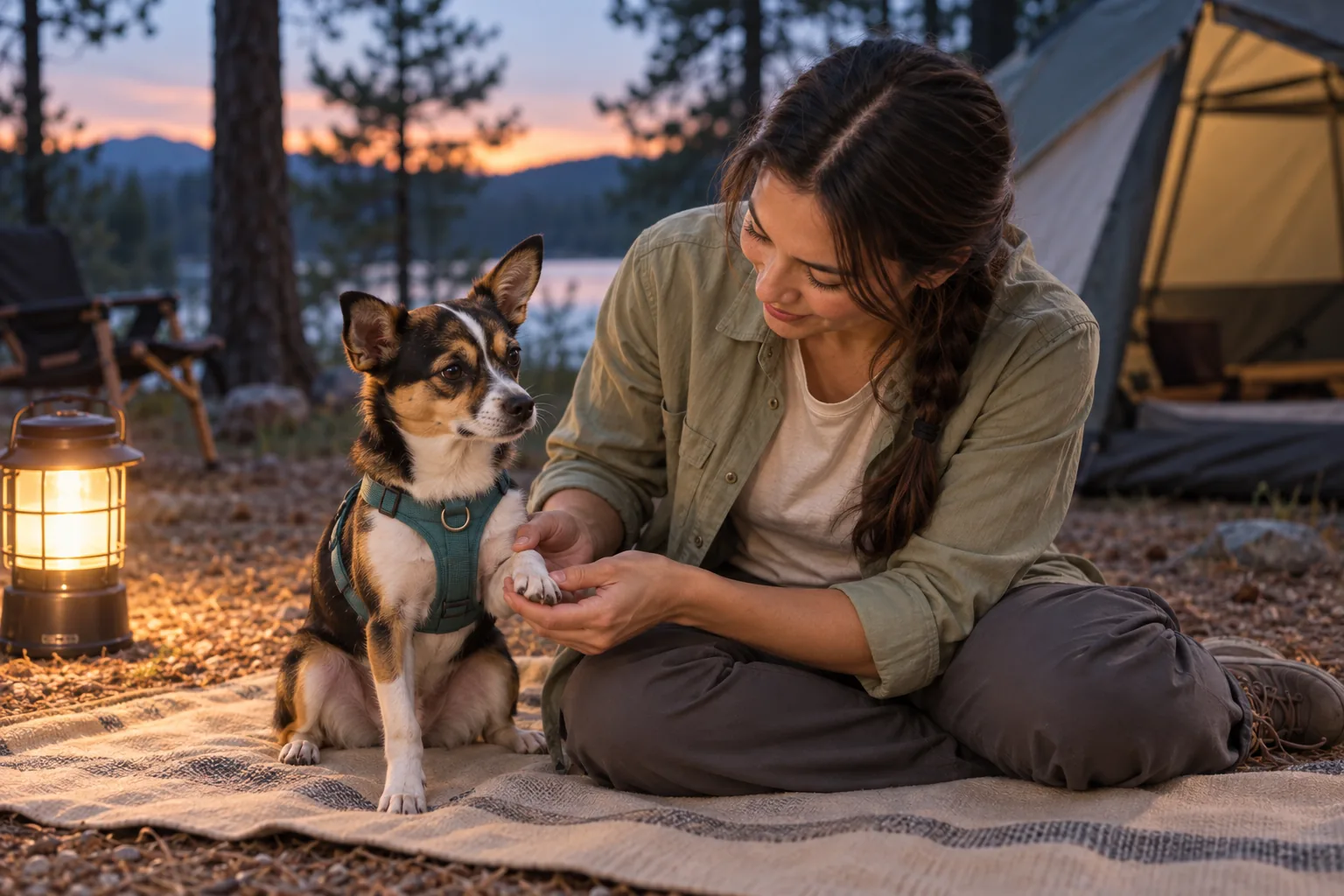
The CDC recommends checking pets that go outdoors for ticks every day and talking with a veterinarian about appropriate tick prevention. Do not apply a human insect product to your dog unless a veterinarian or the product label specifically says it is appropriate for that animal and use.
Small-Dog Camping Sleep Setup Checklist
Before booking
- Confirm pets are allowed at the exact campground and site
- Review leash, quiet-hour, wildlife, and food-storage rules
- Ask a veterinarian about individual health or parasite concerns
Before leaving home
- Measure the dog standing and lying down
- Test the full sleeping setup indoors and outdoors
- Inspect fabric, seams, frame, leash, harness, and attachments
- Pack familiar bedding, water, bowl, towel, light, and waste bags
At camp
- Choose flat, dry, hazard-free ground near your own tent
- Keep the dog supervised and under control
- Keep the rest area away from cooking, fires, roads, and runoff
- Check the dog and gear each evening and morning
For the hydration side of the setup, use My FurMigo's published guide to packing and serving water while traveling with your dog.
Frequently Asked Questions
Where should a small dog sleep while camping?
Choose a controlled sleeping arrangement beside you, within your permitted campsite, on flat and dry ground. The exact choice depends on campground rules, weather, wildlife, and your dog's training. Do not leave a dog unattended outdoors in a soft pet tent.
Does a dog need a separate tent for camping?
No. It is an optional supervised rest nook. It does not replace a nighttime control plan, weather protection, or a properly secured carrier when one is needed.
How do I know whether a pet tent is big enough?
Measure your dog standing and lying naturally. Compare those measurements with the product's usable floor, height, and entrance after adding any bedding. The dog should be able to enter, turn, and lie down without being forced or compressed.
Can I close my dog inside a pop-up pet tent overnight?
Do not assume a fabric pet tent functions like a secured crate or weather-rated shelter. Follow the product instructions, supervise its use, and choose an overnight arrangement that maintains control and suits local conditions. The My FurMigo product page does not describe its Pop-Up Pet Tent as a restraint or crate.
What should I put under my dog at a campsite?
Use a clean, stable layer that stays flat and does not block the entrance or ventilation. Replace anything wet and monitor your dog's comfort because temperature needs vary.
What if my dog will not settle at camp?
Reduce stimulation, stay nearby, offer the familiar routine practiced at home, and avoid forcing the dog into the sleep area. If your dog remains distressed or conditions become unsuitable, use your exit plan and end the trip early.
Conclusion
A good small-dog camping sleeping area is defined by placement, fit, practice, supervision, and a realistic backup plan—not by the amount of gear. Measure your dog, rehearse at home, choose dry ground beside you, follow the site's rules, and leave if your dog or the conditions tell you the setup is not working.
Choosing gear for this route? Compare fit, capacity, and product limits in our dog camping gear buying guide.
Shop this story
Continue exploring
Travel Together
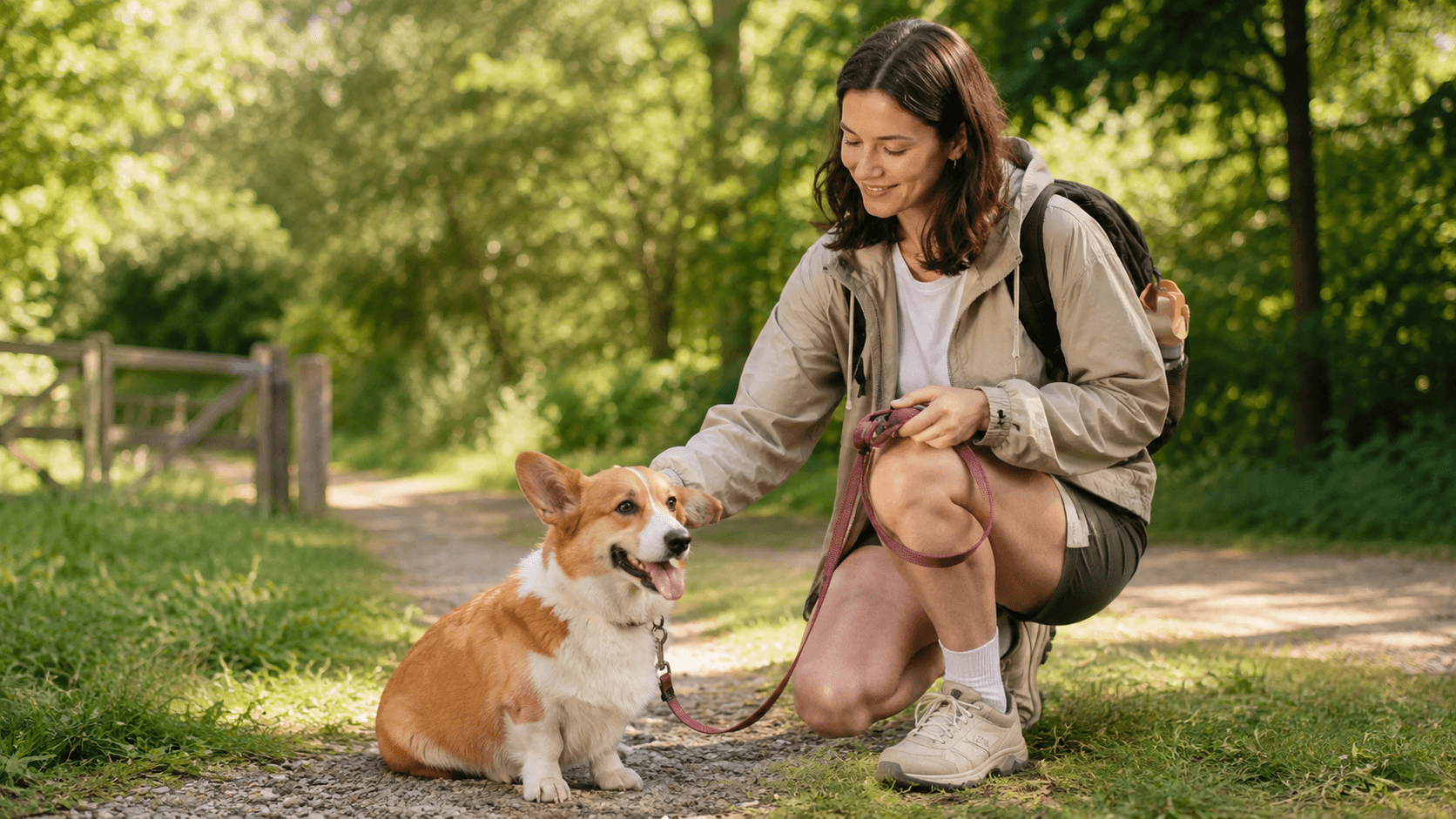
How to Travel With Your Dog’s Water: A Simple Hydration Packing Guide
Taking your dog out for a walk, hike, or road trip is easier when water is part of the plan from the start. The challenge is not simply remembering to bring water. You also need a practical way to carry it, make it available to your dog, and keep the rest of your bag or car organized.
Read story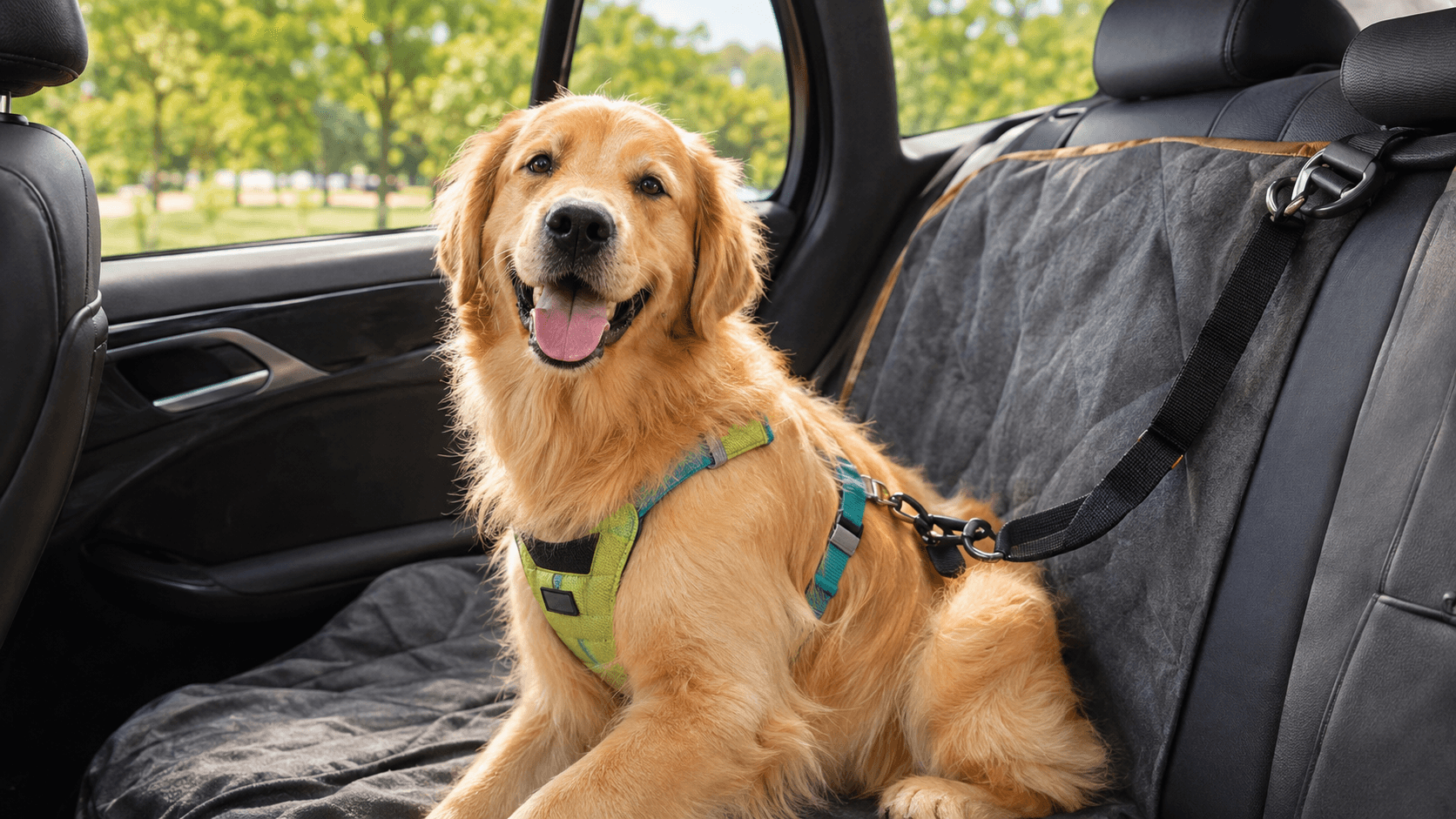
Travel Together
Dog Car Safety: A Practical Pre-Drive Checklist
The simplest dog car safety routine is to secure your dog in the back seat with an appropriate vehicle restraint or secured carrier, keep the dog away from the driver, close or only slightly crack the windows, and check every strap and attachment before the car moves. Add bedding, noise-management gear, and other...
Read story