How to Brush a Shedding Dog at Home
Brush a shedding dog on a non-slip surface, work in the direction of hair growth, and use short, gentle passes one body section at a time. Stop if you meet a tight mat, irritated skin, or signs that your dog is uncomfortable.
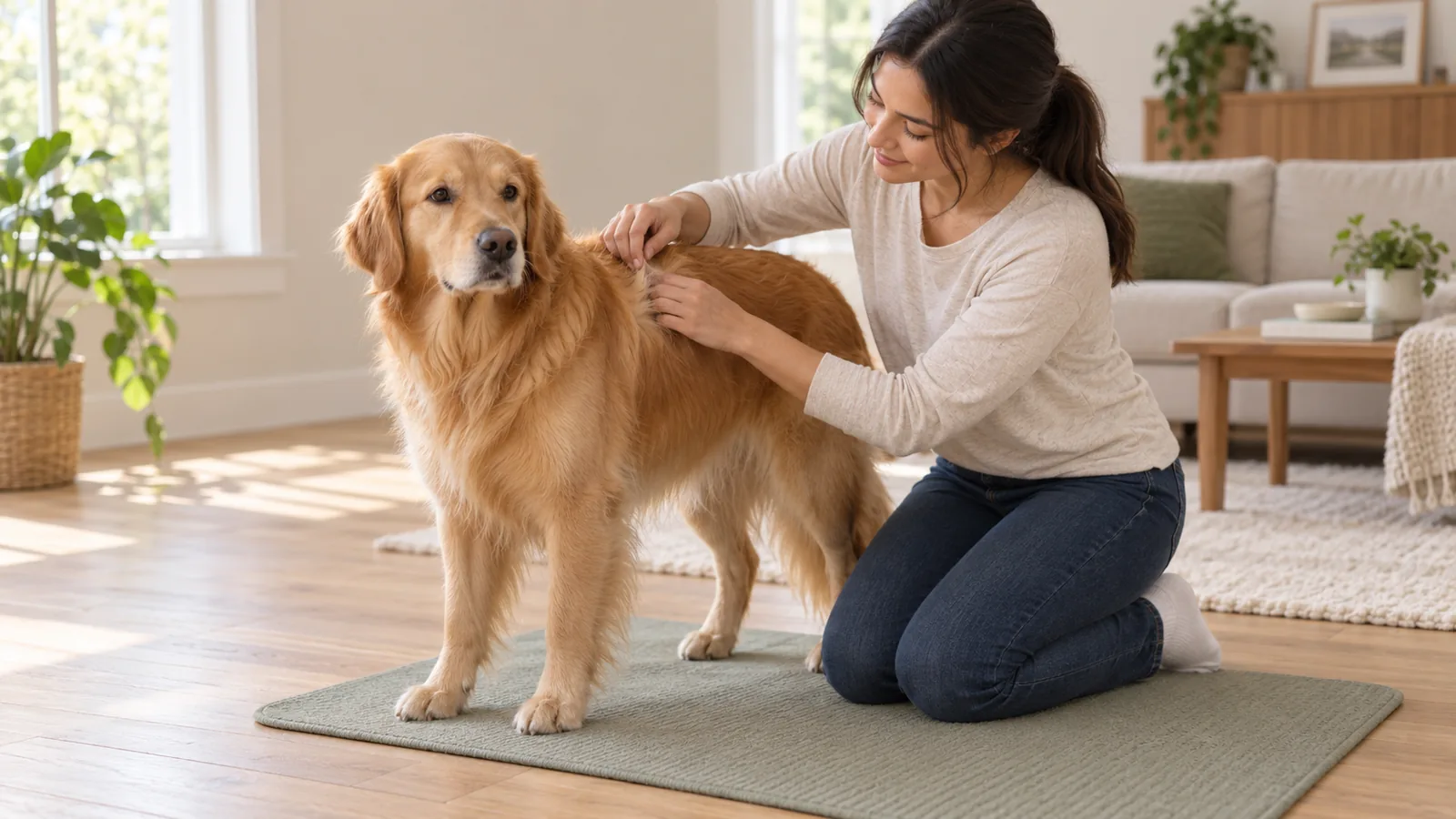
Brush a shedding dog on a non-slip surface, work in the direction of hair growth, and use short, gentle passes one body section at a time. Stop if you meet a tight mat, irritated skin, or signs that your dog is uncomfortable.
There is no single deshedding schedule for every dog. Coat length, texture, undercoat, season, skin health, and tolerance all matter, so the best routine is regular enough to stay manageable but gentle enough that your dog can remain comfortable.
Match the Tool to Your Dog's Coat
Start with coat type, not the amount of hair on the floor. A tool that works well on one coat may snag, miss loose hair, or feel uncomfortable on another.
The VCA grooming and coat-care guide gives different tool suggestions for smooth, medium, long, curly, and shedding coats. It also recommends gentle brushing without excessive pulling. If you cannot identify your dog's coat type or the tool drags through the coat, ask a veterinarian or professional groomer what is appropriate before continuing.
Before the first full session, test the tool on a small, easy-to-reach area such as the shoulder. The teeth should move through the coat without scraping the skin or forcing you to pull. A grooming tool is not a substitute for clippers or professional mat removal.
My FurMigo's One-Button Pet Deshedding Comb is designed to collect loose coat hair during brushing and release that hair when its cleaning button is pressed. The product page lists an ABS body and a size of 19.70 × 8.60 × 4.80 cm. Consider it only if a comb of this type suits your dog's coat; the product name alone does not establish suitability for every dog.
Set Up a Calm, Non-Slip Grooming Station
Choose a quiet, well-lit place where your dog can stand or lie without sliding. A bath mat, yoga mat, or rug is more stable than a smooth tile floor or high table. Keep the session at ground level if there is any chance the dog could jump or fall.
Place only a few items within reach:
- The coat-appropriate brush or comb
- A towel for loose hair and cleanup
- Familiar rewards, if they fit your dog's diet
- A container for removed hair
- A second tool only if a groomer has recommended it for a specific job
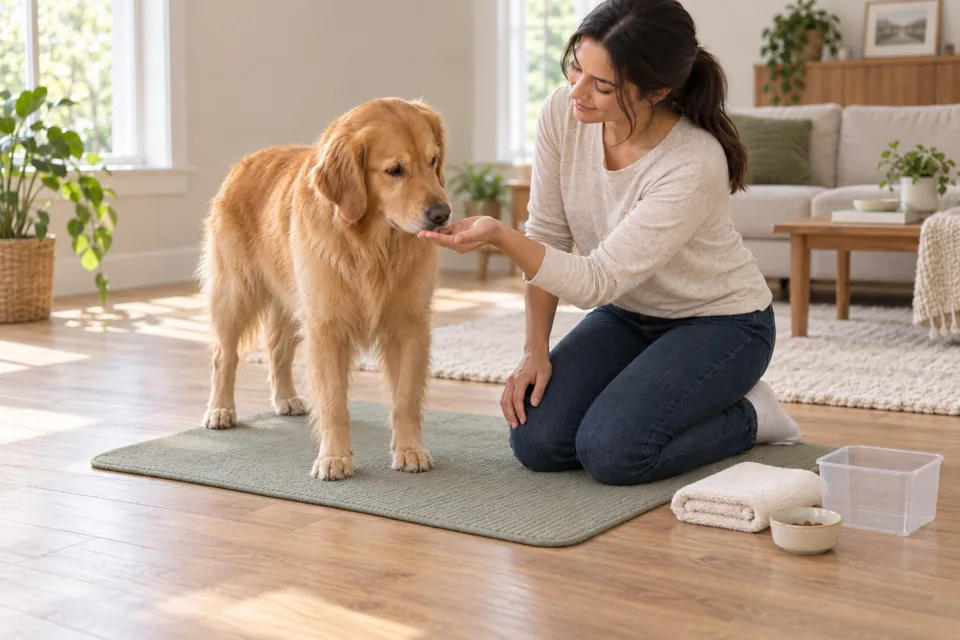
Let your dog see and sniff the tool before it touches the coat. Begin with one calm pass, reward relaxed behavior, and pause. VCA's cooperative handling guidance recommends breaking grooming into easier steps when a dog shows distress. For a dog new to brushing, a successful 30-second introduction is more useful than forcing a complete session.
Brush in Six Manageable Zones
Dividing the coat into zones helps you avoid repeatedly brushing one spot while missing another. Use this order as a starting point, then adapt it to the areas your dog is comfortable having touched.
| Zone | Where to work | What to watch |
|---|---|---|
| 1 | Shoulders and upper back | Easy test area; check pressure |
| 2 | Sides of the body | Brush with hair growth |
| 3 | Chest | Loose skin and sensitive areas |
| 4 | Outer legs | Joints and changes in posture |
| 5 | Neck and behind ears | Tangles; avoid collar friction |
| 6 | Tail and rear coat | Tangling and hygiene concerns |
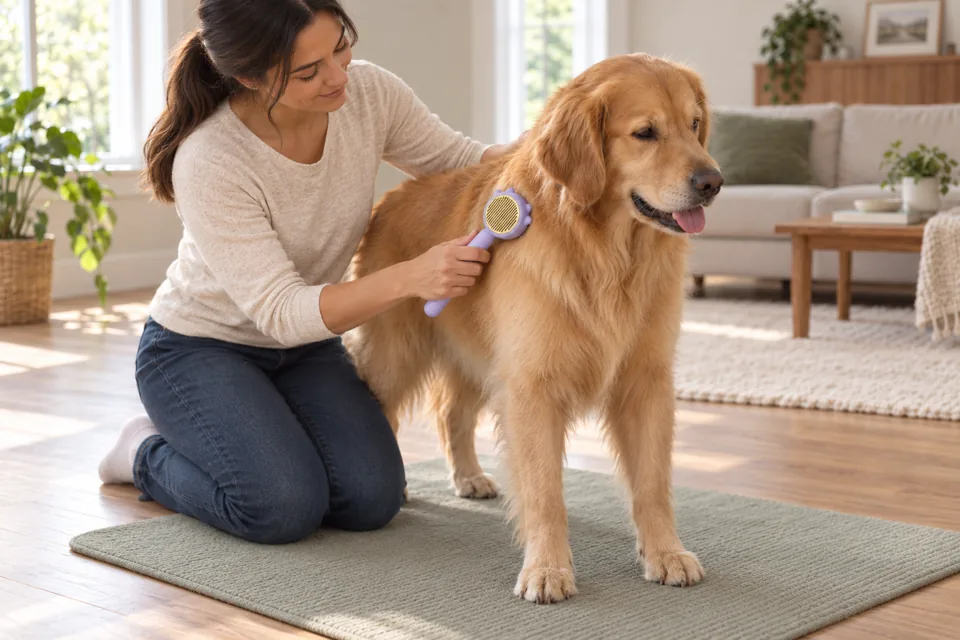
Use short passes instead of dragging the tool from neck to tail. Hold nearby loose skin steady without pinching it, and reduce pressure over bony areas. Clear collected hair whenever the tool stops moving freely so you can see whether the next pass is actually reaching the coat.
Skip the eyes, lips, ear openings, genitals, open wounds, inflamed skin, and any area your dog guards. Do not keep brushing a tender spot to investigate it; stop and inspect visually instead.
Treat Tangles and Mats as a Separate Job
Loose hair and a tight mat are not the same problem. If the tool stops abruptly, do not pull harder. Part the surrounding coat with your fingers and check whether you have found a small surface tangle, a burr, or a dense mat close to the skin.
The ASPCA advises that a mat that cannot be brushed out easily should be handled by a groomer or veterinarian, and specifically warns against cutting mats with scissors because skin can be caught or cut. Wetting a mat without a plan may also make it harder to remove, so deal with tangles before bathing.
Stop the home session and seek help when:
- A mat is tight against the skin
- The skin beneath it is red, damp, smelly, bleeding, or painful
- The dog repeatedly flinches, cries, growls, snaps, or tries to escape
- You find a lump, parasite, wound, bald patch, or unexpected coat change
- The coat suddenly sheds much more than is normal for your dog
These signs do not identify a diagnosis. A veterinarian can assess skin or health concerns, while a qualified groomer can advise on coat maintenance and safe mat removal.
Clean the Tool and Reset the Area
Remove collected hair before storing the tool. If you are using the One-Button Pet Deshedding Comb, press its cleaning button after brushing to help release the hair, then dispose of the hair and store the comb in a dry place as directed on the product page.
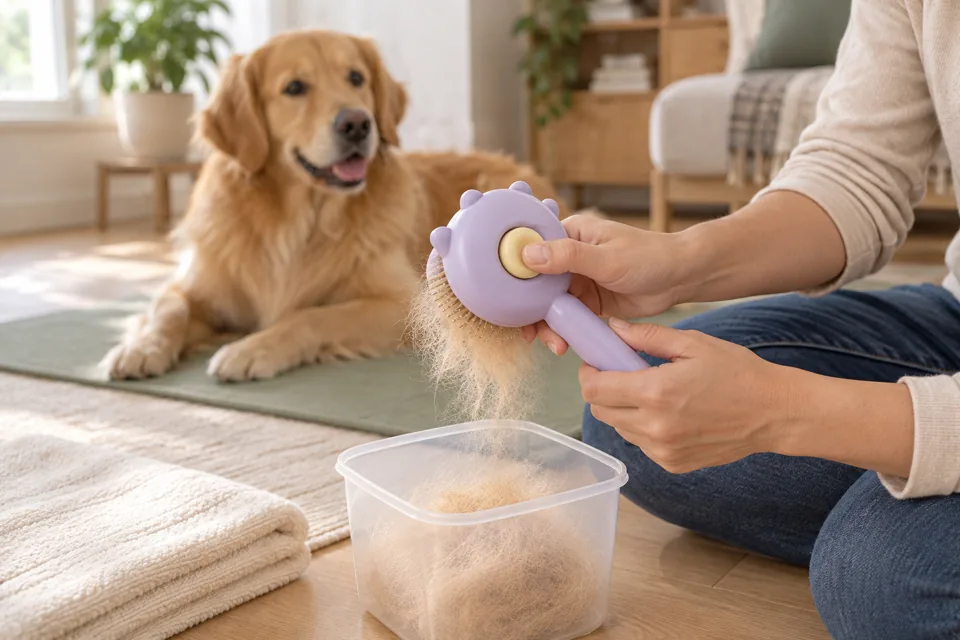
Check the tool for bent or damaged parts before the next session. Clean it according to the manufacturer's directions; do not soak, disinfect, oil, or heat a grooming tool unless its care instructions permit that method.
Finish by checking the areas you brushed. The skin should not look scraped or newly inflamed, and your dog should return to normal behavior. Note the session length and any area you skipped. That simple record makes the next session easier to adjust.
Build a Schedule From the Dog in Front of You
Some long, silky, or curly coats need daily attention to prevent tangles, while short coats may need less frequent brushing, according to VCA. Seasonal shedding can also change the amount of loose hair between sessions. Use those principles to build a starting schedule, then adjust based on your dog's coat and professional advice.
A practical test is whether you can complete a gentle session before loose hair, dirt, or small tangles become difficult to manage. More brushing is not automatically better. Repeated passes over already-cleared skin can create unnecessary friction, and a stressed dog may become less willing to participate next time.
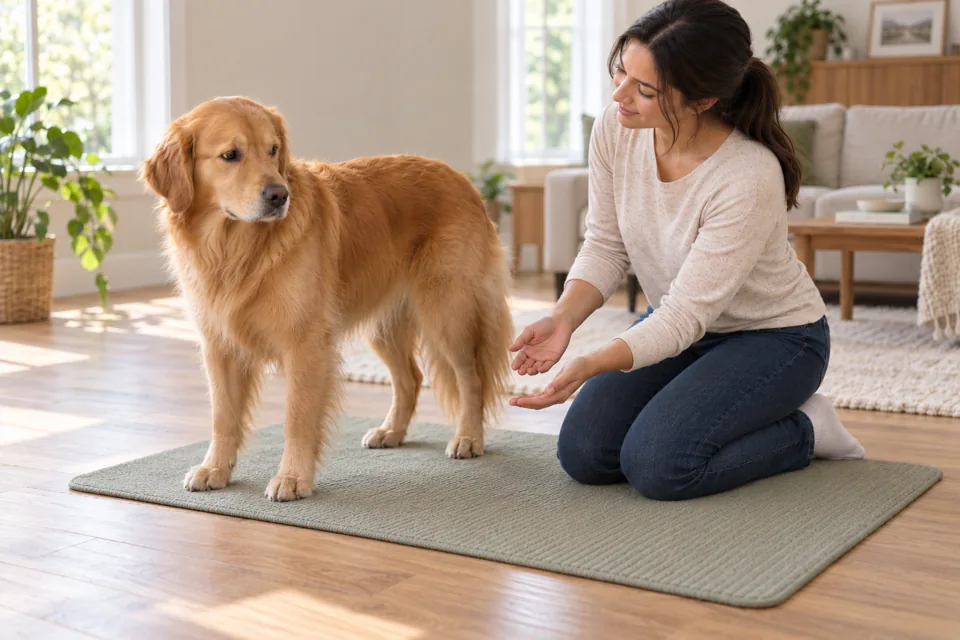
End while the dog is still coping well. If you cannot finish every zone, continue later rather than turning one manageable session into a struggle.
Frequently Asked Questions
How often should I brush a shedding dog?
It depends on coat type, season, skin condition, and how quickly loose hair or tangles return. Long, silky, or curly coats may need daily attention, while some short coats need less. Ask a groomer or veterinarian for a coat-specific schedule if you are unsure.
Should I brush with or against hair growth?
For a basic home routine, begin in the direction the hair grows. This makes it easier to use gentle pressure and notice resistance. Do not repeatedly back-brush or rake the coat unless a professional has shown you a suitable technique for that coat and tool.
Can I brush out every mat at home?
No. Stop if a mat is tight, close to the skin, painful, or difficult to loosen gently. Do not cut it with scissors. A groomer or veterinarian can determine the safer removal method and check the skin underneath.
Why does my dog dislike being brushed?
The dog may be unfamiliar with handling, worried about the setting, sensitive in one area, or experiencing pulling or pain. Shorten the session, use a stable surface, reduce the difficulty, and confirm that the tool suits the coat. Sudden sensitivity or pain warrants veterinary advice.
Is a deshedding comb suitable for every dog?
No single grooming tool suits every coat or skin condition. Check the tool's intended use, test it gently on a small area, and stop if it snags or irritates the skin. A groomer or veterinary team can recommend a tool for your individual dog.
Conclusion
A useful dog deshedding routine is gentle, repeatable, and tailored to the coat—not a race to collect the biggest pile of hair. Choose a suitable tool, work through one zone at a time, stop at mats or discomfort, and end before your dog becomes overwhelmed.